China Top 10 Steam Humidifier Suppliers for Global Buyers
Choosing a reliable steam humidifier supplier in China requires more than comparing product prices. Global buyers must examine engineering capability, manufacturing consistency, export experience, and after-sales support. A supplier may offer polished brochures, yet its factory controls, testing records, and replacement-part system deserve closer attention.
William P. Bahnfleth, an ASHRAE Fellow and respected indoor-environment researcher, has stated, “Humidity control must be treated as part of the whole building system, not as an isolated device.” This principle matters in hospitals, data centers, cleanrooms, museums, and commercial buildings. A suitable steam humidifier should match the required output, water conditions, control strategy, and operating schedule. Electrode and resistive models behave differently. Their maintenance needs also differ.
Small details matter.
This guide reviews China’s top 10 steam humidifier suppliers for global buyers. It considers product design, heating performance, control compatibility, material quality, factory certification, customization, delivery capability, and technical service. It also looks beyond marketing claims. Can the supplier provide clear wiring diagrams? Are spare cylinders or heating elements available? Does the team understand local installation conditions?
These questions expose practical strengths.
No ranking can fit every project. A supplier suitable for a textile plant may not suit a pharmaceutical facility. Buyer requirements, regional standards, water quality, and budget can change the result. Some promising manufacturers may also have limited international service coverage. That weakness should not be ignored. This overview offers a practical starting point, while independent verification remains necessary before a purchase decision.
Steam Humidification Basics: 40–60% RH Targets and 0.68 kWh/kg Theory
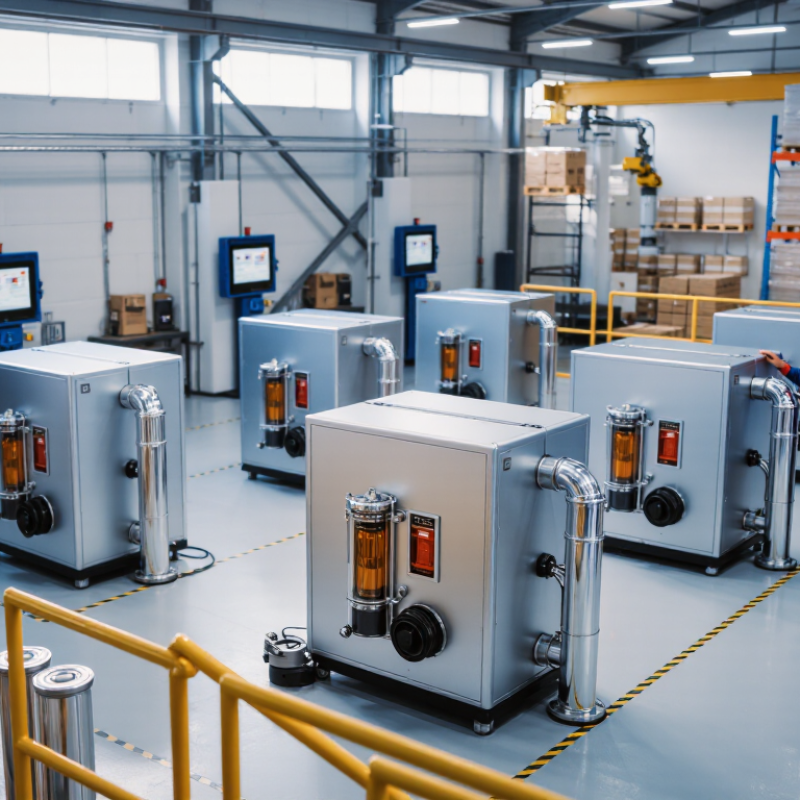
Steam humidification adds clean moisture by boiling water inside a resistance-heated cylinder. The target is usually 40–60% relative humidity (RH). This range supports comfort, protects materials, and limits many moisture-related risks. Yet the correct setpoint depends on temperature, occupancy, and building use.
The widely cited 0.68 kWh/kg figure describes the theoretical energy needed to evaporate one kilogram of water. It assumes ideal heat transfer and excludes cylinder losses, drainage, controls, and standby power. A practical unit may consume more. That gap matters. For example, adding 10 kg of steam per hour theoretically requires 6.8 kWh. A commissioning engineer should verify actual readings with a calibrated meter, not rely only on a brochure.
Global buyers comparing Chinese suppliers should request output data at the specified water quality and voltage. Ask for steam distribution details, RH sensor accuracy, maintenance access, and overheating protection. In a test room, place the sensor away from windows, supply air, and direct steam discharge. Small placement errors can create unstable readings. I have seen systems chase humidity because sensors were installed too close to the injection grid. The design looked correct on paper. Field conditions disagreed. Keep records of energy use, drain cycles, and RH trends for several weeks. That evidence is more useful than a single factory test.
China’s Top 10 Steam Humidifier Suppliers: Models, Output, and Applications
China Top 10 Steam Humidifier Suppliers: Models, Output, and Applications
China’s leading steam humidifier suppliers generally offer electrode, resistive, and gas-fired models. Their typical output ranges from 3 to 180 kilograms per hour. Large industrial units can exceed 500 kilograms per hour. However, catalog figures often describe maximum output, not continuous performance.
Electrode humidifiers suit offices, hospitals, and data rooms because they provide responsive control and compact installation. Resistive models support laboratories, museums, and clean manufacturing where water quality needs closer management. Gas-fired systems fit large factories and central air-handling plants. Many Chinese factories report annual production between 1,000 and 10,000 units, although these figures require verification through factory audits and shipment records.
Application conditions should guide supplier selection. ASHRAE guidance commonly supports indoor relative humidity near 30% to 60%, depending on comfort and building use. The U.S. Department of Energy also identifies humidity control as important for energy performance and indoor comfort. For pharmaceutical and electronics facilities, buyers should request validated control accuracy, drain design, electrode life, and sanitation procedures. IEC and ISO-based quality systems can strengthen reliability, but certification alone proves little.
A practical comparison should include steam output at rated voltage, response time, service access, and spare-part availability. One weakness remains. Some suppliers publish impressive capacity but limited field data. Buyer references matter more than polished brochures. Misjudging water conductivity can reduce output and shorten component life. That detail is easy to overlook.
China’s Top 10 Steam Humidifier Suppliers: Models, Output, and Applications
Representative steam humidifier output levels commonly used across major application segments. Actual capacity depends on the model configuration, steam distribution method, and project requirements.
Compact units are typically used for residential and small commercial spaces, while higher-output electric or gas-fired systems are applied in hospitals, data centers, industrial facilities, and process environments. Common commercial and industrial steam humidifier capacities range from approximately 5 to 180 kg/h or more.
Global Compliance Checks: CE, ISO 9001, IEC Safety, and Water Standards
China Top 10 Steam Humidifier Suppliers for Global Buyers
Global Compliance Checks: CE, ISO 9001, IEC Safety, and Water Standards
A compliant steam humidifier supplier should provide traceable evidence, not broad marketing claims. CE marking requires a documented conformity assessment under applicable European rules. It is not a quality certificate. Buyers should request the EU Declaration of Conformity, risk assessment, test reports, and production-control records. IEC 60335-2-98 addresses safety requirements for humidifiers and similar appliances. Check whether the tested model matches the offered voltage, heating chamber, controls, and enclosure.
ISO 9001 supports process consistency, but certification alone cannot guarantee product safety. The ISO Survey 2022 reported more than 1.2 million ISO 9001 certificates worldwide. That scale shows its value, yet audits still need careful reading. Verify the certificate scope, issuing body, expiration date, and manufacturing address. A small mismatch can matter. One overlooked revision may invalidate an otherwise convincing file.
Water quality deserves equal attention. Ask for limits on hardness, conductivity, chloride, and microbial control. EN 1717 helps assess backflow risks, while material-contact requirements may reference NSF/ANSI 61 or local drinking-water rules. In practice, poor water treatment can create scale inside electrodes and shorten service life. WHO data links unsafe water and sanitation to substantial global disease burdens, although humidifier risk depends on design and maintenance. No checklist catches every installation mistake. Require commissioning instructions, cleaning intervals, spare-part records, and independent retesting when documents appear incomplete.