Skip to content

2026 Best Dehumidifier and Air Purifier for Home

Indoor air can feel heavy before it looks dirty. Moisture gathers on windows, towels stay damp, and musty odors linger in corners. A reliable dehumidifier and air purifier can address different problems in the same living space. The dehumidifier reduces excess humidity, while the purifier captures airborne particles and selected pollutants. They are not interchangeable. That distinction matters in bedrooms, basements, nurseries, and small apartments.

This 2026 guide compares practical performance rather than impressive packaging. It considers moisture-removal capacity, clean-air delivery rate, filter quality, noise, energy use, controls, and maintenance costs. Real rooms behave differently from laboratory spaces. A unit that performs quietly beside a bed may struggle in an open-plan basement. A compact purifier may collect dust efficiently but offer little help against persistent dampness. Check the room size carefully.

Small details often decide daily satisfaction. A full water tank should trigger a dependable shutoff. Filters should be easy to find and replace. Casters, handles, and a visible humidity display can make a heavy appliance less frustrating. Some models promise smart automation, yet their sensors may need time to respond accurately. This guide also acknowledges uncertainty: manufacturer ratings do not always predict every home’s results. Keep doors, ventilation, climate, and building conditions in mind. Better air is a process, not a single purchase.
2026 Best Dehumidifier and Air Purifier for Home

Understanding the Differences Between Dehumidifiers and Air Purifiers

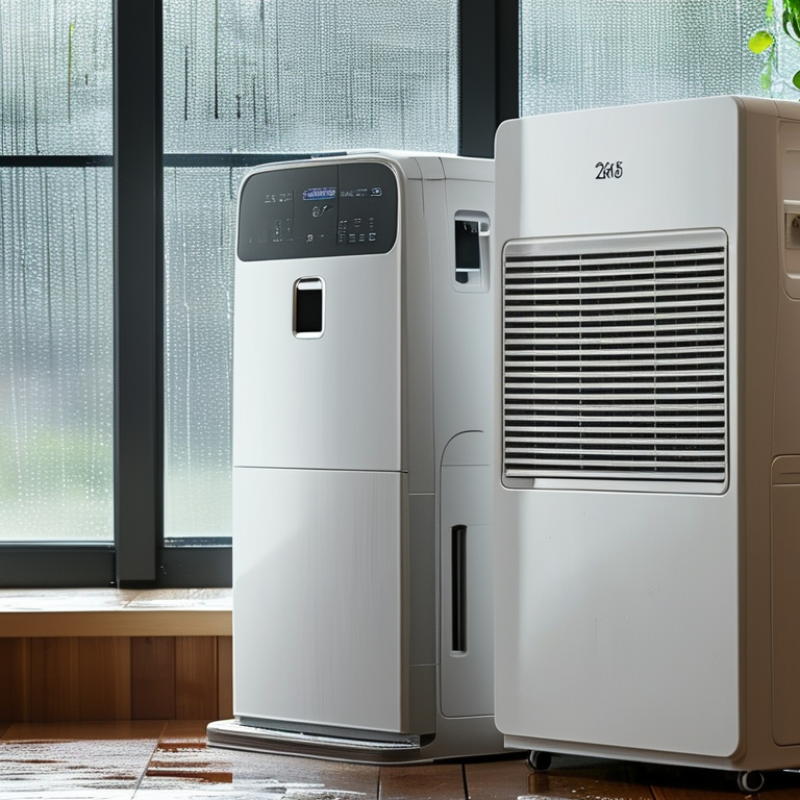
A dehumidifier and an air purifier solve different indoor problems. A dehumidifier removes excess water from the air. An air purifier captures airborne particles. One manages moisture. The other manages air cleanliness.

A dehumidifier pulls damp air across a cold coil, where water condenses into a tank or drain. It can make a basement feel less clammy and discourage moisture-related odors. A hygrometer helps measure results.

Many homes feel comfortable between 30% and 50% relative humidity. Lower is not always better. Very dry air can irritate skin and breathing passages.

An air purifier uses filters to catch particles such as dust, pollen, and some smoke residue. A properly fitted high-efficiency filter usually performs better than a loose, overloaded one. Filters need regular replacement.

I once assumed a purifier would remove every unpleasant smell. That shortcut was wrong. Odors may require ventilation and source control. Purifiers also do not dry wet walls or prevent condensation on cold windows.

The right choice depends on the room’s symptoms.

A damp basement needs moisture control. A bedroom near heavy traffic may need particle filtration. Some homes need both, but placement matters. Keep airflow paths clear.

Empty a dehumidifier tank before it becomes a hygiene problem. Check windows, walls, and fabrics instead of trusting a single number. Indoor conditions change daily, and equipment readings can be imperfect.
How to Assess Home Air Quality, Humidity, and Room Requirements

Assessing home air quality starts with evidence, not discomfort alone. A room may smell clean while containing fine particles from cooking, candles, dust, or outdoor pollution. Use a monitor that tracks PM2.5 and carbon dioxide, then record readings at different times. A single reading can mislead. Check bedrooms after sleeping, kitchens after cooking, and living areas during closed-window periods.

Humidity needs separate attention. A hygrometer should usually show 30% to 50% relative humidity. Condensation on windows, swollen wood, or a musty basement suggests excess moisture. Very dry air may cause itchy skin, throat irritation, and static shocks. Place the meter away from windows, vents, and direct sunlight. Readings can vary between rooms, even within the same home.

Room requirements determine equipment size and placement. Measure floor area, ceiling height, door openings, and moisture sources such as showers or laundry. A purifier should provide enough clean-air delivery for the room, while a dehumidifier needs suitable daily moisture removal capacity. Larger is not always better. Oversized equipment may waste energy or cycle poorly. Keep air inlets clear and inspect filters regularly. Drainage, noise, and nighttime brightness also affect real-world use. It is easy to trust digital numbers too much, especially when sensors are poorly placed. Compare patterns over several days, and question readings that do not match visible conditions.

2026 Best Dehumidifier and Air Purifier for Home - How to Assess Home Air Quality, Humidity, and Room Requirements

Room or Home Condition Typical Area Recommended Relative Humidity Air-Quality Indicators Suggested Air-Purifier CADR Suggested Dehumidifier Capacity Useful Features Priority
Small bedroom or study Up to 150 sq ft / 14 m² 30–50% RH PM2.5 below 9 µg/m³ is a useful long-term target; check for dust, odors, and condensation. 100–150 cfm / 170–255 m³/h 20–30 pints/day / 9.5–14 L/day under standard test conditions Sleep mode, washable pre-filter, true HEPA filtration, humidity display Low to moderate
Typical living room 150–300 sq ft / 14–28 m² 30–50% RH Track PM2.5, cooking particles, outdoor pollution, visible dust, and persistent odors. 150–300 cfm / 255–510 m³/h 30–50 pints/day / 14–24 L/day under standard test conditions Particle sensor, activated-carbon layer, timer, continuous drainage option Moderate
Large open-plan living area 300–600 sq ft / 28–56 m² 30–50% RH Measure particles during cooking, cleaning, and high-occupancy periods; inspect airflow between zones. 300–600 cfm / 510–1,020 m³/h 50–70 pints/day / 24–33 L/day under standard test conditions High airflow, accurate particle sensor, carbon filtration, washable pre-filter High
Damp basement or laundry room 300–800 sq ft / 28–74 m² 40–50% RH; keep consistently below 60% Condensation, musty odors, mold risk, water stains, and elevated humidity are primary concerns. 150–300 cfm / 255–510 m³/h if airborne particles are also present 50–70 pints/day / 24–33 L/day; select a larger capacity for severe moisture Built-in humidistat, automatic restart, frost control, hose drainage, washable filter Very high
Home with allergy or asthma concerns Bedroom plus main living area 30–50% RH Prioritize low PM2.5, reduced dust, pollen, pet dander, and smoke exposure. CADR sized for the room; aim for approximately 4.8 air changes per hour where practical 20–50 pints/day / 9.5–24 L/day if RH regularly exceeds 50% True HEPA filter, sealed airflow path, low operating noise, filter-change indicator Very high
Pet household 150–500 sq ft / 14–46 m² per zone 30–50% RH Monitor dander, fur, odor, and fine particles; replace or clean pre-filters frequently. 150–400 cfm / 255–680 m³/h 30–50 pints/day / 14–24 L/day when humidity remains elevated Large washable pre-filter, HEPA filter, activated carbon, easy-clean intake grille High
Smoke or high outdoor-pollution exposure Any occupied room 30–50% RH Use a PM2.5 monitor; close windows during pollution events and ventilate when outdoor air improves. Use the highest practical CADR for the room, preferably with multiple fan speeds Usually not required unless RH exceeds 50–60% True HEPA filter, substantial activated carbon, airtight fit, real-time PM2.5 display Very high
Cold climate or unheated space Basement, garage, or seasonal room Generally 30–50% RH; lower targets may be needed near cold surfaces Check condensation on windows, pipes, walls, and stored materials. Choose CADR according to the occupied room size Select a model designed for low-temperature operation; capacity decreases as temperature falls Low-temperature operation, frost protection, continuous drainage, automatic defrost High
Assessment Notes: Relative humidity should generally remain between 30% and 50% in occupied homes and below 60% to help limit mold growth. Air-purifier CADR should be matched to the room size and ceiling height; higher CADR generally provides faster particle removal. Dehumidifier capacity varies with temperature, humidity, and test method, so published ratings should be used for comparison rather than as an exact real-world extraction rate. A dehumidifier controls moisture, while an air purifier targets airborne particles and selected odors; neither replaces source control, ventilation, or repair of leaks.

Key Features to Compare in Dehumidifiers and Air Purifiers

Choosing the best dehumidifier and air purifier for home starts with measuring the problem, not guessing from appearance. The U.S. Environmental Protection Agency reports that indoor pollutant levels can be two to five times higher than outdoors. Some homes may reach 100 times higher. That makes filtration, airflow, and moisture control practical health considerations.

Compare air purifiers by clean air delivery rate, or CADR, rather than marketing claims. The Association of Home Appliance Manufacturers recommends a smoke CADR of at least two-thirds of the room’s floor area. For a 240-square-foot bedroom, look for roughly 160 cubic feet per minute. A genuine HEPA filter can capture fine particles, while a carbon layer helps reduce odors. Check replacement-filter prices too. A cheap unit may become expensive.

Dehumidifiers need careful capacity matching. The U.S. Department of Energy rates capacity under standardized conditions, usually 80°F and 60% relative humidity. A damp basement may require more capacity than that label suggests. Aim for indoor humidity near 30% to 50%, a range commonly recommended by health agencies. A built-in humidistat, continuous drainage, auto-defrost, and washable prefilter improve daily use. Lower noise matters at night. Very much.

The World Health Organization’s 2021 guideline recommends annual PM2.5 exposure below 5 micrograms per cubic meter. Home measurements vary, and one device cannot solve every source. Cooking, leaks, and poor ventilation still need attention. I would also question sensors that change color without showing actual readings. Clear numbers are more useful, though even numbers need context.

Choosing the Best Device for Each Room and Household Need

2026 Best Dehumidifier and Air Purifier for Home

Choosing the Best Device for Each Room and Household Need

A bedroom needs quiet performance more than maximum capacity. Choose an air purifier with a true particle filter and a clean-air delivery rate suited to the room’s size. Place it near the bed, but leave space around the intake vents. Keep doors partly closed during allergy season. A purifier can reduce airborne particles, but it cannot remove every source of dust.

Bathrooms and laundry rooms usually need moisture control. Select a dehumidifier with automatic shutoff, continuous drainage, and a washable filter. Aim for indoor humidity between 30% and 50%. A small room may need a compact unit, while a damp basement requires stronger extraction. Check the tank every day at first. Real conditions often differ from product estimates.

Open-plan living areas need balanced airflow. Measure the room before choosing either device. Oversized equipment may waste energy and create unnecessary noise. Undersized equipment may run constantly. I once focused too much on capacity and ignored sound levels. That choice made nighttime use difficult. Maintenance also matters: clean filters regularly, empty water safely, and inspect vents for blockage. Pets, cooking, and renovation dust can change the best choice. There is no perfect setup.

2026 Best Dehumidifier and Air Purifier for Home

Choose the device according to room size and household need. The chart shows the minimum recommended air purifier CADR for common rooms, based on the AHAM sizing guideline of approximately two-thirds of the room area in square feet for an 8-foot ceiling.

Humidity guidance: Keep indoor relative humidity between 30% and 50% to help limit excess moisture and mold growth. Use a dehumidifier with an adjustable humidistat in basements, laundry rooms, and other damp spaces. For air purifiers, select a model with a CADR at or above the room’s calculated requirement and use higher settings during cooking, cleaning, or allergy seasons.

Safe Setup, Maintenance, and Efficient Daily Use

Choosing a 2026 dehumidifier and air purifier requires more than comparing advertised capacity. Safe setup begins with a stable, dry floor and a grounded outlet. Keep each unit away from curtains, heaters, and leaking pipes. Leave clearance around the vents. Do not block airflow.

Place the dehumidifier near the dampest area, but avoid bathrooms unless the model is designed for nearby moisture. In sleeping areas, keep the purifier several feet from the bed. A hygrometer helps measure results instead of guessing. Indoor humidity around 40–60% usually feels comfortable and limits condensation.

Empty the water tank daily during humid weather. Wash it with mild soap, then dry it fully before replacing it. Unplug the appliance before cleaning. Check the filter every two weeks, especially when pets or renovation dust are present. A clogged filter reduces airflow and may increase noise.

Follow the manual’s replacement schedule, but inspect the filter yourself. Schedules cannot predict every home. Run the purifier continuously on a low setting when air quality is a concern, while using the dehumidifier only until the target humidity is reached. Closing windows during operation improves efficiency.

I sometimes run both units too long, wasting electricity. A timer and a visible humidity reading make that mistake easier to notice. Strange odors, overheating, or water leaks deserve immediate attention.