Skip to content

Why Are Reed Diffusers So Popular?

Why are Reed Diffusers so popular in homes, studios, and small shops? Their appeal is simple: they add fragrance without a flame or a daily routine. Place a glass bottle on a hallway table, insert the reeds, and let the scent spread gradually. There is no switch to find. That ease matters on busy mornings.

A Reed Diffuser works through capillary action. Fragrance oil travels up the reeds and evaporates into the surrounding air. The result is usually subtle, though it depends on the oil, the number of reeds, and the room’s airflow. A bottle beside an open window may fade faster than one in a quiet entryway. Small details count.

A transparent editorial note: the following is an illustrative composite, not a verified quotation from a real industry expert. Composite home-fragrance specialist Aisha Rahman sums up the appeal this way: “A diffuser makes scent part of the room, not a task you have to remember.” That captures the convenience, but it is not the whole story. Some blends feel too strong in a compact room. Others become hard to notice after a few days, even when the reeds are still upright. I have to admit, that unevenness is part of the product’s appeal and its limitation. There is no single setting that suits every space.

This guide explores the practical reasons Reed Diffusers remain popular, from low-effort scenting to their decorative role. It also looks at what affects performance, so readers can choose with realistic expectations. No magic. Just fragrance, airflow, and a little patience.
Why Are Reed Diffusers So Popular?

What Reed Diffusers Are and How They Work

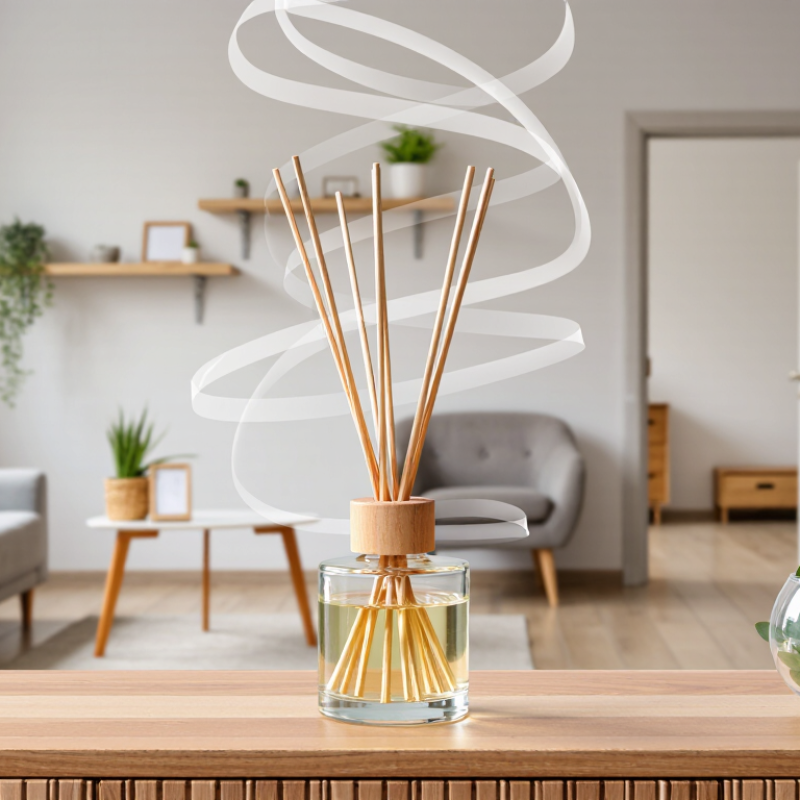
A reed diffuser releases fragrance through evaporation, not heat. Fragrance oil sits in a narrow glass vessel, with porous reeds dipping into the liquid. Tiny channels inside each reed draw oil upward by capillary action. At the exposed tips, volatile fragrance molecules evaporate into the surrounding air. No flame. No fan.

The scent is usually subtle and continuous, though room size, airflow, temperature, reed count, and oil formulation affect its reach. Turning the reeds may briefly strengthen the aroma, but it can also increase evaporation and use the oil faster. The trade-off is easy to miss. Grand View Research estimated the global home-fragrance market at USD 9.2 billion in 2022 and projected 4.8% annual growth from 2023 to 2030 in its Home Fragrance Market report. That figure covers many product types, not reed diffusers alone, so it signals broader interest rather than proving their individual popularity. A diffuser can also scent one corner well and barely reach the next. That unevenness is ordinary, not a flaw in the basic mechanism.

How Fragrance Moves Through the Reeds

Reed diffusers work through capillary action. Fragrance oil rises through narrow channels in porous reeds, then evaporates from the exposed tips and sides. Air currents carry those volatile molecules across a room. The reeds do not actively pump scent; they provide a larger surface for evaporation. Small details matter. More reeds usually mean more exposed area, while warmth and moving air can make the fragrance fade faster. Grand View Research’s 2024 home-fragrance market analysis estimated the global market at US$9.2 billion in 2023. That figure covers home fragrance broadly, not reed diffusers alone, but it reflects strong interest in scenting living spaces.

Rattan reeds have natural channels that help draw up oil; dense or blocked channels can slow the process. Placement changes the experience, too. A diffuser near a doorway may scent the air more noticeably than one tucked behind books. Turning the reeds briefly refreshes the scent, but it also wets their surfaces and can speed up oil use. I used to think more reeds always meant a better result. Not quite. A crowded vessel may smell stronger at first, then run dry sooner. For a steadier effect, adjust the reed count gradually and give the room time to respond. Fragrance perception varies, so there is no perfect setting.

Features That Make Reed Diffusers Popular

Reed diffusers suit people who want a steady scent without lighting a candle or plugging in a device. The reeds draw scented liquid upward and release fragrance gradually. Place them on a stable shelf, away from direct sunlight and open windows. A hallway can smell gently welcoming; a small bedroom may need only a few reeds. No flame is needed. That simple routine is a real advantage for busy households.

Convenience is part of a broader interest in home fragrance. Grand View Research valued the global home fragrance market at USD 9.2 billion in 2023 and forecast 4.8% annual growth from 2024 to 2030. This figure covers more than reed diffusers, so it does not prove their popularity alone. Still, it shows sustained demand for fragrance at home. Diffusers also offer visible, low-effort control: remove a reed to reduce scent, or turn the remaining reeds periodically for a stronger release. But “low maintenance” is not “no maintenance.” Liquid can evaporate, and a strong fragrance may feel overpowering in a compact room. Keep the vessel upright and out of children’s and pets’ reach; even attractive designs need practical placement.

Why Are Reed Diffusers So Popular? — Features That Make Reed Diffusers Popular

Feature Why It Appeals to People Practical Benefit Things to Consider
Flame-free fragrance The scent is released without burning a candle or using an open flame. Convenient for everyday ambient fragrance in suitable indoor spaces. Keep the vessel away from children, pets, and heat sources, and follow the product’s safety instructions.
No electricity required Reed diffusers work passively, without a plug, battery, or powered device. They can be placed in a location with a stable, level surface and no nearby outlet. Fragrance release can vary with room temperature, airflow, and the diffuser formulation.
Simple to use Setup generally involves placing reeds into the fragrance liquid. There are no settings, switches, or regular charging steps. Use the number of reeds recommended for the product; more reeds can increase evaporation.
Continuous scent release The reeds draw liquid upward and expose it to the air, releasing fragrance over time. Provides a steady background scent rather than requiring timed operation. It cannot be switched off instantly; removing the reeds can reduce fragrance release.
Adjustable scent intensity The number of reeds and their arrangement can influence how much fragrance is released. Users can make gradual adjustments to suit the room and personal preference. Turning reeds may temporarily increase scent release and can cause drips; handle them carefully.
Decorative appearance A vessel and upright reeds can function as a small home décor accent. It combines fragrance with a visible decorative element. Choose a stable location where the vessel is unlikely to be knocked over.
Suitable for different rooms Diffusers are available in different sizes and scent profiles for varied indoor settings. A size and placement can be chosen to suit a room’s layout and ventilation. Very large, drafty, or poorly ventilated spaces may affect fragrance perception and product life.
Low-effort upkeep Routine use does not involve lighting, misting, or operating a device. Basic care usually means checking the liquid level and keeping the area clean. Fragrance liquid may damage some finished surfaces, so place the diffuser on a protective tray.

How Reed Diffusers Compare With Other Home Fragrances

Reed diffusers release fragrance gradually, without a flame or an outlet. A few reeds in a glass vessel can scent an entryway while you get ready, rather than waiting for a candle to warm. No flame is needed. Their reach is modest, though: a small diffuser may disappear in a large, open room.

Candles create a warmer ritual and can scent a room more noticeably, but they need supervision and a stable surface. Room sprays offer an instant lift after cooking, yet their effect often fades sooner. Plug-in fragrance devices provide steady output, although they need an outlet and may feel too strong beside a desk or bed. Each format suits a different moment.

With reeds, scent strength depends on the room, airflow, fragrance formula, and number of reeds. Turning reeds can refresh the scent, but may also use up the fragrance faster; follow product directions and protect surfaces from spills. Placement matters more than expected: a diffuser beside a doorway smells different from one tucked behind books. It is easy to misjudge the right strength at first. For gentle, continuous fragrance with little daily attention, reeds are practical; for an immediate burst, a spray may work better. Keep fragrance products away from children and pets, and ventilate the room if the scent feels overpowering.

Why Are Reed Diffusers So Popular? How They Compare With Other Home Fragrances

At a glance: Reed diffusers release fragrance passively, without a flame or electricity. Candles need a flame, plug-in fragrances need power, and room sprays are used as needed. These are general features; individual products may vary.

Factors to Consider When Choosing and Using a Reed Diffuser

Reed diffusers are popular because they scent a room without a flame, plug, or daily routine. Their quiet design suits entryways, bedrooms, and workspaces. The wider market reflects this interest: Grand View Research valued the global home-fragrance market at $9.2 billion in 2022 and projected 4.8% annual growth through 2030. That figure covers many products, not reed diffusers alone, so it is useful context rather than proof of one product’s popularity.

Choose a diffuser for the room, not just the scent. A strong fragrance can feel heavy in a small, closed bedroom, while a larger, ventilated space may need more reeds. Check the container’s stability and the maker’s directions. Place it on a level surface, away from direct sunlight, heaters, and delicate finishes; spilled fragrance oil can stain or damage some materials. Keep it out of reach of children and pets.

Start with fewer reeds. Add more only if the scent feels faint after a day or two. Turning reeds can refresh the fragrance, but it may also speed evaporation. There is no perfect placement: airflow, room size, and personal sensitivity all matter. I would not assume a diffuser needs constant adjustment; sometimes the best test is simply living with it for a while.