Skip to content

10 Best Steel Cable Tray Suppliers in 2026?

Choosing the right Steel Cable Tray supplier in 2026 requires more than comparing prices on a product page. Cable routing affects electrical safety, installation time, maintenance access, and long-term project costs. A weak tray system can bend under load, corrode in humid areas, or create unnecessary work during installation.

This guide reviews ten leading suppliers through practical purchasing criteria. We consider steel grade, coating options, load capacity, tray dimensions, connection design, and manufacturing consistency. We also examine quality documentation, testing practices, delivery reliability, customization support, and after-sales service. These details matter on real sites, where installers handle heavy trays, tight corners, uneven supports, and changing project schedules.

Small details matter.

The evaluation reflects common requirements across commercial buildings, factories, data centers, renewable-energy facilities, and infrastructure projects. However, supplier performance can vary by region, product line, and order size. A manufacturer with strong export experience may not provide the fastest local support. Likewise, an attractive quotation may exclude fittings, fasteners, or protective finishes. That distinction deserves careful attention.

Rather than treating a ranking as permanent, readers should use it as a practical shortlist. Confirm current certifications, production capacity, lead times, warranty terms, and technical drawings before ordering. Site conditions also deserve review, especially exposure to moisture, chemicals, vibration, and unusual cable loads. No supplier is perfect. Even experienced buyers can overlook one specification when deadlines become tight. This article aims to make that decision clearer, more evidence-based, and easier to verify.
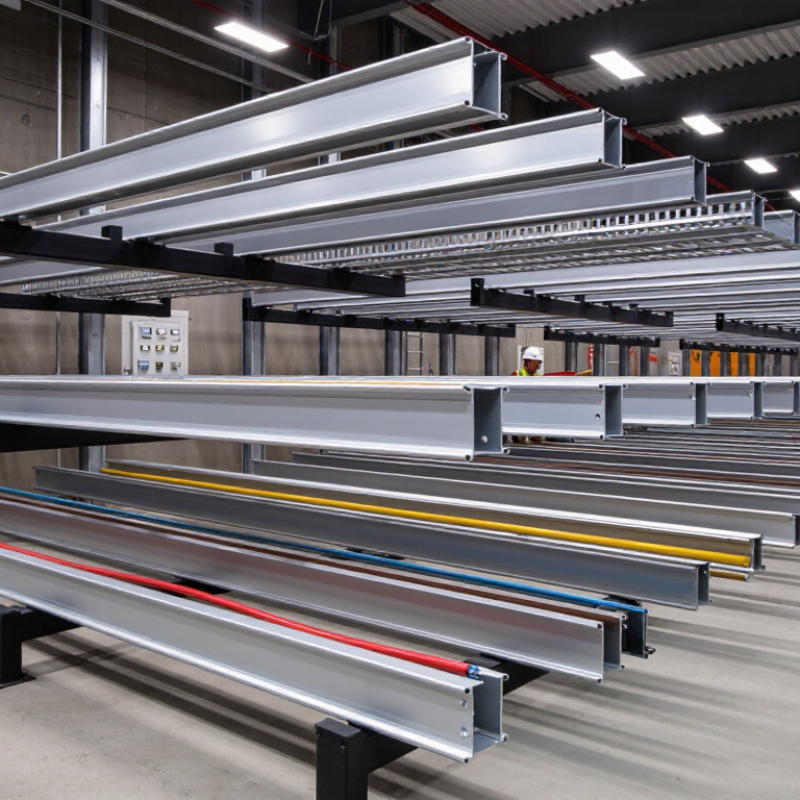
10 Best Steel Cable Tray Suppliers in 2026?

Understanding Steel Cable Tray Systems and Their Applications

Steel cable tray systems provide a practical route for power, control, and communication cables. They are commonly used in factories, commercial buildings, data facilities, tunnels, and renewable-energy sites. Unlike enclosed conduit, trays allow airflow and make inspection easier. They also support faster cable installation and future changes.

The tray style should match the cable environment.

Ladder trays suit heavy power cables and improve ventilation. Perforated trays provide balanced support for mixed cable groups. Solid-bottom trays help protect sensitive cables from falling dust and small debris.

Steel thickness, span distance, and load capacity must be checked together.

A wider tray is not always stronger. It may need extra supports.

Corrosion protection matters near coastal plants, chemical areas, and outdoor equipment. Hot-dip galvanized steel often suits exposed locations, while stainless steel may be needed in aggressive conditions.

Engineers should verify coating details, bonding points, bend radius, and expansion provisions before installation. Correct earthing is essential for metal tray continuity. It should never be assumed from appearance alone.

One design mistake I still see is ignoring maintenance space. A neat drawing can hide a crowded tray.

Reliable suppliers provide tested load data, dimensional drawings, material certificates, and clear installation guidance. Buyers should also compare production consistency, delivery control, and technical support, not only the lowest quotation.

Even experienced teams sometimes underestimate cable growth. Leaving practical spare capacity can prevent expensive reconstruction later.

Key Criteria for Evaluating Steel Cable Tray Suppliers in 2026

Choosing steel cable tray suppliers in 2026 requires more than comparing prices. In field inspections, I look at load ratings, steel thickness, weld consistency, and finish quality. A tray may look strong yet sag after installation. Ask for drawings showing span limits, safe working loads, joint details, and support spacing. Independent test records add confidence, especially for corrosion resistance, coating adhesion, and fire performance. Do not accept vague claims. Request batch numbers and traceable reports.

Material expertise matters when environments change. Galvanized steel can suit ordinary indoor routes, while harsher areas may require a stronger coating or stainless construction. The supplier should explain coating thickness, edge protection, drainage, and fastener compatibility. Inspect sample sections for sharp edges, uneven holes, warped bends, or weak couplers. Small defects become installation delays. They also increase cable damage risks.

Reliable suppliers provide responsive engineering support, accurate lead times, protective packaging, and replacement procedures for damaged parts. Check whether technical staff can review a real route, including bends, vertical drops, expansion points, and earthing continuity. References from comparable projects are useful, but verify them with measurable outcomes. Price still matters. It should not hide thin steel or incomplete accessories. I have missed minor details before, especially around covers and bonding hardware. A written inspection checklist remains essential, even when the supplier seems experienced.

Profiles of the 10 Best Steel Cable Tray Suppliers

The first supplier serves heavy industrial projects and produces hot-dip galvanized steel trays. Its engineers provide load tables, bend-radius guidance, and installation drawings.

The second focuses on commercial buildings, offering perforated trays, covers, and quick-connect fittings. Its catalog is practical, although some dimensions require confirmation.

The third supplies stainless steel systems for humid factories and coastal facilities. Weld quality and surface consistency are key strengths.

The fourth makes lightweight cable trays for data centers. It reduces handling time, but buyers should check deflection under dense cabling.

The fifth specializes in custom fabrication. It can match unusual widths, offsets, and support spacing. Custom work costs more and may extend delivery schedules.

The sixth supplier maintains a broad stock of galvanized ladder trays. This helps contractors replace damaged sections without waiting for production.

The seventh supplies fire-resistant steel systems and documents material performance clearly. Independent test records deserve careful review.

The eighth combines tray production with brackets, clamps, and bonding accessories. This simplifies purchasing and reduces compatibility problems.

The ninth supports infrastructure projects with thick-gauge trays and strong splice plates. Its products suit outdoor routes, though weight can increase installation effort.

The tenth offers regional manufacturing and technical consultation. Shorter transport distances may improve response times, but quality can vary between batches.

During supplier evaluations, I compare coating thickness, steel grade, hole accuracy, and declared load capacity.

I also inspect sample edges for burrs and weak welds. These small details matter.

No supplier is perfect. A reliable choice depends on environment, cable weight, maintenance access, and documented testing.

Comparing Product Quality, Standards, Pricing, and Customization

When comparing the ten best steel cable tray suppliers in 2026, product quality should lead the review. Fortune Business Insights projects the global cable tray market to reach about USD 10.9 billion by 2032. This growth increases supplier choice, but not necessarily manufacturing consistency. Look for documented load tests, weld inspection records, coating thickness results, and traceable steel certificates. Compliance with IEC 61537 or NEMA VE 1 provides a stronger technical baseline. Still, a certificate alone proves little without recent test evidence.

Pricing requires more than comparing dollars per meter. A lower quotation may exclude couplers, covers, bends, freight, or corrosion protection. Steel thickness, tray width, span distance, and finish can change the final cost sharply. Hot-dip galvanizing usually costs more than pre-galvanized steel, but it can offer better protection in exposed environments. The 2024 NFPA research data continues to show that electrical installation failures create serious fire risks, making weak material economies difficult to defend. That point deserves more attention.

Customization separates capable suppliers from simple catalog sellers. Ask whether they can adjust rung spacing, side-rail height, perforation patterns, and support accessories. Request drawings before production. Require sample approval. Reliable suppliers should explain load capacity at the specified support span, not only advertise maximum strength. Factory audits, ISO 9001 procedures, and responsive engineering support improve confidence. My caution is practical: delivery promises often look precise until tooling, coating, or export packaging causes delays. Allow contingency time.

10 Best Steel Cable Tray Suppliers in 2026: Comparing Product Quality, Standards, Pricing, and Customization

Because supplier-specific commercial data is not uniformly published, this chart uses non-branded 2026 market reference ranges for common steel cable tray finishes. Prices are indicative USD per meter and vary by width, thickness, load class, order volume, and accessories.

How to use this benchmark: Compare supplier quotations against the relevant coating or material category, then verify compliance with IEC 61537 or NEMA VE 1, corrosion protection requirements such as ISO 1461 or ASTM A123, quality systems such as ISO 9001, and the supplier’s ability to provide custom widths, bends, covers, supports, and project documentation.

How to Choose the Right Steel Cable Tray Supplier for Your Project

Choosing a steel cable tray supplier starts with your project conditions, not a sales catalog. Check tray width, cable weight, span length, and installation height. A reliable supplier should calculate load capacity clearly. Ask for material grades, coating thickness, welding details, and dimensional tolerances. These details reveal manufacturing discipline.

Site experience matters. In a humid plant, hot-dip galvanized steel may resist corrosion better than a basic painted finish. Indoor electrical rooms may need a different solution. Confirm whether the supplier can provide bends, tees, covers, couplers, and support accessories in matching dimensions. Request a sample section before ordering. A small sample can expose sharp edges, weak welds, or poor fit.

Do not judge suppliers by price alone. Compare production capacity, inspection records, packaging, delivery control, and technical support. Ask how they handle damaged goods or design changes. Their answer shows practical responsibility. I have seen projects delayed because accessories arrived separately from the trays. That mistake seemed minor, but installers lost several days. Check drawings carefully, even when the supplier appears experienced. No supplier is perfect. A transparent supplier admits limitations and suggests workable adjustments. Third-party test reports can add confidence, but verify that the documents match the actual product. Choose the supplier that communicates precisely, documents consistently, and understands your installation environment.

10 Best Steel Cable Tray Suppliers in 2026? – How to Choose the Right Steel Cable Tray Supplier for Your Project
Rank Anonymous Supplier Profile Primary Product Range Steel and Finish Options Typical Tray Widths Typical Load Span Common Compliance References Customization Capability Typical Production Lead Time Minimum Order Flexibility Regional Supply Coverage Best Fit for Evaluation Score
1 Supplier Profile 01
Large-scale industrial manufacturer
Ladder trayPerforated traySolid-bottom trayAccessories Pre-galvanized steel, hot-dip galvanized steel, stainless steel, powder-coated steel 100–1000 mm 1.5–3.0 m standard spans IEC 61537; NEMA VE 1; project-specific specifications High: non-standard bends, covers, fittings and support systems 3–6 weeks for standard items Suitable for partial and full-container orders Multi-region export capability Large infrastructure, energy and industrial projects 9.4/10
2 Supplier Profile 02
Corrosion-resistant systems specialist
Ladder trayMarine trayChemical-duty accessories Hot-dip galvanized steel, stainless steel grades 304 and 316, corrosion-resistant coatings 150–900 mm 1.5–2.4 m standard spans IEC 61537; ISO 12944 coating classification; project corrosion specifications High: material grades, coating systems and fabrication details 4–8 weeks depending on material Medium: custom stainless orders may require batch quantities Strong coverage for coastal and process-industry markets Marine, offshore, wastewater and chemical facilities 9.2/10
3 Supplier Profile 03
Fast-delivery commercial supplier
Perforated trayWire mesh trayCovers Pre-galvanized steel, electro-galvanized steel, powder-coated steel 50–600 mm 1.2–2.0 m standard spans IEC 61537; applicable national installation codes Medium: standard fittings and limited dimensional changes 1–3 weeks for stocked products Low-volume and mixed-size orders accepted Strong domestic and regional distribution Commercial buildings, data rooms and retrofit work 8.9/10
4 Supplier Profile 04
Heavy-duty power-sector manufacturer
Heavy-duty ladder trayPower cable trayLong-span systems Hot-dip galvanized steel, painted structural steel, stainless steel 200–1200 mm 2.4–6.0 m engineered spans IEC 61537; NEMA VE 1; structural load calculations High: reinforced side rails, long-span designs and engineered supports 5–10 weeks Medium to low for engineered configurations International project-based supply Power plants, substations and heavy industrial facilities 8.8/10
5 Supplier Profile 05
Modular installation specialist
Wire mesh trayPerforated trayQuick-connect accessories Electro-galvanized steel, pre-galvanized steel, powder-coated steel 50–600 mm 1.2–2.0 m standard spans IEC 61537; electrical installation standards applicable to the destination market Medium to high: modular fittings and on-site adjustment options 2–4 weeks for standard configurations Suitable for small and medium projects Regional distribution with selected export service Data centers, offices and high-density communication cabling 8.6/10
6 Supplier Profile 06
Architectural and commercial systems supplier
Solid-bottom trayPerforated trayDecorative covers Powder-coated steel, pre-galvanized steel, stainless steel 100–500 mm 1.2–2.0 m standard spans IEC 61537; coating and indoor installation specifications High for appearance, color and visible installation requirements 3–7 weeks Medium: color-matched orders may require larger batches Good coverage in commercial construction markets Airports, offices, hospitals and public buildings 8.4/10
7 Supplier Profile 07
Cost-focused volume supplier
Ladder trayPerforated trayBasic fittings Pre-galvanized steel, hot-dip galvanized steel, painted steel 100–800 mm 1.5–3.0 m standard spans IEC 61537; buyer-specified inspection requirements Medium: standard variations and production tooling available 4–7 weeks Competitive for container-load and repeat orders Primarily regional with export by project Warehouse, factory and cost-sensitive infrastructure projects 8.2/10
8 Supplier Profile 08
OEM and private-label manufacturer
Ladder trayPerforated trayWire mesh trayOEM parts Pre-galvanized steel, hot-dip galvanized steel, stainless steel, powder coating 100–1000 mm 1.5–3.0 m standard spans IEC 61537; customer drawings and inspection plans High: drawings, packaging, labeling and product configurations 4–8 weeks after drawing approval Medium: tooling and custom packaging may affect minimum quantities Export-oriented supply model Distributors, system integrators and private-label programs 8.1/10
9 Supplier Profile 09
Regional stock-and-service distributor
Standard trayCoversSupportsFasteners Pre-galvanized steel, electro-galvanized steel, limited stainless steel 50–600 mm 1.2–2.0 m standard spans Product-dependent compliance documentation Limited: mainly standard products and cut-to-length services Same day to 2 weeks for stocked items Excellent for small orders and urgent replacements Strong local or national service area Maintenance, repairs and short-duration projects 7.9/10
10 Supplier Profile 10
Engineering-led project supplier
Engineered cable traySeismic supportsCustom accessories Hot-dip galvanized steel, stainless steel, high-performance protective coatings 100–1200 mm 1.5–4.5 m, subject to engineering review IEC 61537; seismic, fire and project-specific engineering requirements Very high: calculations, drawings, support layouts and special fittings 6–12 weeks for engineered packages Usually requires project-based quantities Project delivery in selected international markets Complex industrial, transportation and mission-critical facilities 7.8/10

Comparison basis: product breadth, material and coating options, load-span capability, standards documentation, customization, delivery flexibility, order-size suitability and project support. Confirm current certifications, load tables, coating thickness, testing records, lead times and commercial terms directly before purchase.