Skip to content

Who Are the Top Marine Induction Cooker Suppliers in China?

Choosing a Marine Induction Cooker supplier in China involves more than comparing prices or product photos. Marine kitchens face limited space, frequent movement, and demanding daily use. A cooker must fit its installation area, match the vessel’s electrical system, and remain practical for the crew. Small details matter: control placement, glass-panel thickness, mounting points, and access for cleaning.

This article explores what distinguishes leading Chinese suppliers, without treating a sales ranking as proof of quality. Buyers can compare manufacturing experience, product documentation, customization options, inspection processes, and after-sales support. Ask how each model is tested, what technical records are available, and whether sample units can be assessed before a larger order. A brochure rarely tells the whole story. Real operating conditions can expose weak controls or awkward servicing access.

Supplier claims deserve careful review. Request clear specifications for power input, dimensions, installation requirements, and warranty terms, then compare them against the vessel’s needs. Check whether the supplier communicates consistently and can explain its quality-control process. Not every model suits every boat. Even a capable manufacturer may offer a product that needs adaptation, and that should be discussed early. The goal is not simply to find a low-cost cooker, but to identify a dependable partner and a Marine Induction Cooker that performs predictably in a marine galley.
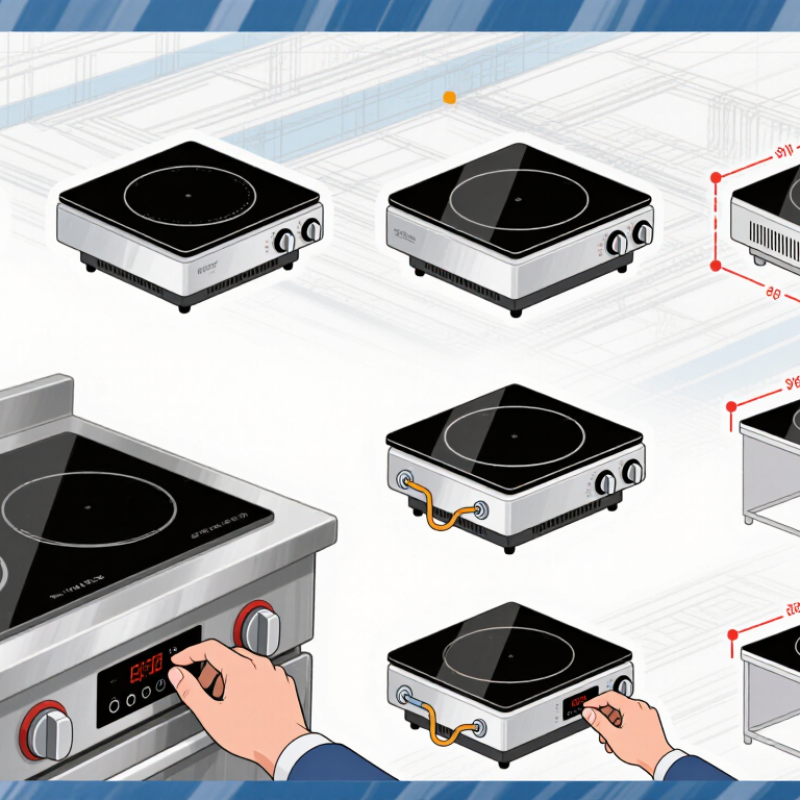
Who Are the Top Marine Induction Cooker Suppliers in China?

What Defines a Marine Induction Cooker?

A marine induction cooker is an electric appliance designed for the constraints of life aboard a vessel. It heats compatible cookware through an electromagnetic field instead of using an exposed burner. This can reduce hot-surface exposure and makes the glass surface easy to wipe clean. Still, glass needs careful handling.

Marine use changes the design priorities. The cooktop should fit securely into the counter and remain stable as the vessel moves. Controls need to be readable in a compact galley, where wet hands and dim light are common. Cookware detection, overheat protection, and residual-heat indicators are useful features. They help, but they do not replace supervision.

Electrical compatibility is central. Check the vessel’s supply, inverter capacity, and the cooker’s rated power before installation. A powerful unit may work well at the dock but strain a limited onboard system. At sea, not always. Ventilation, clearance, and service access also deserve attention. No layout is perfect. A marine induction cooker is defined not only by how it heats, but by how reliably it fits a vessel’s space, movement, and power limits.

How to Assess China-Based Marine Cooker Suppliers

When assessing China-based marine cooker suppliers, look beyond catalogue photos and quoted prices. Ask for written specifications covering input voltage, rated power, cut-out dimensions, ventilation clearance, and protection against moisture and vibration. Compare these details with your vessel’s electrical system and galley layout. A neat brochure is not proof of reliable production. Request inspection records, component traceability, and test results for the exact model you plan to buy.

Tips: Ask for a sample unit or live demonstration. Check that controls respond consistently, the cooking surface heats evenly, and the housing has no sharp edges. Confirm spare-part availability and response times in writing. Small details matter.

Evaluate how the supplier handles technical questions. Clear, specific answers about installation, maintenance, and operating limits suggest stronger product knowledge. Ask who performs quality checks and how defects are recorded. If possible, speak with a previous commercial buyer and verify that the cooker has worked in similar onboard conditions. Do not rely on a single reference. Supplier claims can sound convincing, yet documents may be incomplete or hard to compare. That is a reason to pause, clarify, and keep a record of agreed specifications before placing an order.

Leading Marine Induction Cooker Suppliers in China

Leading marine induction cooker suppliers in China support shipyards, galley contractors, and vessel operators with equipment designed for compact kitchens. A capable supplier understands more than heating power. Salt-laden air, vibration, limited ventilation, and changing onboard loads all affect daily performance. Ask how each model handles the vessel’s power supply and installation limits. Details matter.

When comparing suppliers, request clear technical documents, relevant test reports, wiring diagrams, and maintenance instructions. Check whether the cooking surface, control panel, and cooling system suit frequent use in a working galley. Ask about spare parts, fault diagnosis, and response times across your operating regions. A quick answer helps. So does evidence. A glossy brochure alone cannot show how a unit behaves after hours of service.

Factory discussions can reveal useful details: production checks, component sourcing, and procedures for managing design changes. If possible, inspect a sample under a realistic load and observe temperature control, noise, and heat near surrounding cabinets. Not every supplier will have identical testing resources, and that can make comparisons awkward. Record what is verified, what remains uncertain, and who will support the equipment after installation. Small gaps in documentation may seem harmless, until a cooktop needs attention at sea.

Comparing Supplier Products and Manufacturing Capabilities

Comparing Chinese marine induction cooker suppliers requires more than checking rated power. Look at usable power settings, cookware detection, control response, and performance at low supply voltage. In a galley, a cooktop may face salt mist, vibration, heat, and limited ventilation. That matters offshore. Ask for test conditions, not just a pass certificate.

The U.S. Department of Energy’s Energy Saver guidance reports roughly 85% energy transfer for induction cooking, versus about 32% for gas cooking. This is a useful efficiency benchmark, not a guarantee of onboard performance. A supplier should explain how its unit manages heat around the inverter and coil during sustained use. Request thermal-cycle and vibration-test records, plus details on sealing, corrosion checks, and electromagnetic compatibility testing against relevant marine standards.

Manufacturing capability is another dividing line. Ask whether the supplier controls coil winding, circuit-board assembly, final inspection, and traceability in-house, or relies heavily on subcontractors. See the actual line: Are glass panels checked for edge chips? Are finished units run under load before packing? Not every factory proves it. A polished brochure is not evidence; I would still request batch records and sample-test results. Custom voltage or mounting options can be valuable, but rushed customization may weaken consistency. That part deserves scrutiny.

Who Are the Top Marine Induction Cooker Suppliers in China? - Comparing Supplier Products and Manufacturing Capabilities
Supplier Profile Typical Product Offering Power and Installation Considerations Manufacturing Capabilities to Assess Marine-Specific Checks Best Fit
Marine-appliance specialist Induction cooktops designed or configured for vessel galleys; product formats and control layouts vary by model. Confirm the exact AC input voltage, frequency, rated power, and installation dimensions for each model. Check compatibility with the vessel’s shore-power or inverter system. Review model-specific production records, incoming-component controls, final electrical testing, and capacity for repeat orders. Request evidence for applicable electrical-safety and electromagnetic-compatibility requirements in the destination market. Verify mounting, ventilation, spill exposure, and corrosion-related provisions. Buyers seeking marine-oriented product design and support.
Household-appliance OEM with marine options Standard induction cooktops that may be adapted with alternate controls, finishes, dimensions, or mounting arrangements. Check whether the proposed unit is suitable for the vessel’s electrical supply and whether its installation clearances are achievable in the galley. Assess tooling flexibility, customization limits, component traceability, production consistency, and the supplier’s process for approving design changes. Do not assume a household model is marine-ready. Verify the suitability of its enclosure, mounting method, wiring arrangement, and operating instructions for the intended installation. Projects where a standard appliance platform can meet the vessel’s requirements after documented review.
Induction-module integrator Induction heating electronics or modules supplied for integration into a separately designed cooktop or galley assembly. Confirm the module’s input requirements, output limits, cooling needs, control interface, and required protective devices with the system designer. Review module testing, technical documentation, interface support, component lifecycle planning, and cooperation during system validation. Evaluate the completed appliance—not only the module—for electrical safety, electromagnetic compatibility, thermal performance, and installation suitability. Equipment builders with in-house engineering and appliance-level testing capability.
Custom project manufacturer Project-specific cooktop or galley equipment developed around an agreed footprint, control scheme, or vessel requirement. Define the vessel supply, rated power, installation envelope, operating conditions, and acceptance criteria before design approval. Check engineering resources, prototype process, design-change control, production tooling, quality documentation, and ability to maintain the approved configuration. Agree how testing, documentation, installation instructions, and applicable market requirements will be handled before placing a production order. New-build or retrofit projects with non-standard layouts or defined integration requirements.
Export-focused appliance manufacturer Induction cooktops configured for different destination-market electrical and documentation requirements; model availability varies. Match the exact model’s voltage, frequency, plug or wiring arrangement, and power demand to the vessel’s electrical system. Verify export documentation, batch identification, inspection records, packaging controls, and the process for handling warranty or quality issues. Request model-specific test reports and confirm that certificates or declarations apply to the exact product configuration being purchased. Buyers prioritizing export documentation and repeatable international shipments.
Comparison note: These are supplier and manufacturing profiles, not named or ranked companies. Product specifications, test results, certifications, and marine suitability must be confirmed for the exact model and intended vessel installation. Induction cooking also requires cookware compatible with induction heating.

How to Select a Supplier for Marine Applications

For marine applications, judge a supplier by evidence, not a polished catalogue. Ask for test reports covering vibration, electromagnetic compatibility, heat protection, and resistance to salt-laden air. Confirm that the cooker’s approvals match the vessel’s class and intended installation; a general household certificate may not be enough. Ask for proof. Check the specified voltage and frequency against the galley supply, including any expected fluctuations. Salt gets everywhere.

A useful supplier will explain installation clearances, ventilation needs, and how the unit behaves under repeated high-load use. Request details on spare-part availability, repair response times, and warranty coverage for marine service. If possible, speak with operators of similar vessels and ask what failed, not only what worked. A datasheet can look convincing; it is not the galley. Compare the supplier’s written answers with the actual installation drawings and maintenance plan. Some details may still be uncertain before a vessel trial, so record open questions rather than treating assumptions as specifications. Reliable support matters when a cooker stops working far from shore.