Top 10 Industrial Automation Lens Types for Global Buyers
Choosing the right Industrial Automation Lens can determine whether a vision system reads every barcode or misses critical defects. Global buyers must evaluate more than focal length, price, and availability. Sensor size, working distance, field of view, resolution, distortion, and environmental protection all affect real production results.
This guide examines ten common lens types used in automated inspection, robotics, packaging, assembly, and measurement. Fixed-focal-length lenses suit stable inspection stations, while zoom lenses support changing viewing distances. Telecentric lenses help control dimensional errors. Macro lenses reveal scratches on small components. Wide-angle options cover larger areas, but they may introduce stronger edge distortion.
Real factory conditions matter. A lens near a stamping press faces vibration, oil mist, and uneven illumination. A warehouse scanner may need a wide field of view and reliable autofocus. C-mount compatibility, 1-inch sensor coverage, and sufficient light transmission should also be verified before purchase. Small differences can become expensive downtime.
No ranking fits every factory. A technically impressive lens may perform poorly with weak lighting or an unsuitable camera. That is an easy mistake. Buyers should test sample images at the actual working distance, not rely only on catalog charts. Supplier documentation, calibration support, warranty terms, and regional service also deserve careful review. This article offers a practical comparison, while acknowledging that application testing remains the strongest evidence.
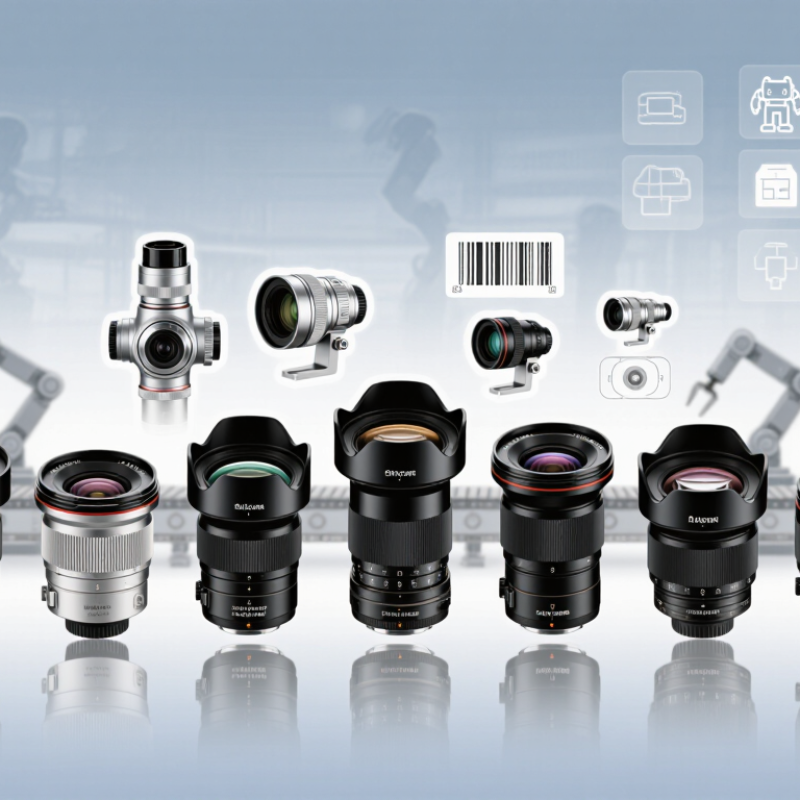
Industrial Automation Lenses: Purpose, Structure, and Core Selection Factors
Top 10 Industrial Automation Lens Types for Global Buyers
Industrial automation lenses turn machine vision sensors into reliable inspection tools. Their purpose is simple: produce a sharp, stable image under demanding factory conditions. Fixed-focal lenses suit consistent distances, while macro lenses reveal small defects on nearby parts. Telecentric lenses reduce perspective errors when measuring edges, holes, or molded components. Wide-angle and fisheye designs cover larger areas, but they may introduce distortion.
Lens structure directly affects performance. Key elements include optical groups, aperture blades, a mechanical barrel, a mounting interface, and protective housing. Focal length controls viewing angle and working distance. Aperture affects light intake and depth of field. The sensor format must match the lens image circle. A mismatch can create dark corners or wasted resolution. Line-scan lenses require especially careful alignment across the inspection width.
Selection should begin with the object, not the catalog label. Measure the working distance, field of view, object speed, lighting angle, and smallest defect. Check resolution using real samples, not only specifications. Distortion, chromatic effects, vibration, dust, and temperature changes also deserve attention. In factory trials, a lens that looks excellent on a static chart can perform poorly beside a vibrating conveyor. Details matter. That choice can fail. I have found that buyers sometimes overvalue megapixels and undervalue mounting stability. A modest lens with secure calibration may deliver more dependable results than an advanced lens used outside its optical limits.
Ten Essential Lens Types Used in Industrial Automation Systems
Industrial automation increasingly depends on reliable vision. The International Federation of Robotics reported 541,302 industrial robot installations worldwide in 2023. Each system needs a lens matched to its inspection distance, lighting, and target detail. Ten essential lens types support these tasks: fixed focal-length, zoom, telecentric, macro, wide-angle, fisheye, line-scan, ultraviolet, short-wave infrared, and thermal infrared lenses.
Fixed focal-length lenses offer stable imaging on production lines. Zoom lenses help engineers adjust framing during setup. Telecentric lenses reduce measurement errors caused by object distance. Macro lenses reveal scratches, threads, and tiny surface defects. Wide-angle lenses cover larger work areas, while fisheye lenses capture extreme fields of view. However, distortion can become severe near the edges. Line-scan lenses suit continuous webs, films, and metal coils. Ultraviolet, short-wave infrared, and thermal lenses expose markings, moisture, heat, or material differences invisible to standard cameras. The choice is not always obvious. I have seen broad coverage selected when measurement accuracy mattered more.
Tips: Match the lens to the sensor size before installation. Check working distance, illumination angle, and required resolution together. The Global Shutter and CMOS image-sensor market data from the International Data Corporation shows rapid machine-vision adoption, but faster cameras cannot repair poor optics. Leave space for focus adjustment. Test reflective parts under production lighting, not only in a clean laboratory. A practical trial often reveals overlooked glare, vibration, or edge blur.
Top 10 Industrial Automation Lens Types for Global Buyers
Ten essential lens types used in industrial automation systems, shown by representative focal-length ranges commonly encountered in machine-vision and inspection configurations.
Short focal lengths generally provide wider coverage, while longer focal lengths support narrower fields of view and greater working distances. Actual lens selection depends on sensor size, object distance, resolution, lighting, and inspection accuracy.
Optical Performance, Compatibility, and Environmental Requirements
Top 10 Industrial Automation Lens Types for Global Buyers
Industrial automation projects commonly use fixed-focal-length, varifocal, telecentric, macro, wide-angle, fisheye, line-scan, short-wave infrared, ultraviolet, and liquid lenses. Each type serves a different inspection problem. Fixed lenses provide stable imaging on production lines. Telecentric lenses reduce measurement errors caused by perspective. Macro lenses reveal small defects, such as scratches on a metal connector.
Optical performance must match the sensor, working distance, and field of view. Check the lens mount, image circle, resolution, and pixel size before purchasing. A lens with high resolution may still fail if its spectral range is unsuitable. Varifocal lenses offer flexibility, but their focus can shift during vibration. Line-scan systems require uniform illumination and accurate synchronization. Wide-angle and fisheye lenses cover large areas, yet edge distortion needs correction.
Environmental requirements are often underestimated. In a dusty workshop, sealed housings and protective windows matter. Food-processing areas may require corrosion-resistant materials and frequent cleaning. Outdoor systems face rain, temperature changes, and glare. Thermal expansion can alter focus. I have seen reliable lenses perform poorly because condensation was ignored. A perfect match is rare. Leave room for testing. Confirm connector clearance, cable routing, and mounting stiffness with the actual machine, not only a datasheet.
How Global Buyers Compare and Select the Right Lens Type
Global buyers should compare industrial lenses against the inspection task, not catalog popularity. The International Federation of Robotics reported 541,302 industrial robots installed worldwide in 2023. That scale increases demand for stable vision at faster production speeds.
Fixed-focal lenses suit repeatable distances and simple inspection zones.
Telecentric lenses reduce measurement errors when object height changes.
Macro lenses reveal small defects on connectors, seals, and machined edges.
Wide-angle lenses cover large areas, but they may introduce distortion near the frame.
Start with sensor size, working distance, field of view, and required resolution. Then check aperture, wavelength compatibility, distortion, and environmental sealing. Do not choose by focal length alone.
A line-scan system needs a lens designed for continuous web inspection, while ultraviolet or short-wave infrared work requires suitable optical materials and coatings. Machine vision market studies from MarketsandMarkets identify inspection and quality control as major growth applications, but market forecasts cannot replace a factory trial.
A neat spreadsheet can still mislead. Test the lens with the real sensor, lighting angle, vibration, and surface finish.
In one practical comparison, a cheaper lens may produce acceptable center sharpness but blur corners, forcing software compensation. That trade-off is easy to overlook. Buyers should document edge detail, exposure stability, mounting tolerance, and replacement availability before approving a global specification.
Common Industrial Applications and Purchasing Considerations
Top 10 Industrial Automation Lens Types for Global Buyers
Industrial automation lenses support inspection, measurement, guidance, and robotic handling across many factories. Fixed focal length lenses suit stable conveyor stations with known working distances. Telecentric lenses reduce perspective errors during precision measurement. Macro lenses reveal small defects on connectors, seals, and machined edges. Zoom lenses help engineers test several fields of view before finalizing equipment.
Other useful types include wide-angle lenses for large assemblies, fisheye lenses for broad area monitoring, and line-scan lenses for continuous webs. Infrared-compatible lenses serve thermal or near-infrared inspection tasks. High-speed lenses help capture moving parts under short exposure times. Liquid lens systems can change focus electronically. Each type has limits.
Match the lens to sensor size, pixel pitch, working distance, and lighting geometry. A lens may appear sharp at the center but lose detail near the corners. Check distortion, depth of field, transmission range, and mounting stability. Dust, vibration, heat, and cleaning chemicals can shorten service life. Environmental sealing matters.
Field experience shows that purchasing teams often compare only focal length and price. That approach creates expensive rework. Ask for sample images from the actual production distance. Test reflective metal, dark rubber, and textured surfaces. Confirm calibration requirements with the vision engineer. A wider view is not always better. Sometimes it hides the defect. No lens fits every station perfectly, and real production tests can expose assumptions that specifications miss.