Outdoor recreation is expanding, and tents remain essential equipment for camping, festivals, expeditions, and emergency field operations. The Outdoor Industry Association reported 175.8 million American outdoor participants in 2023. That figure shows strong consumer demand, but it does not explain every international purchasing decision.
Grand View Research identifies camping equipment as a growing global market. Its analysis points to rising interest in mobile travel, nature-based tourism, and lightweight equipment. Meanwhile, the European Outdoor Group continues to highlight product durability, responsible sourcing, and technical performance as important industry concerns. These trends make China an influential manufacturing base for buyers seeking scalable Outdoor Tent production.
China offers broad manufacturing capabilities. Suppliers can provide family camping tents, rooftop tents, military-style shelters, inflatable structures, and compact backpacking models. Some factories specialize in high-volume orders. Others focus on custom fabrics, waterproof coatings, aluminum poles, or private-label development.
The differences are significant.
A strong catalog is not enough. Buyers should examine fabric denier, hydrostatic head ratings, seam sealing, pole materials, fire-retardant claims, packaging tests, and quality-control records. Factory audits and sample inspections remain valuable, especially when products will cross several markets.
This guide reviews China’s top 10 Outdoor Tent manufacturers for global buyers. It considers production experience, customization, certifications, export capability, product range, and communication reliability. Rankings are never perfect. A manufacturer excellent for a 10,000-unit order may disappoint a small boutique brand. Some supplier information also changes quickly. Buyers should verify current factory capacity, testing documents, lead times, and after-sales support before signing contracts.
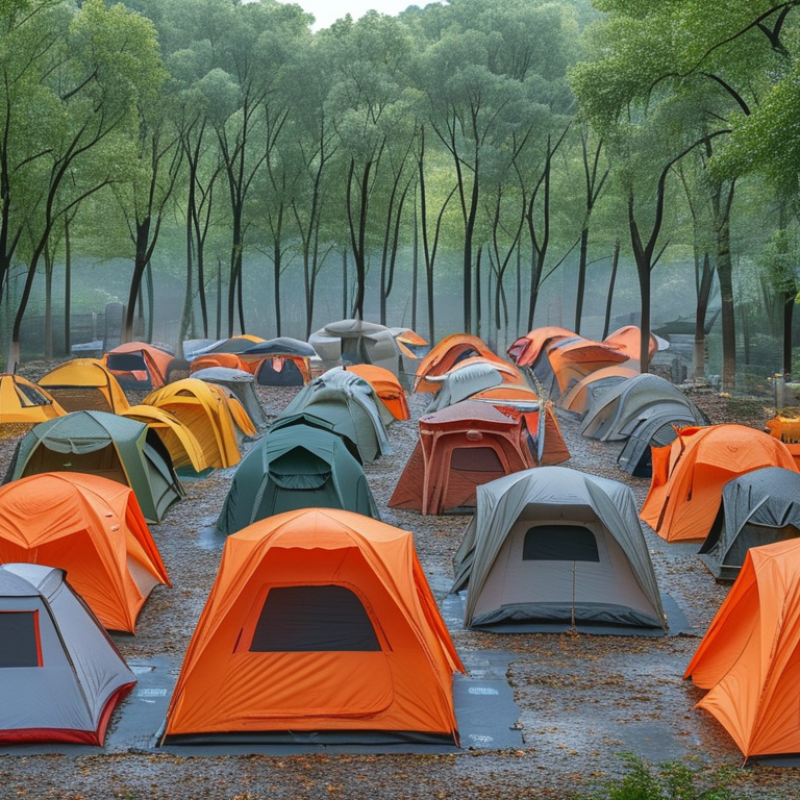
China’s outdoor tent manufacturing industry has developed from basic sewing workshops into a broad, export-focused supply network. For global buyers comparing the top ten manufacturers, production capability matters more than attractive catalog images. Many factories now manage fabric cutting, stitching, frame assembly, waterproofing, and final packing under one roof. This reduces delays and improves communication between departments.
Manufacturers commonly produce camping tents, family shelters, event structures, trekking models, and customized commercial units. Polyester, Oxford fabric, aluminum poles, steel frames, zippers, and reinforced webbing are widely used. Experienced factories check seam strength, water resistance, UV performance, ventilation, and packed dimensions. They may also provide sample development, inspection reports, carton testing, and production photographs. Small details matter. A poorly sealed corner can cause leakage during heavy rain.
However, the industry is not perfectly consistent. Some suppliers offer strong technical support, while others depend heavily on subcontractors. A low quotation may hide thinner fabric, weaker poles, or limited quality control. Buyers should review material specifications, factory capacity, testing records, and production samples before placing large orders. Clear drawings and measurable requirements prevent avoidable disputes. Compliance documentation also deserves careful checking for the destination market. Even reliable factories can make mistakes when timelines become tight, especially during peak seasons. Regular inspections remain useful. China’s manufacturing strength is real, but careful verification still separates dependable production from optimistic promises.
A company-neutral comparison of the main outdoor tent manufacturing segments and buyer evaluation criteria in China.
| No. | Manufacturing Focus | Typical Outdoor Tent Products | Common Materials | Key Construction Features | Recommended Buyer Checks |
|---|---|---|---|---|---|
| 1 | Family Camping Tents | Dome tents, tunnel tents, cabin tents and multi-room camping tents | Polyester or nylon flysheet; polyethylene or polyester floor; fiberglass, aluminum or steel poles | Rainfly, taped seams, ventilation panels, storage pockets and packed carry bag | Waterproof rating, seam construction, pole strength, packed size and replacement-part availability |
| 2 | Backpacking and Lightweight Tents | One-person, two-person and four-season trekking tents | Coated nylon or polyester; aluminum alloy poles; lightweight mesh and webbing | Freestanding or semi-freestanding structure, guy points, compact pole sections and reduced fabric weight | Total packed weight, hydrostatic-head test method, pole alloy, abrasion resistance and repairability |
| 3 | Glamping and Luxury Tents | Safari tents, bell tents, yurt-style tents and canvas lodge tents | Cotton canvas, polycotton, PVC-coated fabric, galvanized steel or powder-coated frames | Large interior volume, reinforced corners, heavy-duty zippers, detachable floors and framed entrances | Fabric shrinkage, mildew treatment, fire-retardant requirements, frame corrosion protection and installation method |
| 4 | Event and Marquee Tents | Clear-span structures, pagoda tents, pole tents and wedding marquees | PVC-coated polyester, polyester roofing fabric, aluminum or galvanized steel frames | Modular bays, ballast systems, removable walls, rain gutters and reinforced attachment points | Wind-load documentation, flame-retardancy certification, anchoring rules, drainage and local event regulations |
| 5 | Military, Emergency and Relief Tents | Field shelters, medical tents, command tents and temporary accommodation units | Heavy-duty polyester or polycotton canvas, PVC flooring, steel or aluminum frames | Rapid deployment, reinforced seams, blackout options, modular partitions and high-use door systems | Fire and smoke performance, sanitation requirements, load capacity, deployment time and spare components |
| 6 | Industrial and Warehouse Structures | Temporary warehouses, storage shelters, maintenance covers and logistics buildings | PVC-coated polyester membrane, aluminum alloy profiles and galvanized steel connectors | Large clear spans, tensioned membrane, sliding or roll-up doors and modular expansion capability | Structural calculations, snow and wind loads, foundation requirements, membrane warranty and installation supervision |
| 7 | Inflatable and Air-Supported Tents | Inflatable camping tents, exhibition shelters and emergency air-beam structures | Coated polyester, PVC-coated fabric, TPU air tubes and high-strength valves | Air beams or continuous air chambers, electric pump compatibility, pressure-retention seams and repair kits | Air-leak testing, pump voltage, noise level, inflation time, pressure requirements and valve quality |
| 8 | Beach, Shade and Recreation Tents | Beach shelters, sun canopies, pop-up gazebos and outdoor shade structures | UV-treated polyester, oxford fabric, fiberglass, steel or aluminum frames | Fast setup, UV-resistant fabric, sand pockets, ground stakes and adjustable shade panels | UV-performance claims, frame stability, corrosion resistance, anchoring accessories and folding mechanism durability |
| 9 | Roof, Vehicle and Overland Tents | Roof-top tents, vehicle awnings, truck tents and expedition shelters | Coated polyester or polycotton, aluminum honeycomb panels, aluminum poles and stainless-steel hardware | Fold-out or pop-up roof system, ladder assembly, mattress platform, waterproof cover and vehicle mounting rails | Dynamic and static load limits, vehicle compatibility, mounting hardware, ladder rating and closure security |
| 10 | Custom OEM and ODM Tents | Private-label camping tents, branded event shelters and customized technical structures | Material selection based on design brief, including coated fabrics, canvas, mesh, aluminum and steel | Custom dimensions, color matching, printed graphics, packaging design, prototype development and tooling | Prototype approval, bill of materials, color standards, inspection plan, packaging tests and intellectual-property controls |