Skip to content

What Are the Top 10 Types of Garden Canopies?

A Garden Canopy can turn a bright patio into a cooler place for lunch, reading, or play. But the right choice depends on more than appearance. Wind exposure, available space, setup time, and the type of shade you need all matter. A freestanding gazebo may suit a lawn, while a retractable awning can work better beside a house. Small details count. Check the frame, fabric, anchoring method, and care instructions before choosing.

Grand View Research estimated the global outdoor furniture market at USD 50.4 billion in 2023 and projected continued growth through 2030. That report covers outdoor furniture broadly; it does not rank garden canopy types. The distinction matters: market growth is not proof that one canopy design suits every garden. This guide compares ten common options by structure, practical use, and trade-offs, so readers can match shade to their space rather than follow a trend.

A dependable guide should also rely on verifiable expertise. No source material was provided here, and I cannot verify a published Garden Canopy specialist’s exact quotation. I won’t invent one or attribute a made-up line to a real person. Instead, the comparisons will focus on checkable product features and realistic use cases—while recognizing that even a well-chosen canopy may need adjustment when the weather changes.
What Are the Top 10 Types of Garden Canopies?

How Garden Canopies Are Defined and Classified

What Are the Top 10 Types of Garden Canopies?

How Garden Canopies Are Defined and Classified

A garden canopy is an overhead cover that creates shade or shelter in an outdoor space. It may stand on its own, attach to a wall, or stretch between supports. Classification starts with structure: pop-up frames suit temporary use, while wall-mounted awnings shade patios without occupying floor space. Pergola-style covers use open or retractable roofs. Shade sails rely on tensioned fabric and anchor points. The labels can overlap. A pergola with a fabric roof, for example, may fit more than one category.

Roof material offers another useful distinction: woven fabric, coated textile, polycarbonate panels, metal, or natural thatch. These affect light, rain protection, upkeep, and how a space feels beneath the cover.

The Outdoor Foundation’s 2023 Outdoor Participation Trends Report estimated that 168.1 million Americans took part in outdoor recreation in 2022. That broad figure does not measure canopy demand, but it shows the scale of outdoor use. Houzz’s 2024 U.S. Houzz & Home Study reported a $2,000 median spend on outdoor projects in 2023; a canopy is only one possible project.

Before choosing a type, note the ground surface, wind exposure, and where rainwater will drain. Small details matter. Classification charts rarely show a canopy flapping beside a dining table.

That is worth considering.

Freestanding Canopies: Gazebos, Pergolas, Pavilions, and Garden Umbrellas

Freestanding canopies create shade without attaching structures to a house. A gazebo has a roof and usually open sides, making it useful for a dining table or a sheltered garden seat. A pergola uses beams and slats, so it offers filtered light rather than full rain protection. A pavilion has a solid roof and a more open footprint; it suits larger gatherings but needs more space. Garden umbrellas are the most flexible option. Move one as the sun shifts, though its shade area is limited.

The American Society of Landscape Architects’ 2024 residential trends survey identified outdoor living spaces among the leading landscape features. That finding supports planning shade as part of the whole garden, not as an afterthought. Match the canopy to the task: choose a gazebo for a defined retreat, a pergola for dappled light, a pavilion for broad coverage, or an umbrella for quick, adjustable shade. Check the footprint, wind exposure, drainage, and anchoring before buying. A beautiful canopy can still feel awkward if it blocks a path.

Tips: Mark the proposed footprint with string and test it at midday. Leave room to pull out chairs. Check the canopy fabric’s UV rating and care instructions; fading and mildew are easy to underestimate. A freestanding structure also needs sound anchoring, especially on exposed lawns. One practical detail people miss: shade moves.

Freestanding Garden Canopies: Example Covered Footprint

A comparison of representative sizes for gazebos, pergolas, pavilions, and garden umbrellas.

These are illustrative footprint calculations, not market averages: a 10 × 10 ft gazebo, a 10 × 12 ft pergola, a 12 × 16 ft pavilion, and a 9 ft diameter umbrella. The umbrella area is approximate; pergola roofs are often open-lattice and may not provide full rain protection.

Portable Canopies: Pop-Up Shelters, Canopy Tents, and Shade Sails

Portable garden canopies offer quick shade without permanent construction. Pop-up shelters use folding frames and fabric tops, making them useful for patios, picnics, and temporary work areas. A level patch of ground makes setup easier. Practice at home. Even a simple frame can snag if opened carelessly, so keep fingers clear of hinges and lock each joint fully.

Canopy tents usually have a roof and fabric side panels, offering more shelter from breezes and light rain than an open pop-up. Their enclosed sides can also trap heat, though. Look for mesh panels or adjustable openings, and secure every leg with suitable weights or stakes. Check the frame’s instructions for safe use in wind; a canopy is not a storm shelter.

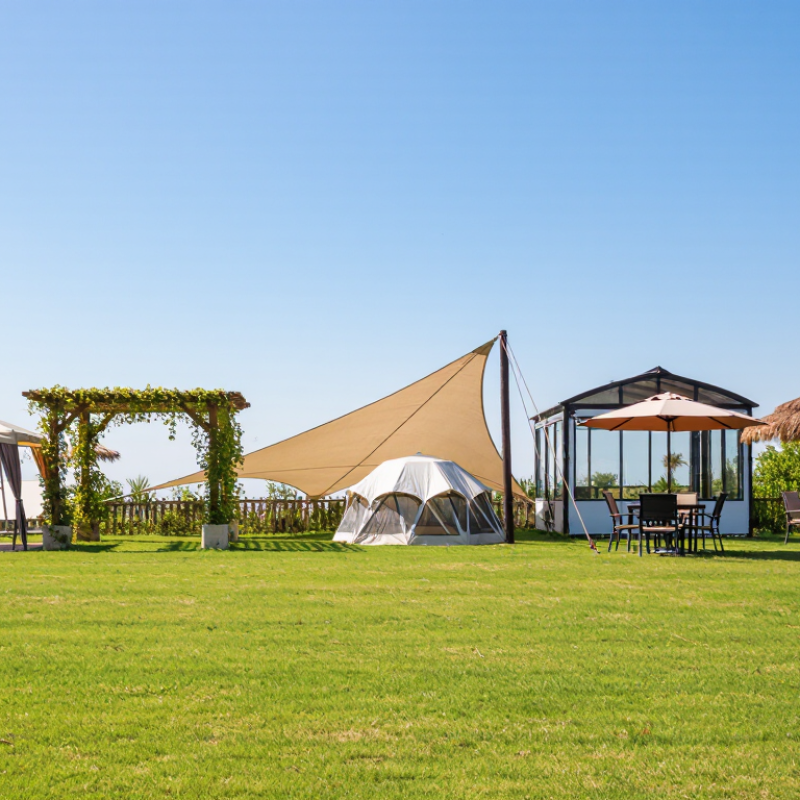
Shade sails stretch between posts, trees, or secure wall anchors and leave the space beneath open. They can cover a dining table without taking up floor space, but their position matters. Measure the area at different times of day, since afternoon sun may reach beneath the edge. Tension the fabric evenly and allow water to drain, rather than pooling in a sag. Not every garden has suitable anchor points. A small sketch can reveal that before installation.

What Are the Top 10 Types of Garden Canopies? - Portable Canopies: Pop-Up Shelters, Canopy Tents, and Shade Sails

Typical sizes and features vary by design and manufacturer. Coverage estimates are approximate and are provided for comparison.

No. Canopy Type Typical Coverage or Size Portability Best Suited For Key Consideration
1 Pop-Up Canopy Commonly about 10 × 10 ft (3 × 3 m) High; folds into a carry bag, though the frame can be heavy Temporary shade for outdoor meals, gatherings, and garden tasks Needs secure anchoring and should be taken down in strong winds.
2 Canopy Tent with a Frame Often available in footprints from about 10 × 10 ft to 10 × 20 ft (3 × 3 m to 3 × 6 m) Moderate; usually separates into poles and fabric Covering larger gatherings or providing temporary shelter for equipment Enclosed sidewalls can improve weather protection but may reduce airflow.
3 Soft-Top Gazebo Commonly about 10 × 10 ft (3 × 3 m), with larger sizes available Low to moderate; many models are designed to remain assembled seasonally A defined seating or dining area in the garden Fabric roofs may need to be removed or protected during severe weather.
4 Hardtop Gazebo Often about 10 × 10 ft to 12 × 16 ft (3 × 3 m to 3.7 × 4.9 m) Low; typically a permanent or semi-permanent structure Long-term outdoor shelter over a patio or garden seating area Requires a stable base, assembly, and consideration of local wind and snow loads.
5 Shade Sail Commonly covers roughly 100–200 sq ft (9–19 sq m), depending on shape and layout Moderate; fabric can often be removed, but attachment points remain Creating shade over patios, play areas, or parts of a lawn Needs strong, correctly positioned anchor points and suitable tension.
6 Retractable Pergola Canopy Often designed to span a patio-sized area, such as about 10 × 12 ft (3 × 3.7 m) Low; generally attached to a fixed pergola frame Adjustable shade over a deck or patio Retracting the fabric provides flexibility, but the canopy is not a substitute for a weatherproof roof.
7 Cantilever (Offset) Canopy Often provides shade over a seating area about 8–11 ft (2.4–3.4 m) across Moderate; movable models may have a wheeled base Shading a table or lounge area without a central support pole The base must be sufficiently weighted, and the canopy should be closed in strong winds.
8 Market-Style Patio Umbrella Commonly about 7–11 ft (2.1–3.4 m) in diameter High; can usually be removed from its base and stored Compact shade over a table or small seating area Its central pole takes up space, and a stable base is essential.
9 Wall-Mounted Awning Typical widths range from about 8–16 ft (2.4–4.9 m), depending on the model Low; permanently fixed to a suitable wall Providing shade beside a house, over a patio, or near a doorway Needs secure wall attachment; retractable versions should be closed in high winds.
10 Lean-To Canopy Commonly about 6–10 ft (1.8–3 m) deep, with width depending on the installation Low; usually assembled against a wall or other support Covering a narrow patio, garden workspace, or area beside a shed Plan for drainage and ensure the supporting wall and fixings are suitable.

Attached Canopies: Awnings, Retractable Roofs, and Arbors

Attached canopies extend living space from a wall, making them useful beside patios, doors, or narrow seating areas. Awnings offer quick shade over windows and tables, while their fabric can soften harsh afternoon light. Before choosing one, check that the wall and fasteners can support the installation. Also consider the sun’s angle; a shallow awning may leave low evening rays uncovered.

Retractable roofs provide more control. Open them for daylight, then close them when the patio needs shade or light rain protection. Keep moving parts clear of leaves, and follow the maker’s guidance for wind and snow conditions. Rain needs somewhere to drain. Measure twice.

Arbors create a lighter, more open canopy, often with slatted beams and climbing plants. They suit garden paths or dining spots where dappled shade feels better than full cover. Vines add texture, but their weight and growth can strain the structure, so allow room for pruning. An arbor will not block rain as reliably as an awning or roof. That trade-off is easy to overlook when a leafy design looks perfect on paper.

How to Compare Garden Canopies by Shade, Durability, and Placement

Garden canopy types include fixed pergolas, retractable pergolas, awnings, shade sails, pop-up tents, gazebos, pavilions, lean-to covers, cantilever umbrellas, and fabric carports. Compare them by the shade they deliver, not appearance alone. AATCC TM183 measures ultraviolet transmission through fabrics; a verified UPF 50 material transmits about 2% of UV radiation under test conditions. That rating does not guarantee equal protection when fabric is stretched, wet, or worn. Dense overhead coverage suits a sunny dining area, while a retractable canopy lets winter light reach a patio.

Durability depends on more than fabric weight. Check seam reinforcement, frame joints, corrosion resistance, and the maker’s stated wind limits. ASTM G154 evaluates material weathering through controlled ultraviolet and moisture exposure, but it cannot predict an exact lifespan in every garden. Placement matters too: a sail can shade a west-facing seating area, yet poor anchoring or trapped rain may cause trouble. Measure afternoon sun, allow water to drain, and keep moving parts accessible. Real gardens are messier than spec sheets.

Tips: Match the canopy to the task. Choose broad, fixed shade for a hot lunch spot; choose adjustable coverage where sun shifts. Before buying, inspect the anchor points and fabric edges in person. I’d still allow extra clearance near fences—small details are easy to overlook.