Skip to content

Top 10 Air Filter and Humidifier Combos for Global Buyers

Choosing the right air filter and humidifier is not a simple matter of buying the most expensive appliance. Global buyers face different climates, room sizes, electrical standards, water conditions, and indoor air concerns. A compact bedroom unit may struggle in a large open-plan living area. A powerful humidifier may also create excess moisture if its settings are ignored.

Dr. Joseph Allen, an indoor-air-quality researcher and director of Harvard’s Healthy Buildings program, has said, “The next frontier in public health is our buildings.” His observation gives this comparison a practical direction. Cleaner air and balanced humidity can support comfort, but neither function should be treated as a complete health solution.

This guide reviews ten air filter and humidifier combinations for international shoppers. It considers filtration performance, CADR ratings, humidification control, noise, tank capacity, cleaning access, replacement-filter costs, and energy use. HEPA filtration can reduce many airborne particles, while humidity control may help prevent overly dry indoor conditions. Yet product claims require careful reading.

Small details matter.

Check voltage compatibility before ordering. Confirm whether replacement filters are available locally. Inspect the water tank for narrow corners where residue may collect. Some models look impressive but become inconvenient after several weeks of daily use. That weakness deserves attention, not polite marketing language.

The following selections are not universal winners. They are practical options for different rooms, budgets, and climates. Buyers should still measure their space, review local safety requirements, and follow manufacturer maintenance instructions.
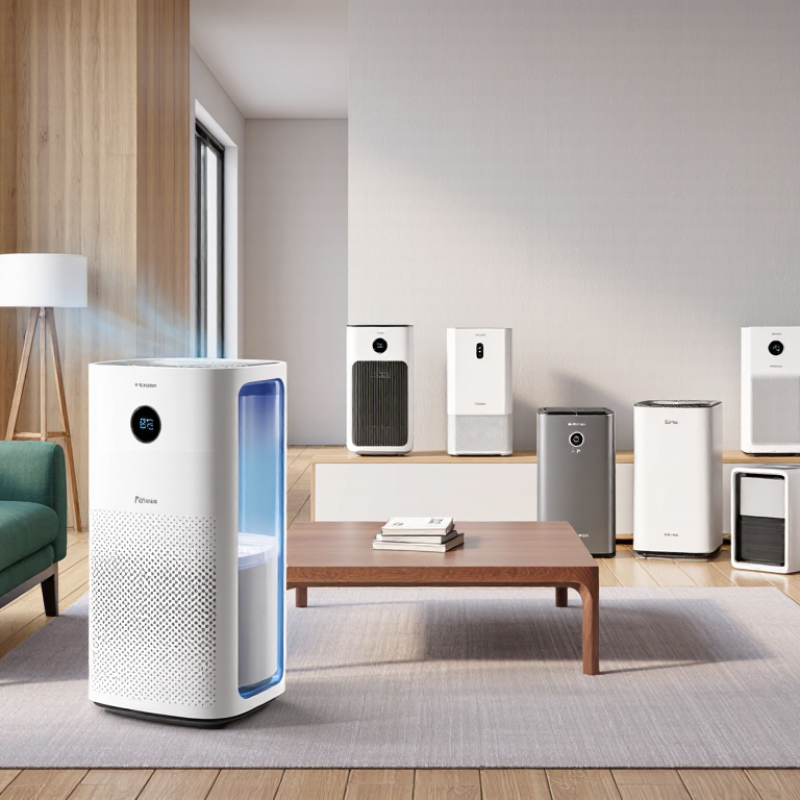
Top 10 Air Filter and Humidifier Combos for Global Buyers

Understanding Air Filter and Humidifier Combos

Understanding Air Filter and Humidifier Combos

An air filter and humidifier combo serves two different indoor needs. The filter captures airborne particles, while the humidifier adds moisture. They are not interchangeable.

The World Health Organization recommends an annual PM2.5 guideline of 5 µg/m³. This figure shows why particle control matters, especially near busy roads or construction zones.

Indoor humidity also affects comfort and building conditions. The U.S. Environmental Protection Agency generally recommends maintaining relative humidity between 30% and 50%. Below that range, dry throats and static electricity may appear. Above it, condensation and mold risks can increase.

A combo unit may save floor space, but its performance depends on airflow, room size, filter quality, and water hygiene. The 2023 World Air Quality Report recorded widespread urban PM2.5 concerns, yet indoor readings can differ sharply from outdoor measurements. That difference is easy to overlook.

Tips: Measure humidity with a separate hygrometer. Choose a filter rated for fine particles, and check its replacement cost. Empty and clean the water tank frequently. Never assume the humidifier improves air purity. It does not. A practical test is simple: place the unit near the breathing zone, close nearby windows, and compare readings before and after operation. I have found that convenience sometimes hides maintenance work. A quiet machine can still have a neglected tank or an overloaded filter. EPA guidance and manufacturer instructions should both be reviewed before daily use.
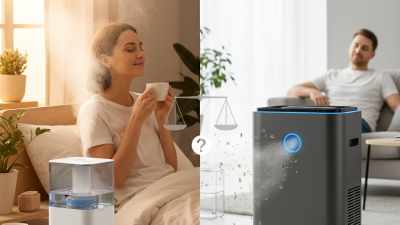
How Combined Air Cleaning and Humidifying Systems Work

Combined air cleaning and humidifying systems use two separate processes. A fan pulls room air through a particle filter, while a humidifier adds controlled moisture. The filter can capture dust, pollen, and some fine particles. Water is not filtration. The U.S. EPA’s Guide to Air Cleaners in the Home notes that indoor pollutant levels can be two to five times higher than outdoor levels. This makes airflow, filter quality, and room size important purchasing factors.

In many units, a sensor measures relative humidity and particle concentration. The control system then adjusts fan speed or moisture output. Evaporative models pass air over a wet wick. Ultrasonic models create a fine mist. Each design has trade-offs. Evaporative systems may leave less mineral dust, while ultrasonic units can consume less energy. However, untreated water may disperse minerals. The U.S. EPA recommends maintaining indoor humidity between 30% and 50%. Higher levels may encourage mold growth.

The cleaning stage does not remove every pollutant. Standard particle filters cannot reliably capture most gases or odors without an additional sorbent layer. The World Health Organization’s 2021 Global Air Quality Guidelines set a 24-hour PM2.5 guideline of 15 micrograms per cubic meter. That target is useful, but household performance varies with doors, windows, and maintenance. Placement matters. A device hidden beside furniture may circulate poorly. Replacing filters and cleaning water-contact parts remain essential. A combined machine is convenient, not automatically superior.

Key Features for Comparing the Top Ten Models

Comparing the top ten air filter and humidifier combos requires more than checking advertised coverage. Start with clean air delivery rate, filter grade, and room-size guidance. A unit should match the room’s measured area, not an ideal showroom. Look for a true particle filter, a washable pre-filter, and clear replacement intervals. Activated carbon can reduce odors, but its performance depends on carbon quantity. Marketing language alone proves little.

Humidification deserves equal attention. Compare moisture output, tank capacity, and automatic humidity control. A built-in hygrometer should keep indoor humidity near 40–60 percent, where many homes feel comfortable. Evaporative systems usually leave less mineral dust, while ultrasonic models may run quietly. However, ultrasonic units need suitable water and frequent cleaning. Check whether the tank opening allows a hand or brush inside. Small details matter.

Noise ratings should be tested at more than one fan speed. Night users may prefer a gentle setting under a quiet bedroom background. Energy use, child-lock controls, timer functions, and filter costs affect long-term value. Global buyers should also verify voltage, plug type, warranty coverage, and local access to replacement parts. Independent safety or efficiency certification adds useful confidence, but certification names differ by market. I would not rank a model highly if its app is impressive but basic maintenance feels awkward. My comparison would record real noise, refill frequency, and cleaning time, although those results can vary between homes.

Top 10 Air Filter and Humidifier Combos for Global Buyers - Key Features for Comparing the Top Ten Models

Rank Anonymous Model Recommended Room Area Clean Air Delivery Rate Humidification Output Water Tank Capacity Filter System Lowest Noise Level Typical Power Draw Automatic Humidity Control Approx. Dimensions Best Use Case
1 Model A — Premium Large-Room Unit Up to 1,000 sq ft / 93 m² 350–400 CFM Approx. 500 mL/h 4.5 L True HEPA + activated carbon + pre-filter 24 dB 8–60 W Yes, target 40–60% RH 29 × 29 × 72 cm Open-plan living rooms and large bedrooms
2 Model B — High-Capacity Family Unit Up to 900 sq ft / 84 m² 300–350 CFM Approx. 450 mL/h 4.0 L HEPA-type filter + carbon filter + washable pre-filter 25 dB 7–55 W Yes 28 × 28 × 70 cm Homes with pets, dust, and dry winter air
3 Model C — Smart Sensor Combination Up to 750 sq ft / 70 m² 250–300 CFM Approx. 400 mL/h 3.5 L True HEPA H13 + activated carbon + mesh pre-filter 23 dB 6–45 W Yes, with humidity display 27 × 27 × 65 cm Allergy-sensitive households and bedrooms
4 Model D — Mid-Size Quiet Unit Up to 600 sq ft / 56 m² 200–250 CFM Approx. 350 mL/h 3.0 L HEPA H13 + carbon layer + washable pre-filter 22 dB 5–38 W Yes 25 × 25 × 58 cm Night-time use and compact apartments
5 Model E — Value Large-Room Unit Up to 550 sq ft / 51 m² 180–220 CFM Approx. 300 mL/h 3.0 L High-efficiency particulate filter + carbon pre-filter 26 dB 6–42 W Yes 24 × 24 × 56 cm Budget-conscious buyers and rental homes
6 Model F — Compact Bedroom Unit Up to 400 sq ft / 37 m² 130–170 CFM Approx. 250 mL/h 2.2 L HEPA filter + activated carbon + pre-filter 24 dB 4–30 W Yes 22 × 22 × 48 cm Bedrooms, nurseries, and small offices
7 Model G — Low-Consumption Unit Up to 350 sq ft / 33 m² 120–150 CFM Approx. 220 mL/h 2.0 L Fine-particle filter + carbon filter 25 dB 3–25 W Yes 21 × 21 × 45 cm Energy-conscious users and study rooms
8 Model H — Travel-Friendly Compact Unit Up to 250 sq ft / 23 m² 80–110 CFM Approx. 180 mL/h 1.5 L Compact HEPA filter + carbon layer 27 dB 3–20 W No; manual adjustment 19 × 19 × 35 cm Hotel rooms, dormitories, and personal workspaces
9 Model I — Child-Safe Family Unit Up to 300 sq ft / 28 m² 100–130 CFM Approx. 200 mL/h 2.0 L HEPA filter + washable pre-filter 26 dB 4–28 W Yes 21 × 21 × 46 cm Children’s rooms and small family bedrooms
10 Model J — Entry-Level Essential Unit Up to 220 sq ft / 20 m² 70–100 CFM Approx. 150 mL/h 1.2 L Particle filter + carbon filter 28 dB 3–18 W No; manual adjustment 18 × 18 × 32 cm Personal spaces and entry-level buyers
Comparison notes: CADR is shown in cubic feet per minute (CFM), while humidification output is shown in millilitres per hour (mL/h). Room-area recommendations assume a typical ceiling height and regular air circulation. Actual performance varies with room layout, climate, operating speed, filter condition, and local testing standards.

Global Buying Factors: Climate, Standards, and Voltage

Top 10 Air Filter and Humidifier Combos for Global Buyers

Climate should guide the purchase more than appearance. The U.S. Environmental Protection Agency recommends indoor relative humidity between 30% and 50%. In tropical regions, a humidifier may increase condensation, dust mites, and mold risk. A dehumidifying strategy may work better there. In dry winter climates, however, a humidifier can reduce irritated throats and static electricity. Measure room humidity with a separate hygrometer. Built-in sensors are useful, but not always perfect.

Air filtration also requires measurable performance. The World Health Organization reported that 99% of people breathed air exceeding its guideline limits in 2019. Buyers should compare clean air delivery rate, filter efficiency, and replacement costs. ISO 16890 classifies many air filters by particulate performance, while independent CADR testing can help match airflow to room size. A small device in a large bedroom may look advanced but clean slowly. That is an easy mistake.

Electrical compatibility deserves equal attention. Household supplies commonly range from 100–120 volts or 220–240 volts, with different frequencies and plug shapes. Check the product label, not only the online listing. A transformer may solve voltage differences, but it cannot fix every frequency or safety issue. Look for conformity with applicable electrical standards, such as IEC 60335 requirements for household appliances. Water quality also matters. Hard water can leave white mineral dust, especially with ultrasonic humidifiers. Distilled water helps, yet it increases operating cost. Real-world ownership is rarely as simple as the brochure suggests.

Choosing the Right Combo for Different Indoor Needs

Choosing the Right Combo for Different Indoor Needs

A useful air filter and humidifier combo should match your room, climate, and daily habits. In a dry bedroom, quiet operation matters more than maximum airflow. A sealed room may need stronger filtration, especially near busy roads or construction areas. Check the purifier’s clean air delivery rate and the humidifier’s output before buying. Bigger numbers are not always better.

For humid coastal homes, choose a model with accurate humidity control and easy-to-clean water parts. High indoor humidity can encourage mold growth. In colder regions, a low-noise unit may suit bedrooms and nurseries. Families with pets should inspect filter costs and replacement schedules. I have found that simple controls are easier to trust. However, built-in sensors can drift, so a separate humidity meter is worth considering. No combo is perfect.

Tips: Place the unit away from walls and curtains. Keep doors and windows closed during heavy outdoor pollution. Use filtered or clean water when the manual recommends it. Clean the water tank frequently, even when it looks clear. Replace filters according to usage, not only the calendar. Ask about voltage, plug type, warranty coverage, and local service before ordering internationally. A compact room may feel comfortable with a smaller unit, while an open living area needs wider air circulation.