10 Sewer Grate Buying Tips for Global Buyers
Buying a Sewer Grate is not simply a matter of choosing steel, size, and price. It is a drainage decision with long-term safety, maintenance, and public-infrastructure consequences. The WHO/UNICEF Joint Monitoring Programme reported that 3.5 billion people lacked safely managed sanitation in 2022. Meanwhile, the ASCE 2021 Infrastructure Report Card gave U.S. wastewater infrastructure a D+ grade. These figures show a difficult reality: small components can affect already stressed systems.
Dr. Robert Pitt, a leading stormwater researcher, has repeatedly emphasized a practical principle: “The design of stormwater controls must reflect local conditions.” That principle applies directly to every Sewer Grate purchase. A grate installed beside a busy road faces oil, sand, leaves, heavy tires, and sudden rainfall. A coastal installation may face salt corrosion. A factory site may need chemical resistance and stricter load performance.
Global buyers should examine drainage capacity, opening design, load classification, anti-slip performance, corrosion protection, installation depth, and replacement availability. EN 124 classifications can support comparison, but certification details still require careful checking. Standards are helpful, not magical.
A low quotation can look efficient. It may become expensive after one blocked inlet or broken frame. Supplier experience, test documents, material traceability, and after-sales support deserve equal attention. This guide may not cover every local condition. That limitation matters. Good procurement leaves room for site inspection, engineering review, and a second opinion before committing to a container-sized order.
Define Site Requirements, Traffic Loads, and Drainage Needs
10 Sewer Grate Buying Tips for Global Buyers
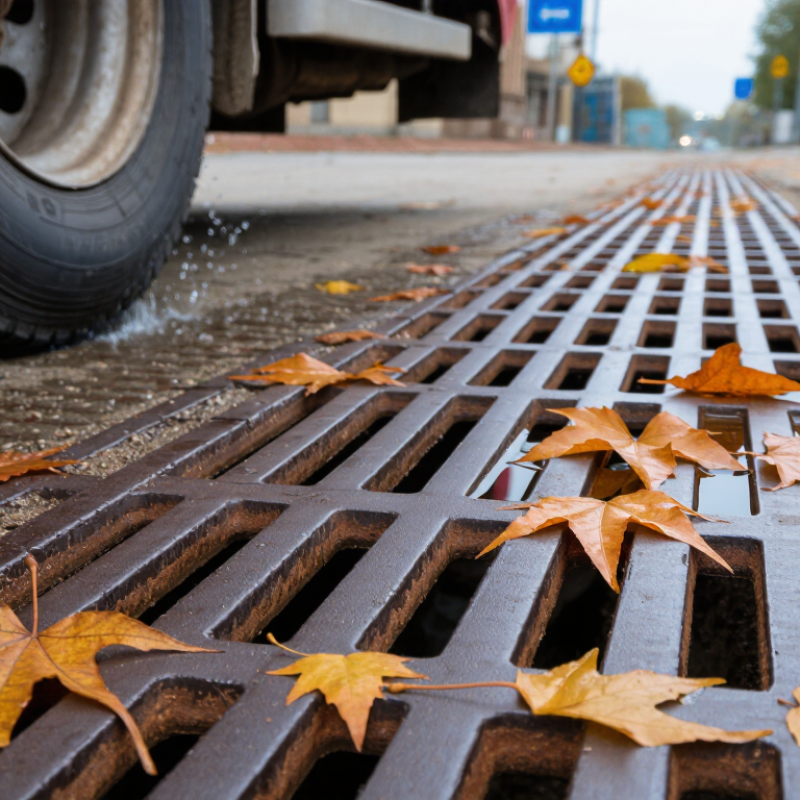
Define the site before comparing sewer grates. Measure the opening, channel depth, shoulder width, and available maintenance space. Record the surrounding surface, such as asphalt, concrete, paving blocks, or compacted soil. A grate beside a warehouse entrance faces different demands from one in a quiet garden. Note standing water, flood paths, and nearby slopes. Small details matter.
Traffic loading needs evidence, not guesswork. Count delivery trucks, buses, forklifts, bicycles, and pedestrians during a normal week. Consider turning wheels, braking, and repeated impact near corners. A grate under a truck lane may require a higher load classification than one beside the lane. Check the frame support and installation depth together. A strong grate can still fail when its frame rests on weak concrete. Do not rely on appearance.
Drainage needs should match local rainfall and catchment size. Estimate how much water reaches the inlet during intense storms. Check the clear opening, outlet pipe capacity, and debris conditions. Leaves, sand, and plastic waste can reduce flow quickly. Include an accessible cleaning point. It is easy to specify a large grate and overlook the downstream pipe. That mistake is common. Review drawings with a drainage engineer when the site has flood history, heavy traffic, or uncertain soil. Keep photographs, measurements, and load assumptions in the purchasing record. A rough estimate may start the process, but it should not make the final decision.
10 Sewer Grate Buying Tips for Global Buyers: Traffic Load Classes
Select the grate load class according to the installation site and expected traffic. Under EN 124, A15 is intended for pedestrian and light-use areas, while B125, C250, D400, E600, and F900 progressively address heavier vehicle loads and specialized high-load locations. Confirm drainage capacity, opening dimensions, corrosion resistance, slip resistance, and local standards before purchasing.
Match Dimensions, Load Ratings, and Applicable Standards
Global buyers should treat a sewer grate as a tested load-bearing interface, not a simple cover. Measure the clear opening, frame dimensions, overall depth, hinge position, locking points, and invert clearance. Record millimetres, not approximate inch conversions. Confirm whether the grate will face pedestrians, delivery vehicles, buses, or repeated turning loads. Site photographs help reveal awkward kerbs, uneven paving, and trapped debris.
Use the applicable standard before comparing prices. EN 124-1:2015 and EN 124-2:2015 classify grates from A15 to F900: 15, 125, 250, 400, 600, and 900 kN test loads. A D400 grate suits many carriageways, but it is not automatically suitable for every truck route. Test load is not the same as a universal safe working load. For North American projects, compare local specifications and AASHTO requirements rather than translating D400 directly. Ask for test certificates, material grade, coating details, slip resistance, tolerances, and batch traceability. A drawing can be correct and still fail onsite. Field teams often find that a few millimetres of frame mismatch creates rocking, noise, and water ingress. The U.S. EPA’s 2022 Clean Watersheds Needs Survey estimated $630.1 billion in wastewater infrastructure needs over twenty years, making avoidable replacement costs difficult to ignore. Recheck the opening after paving plans change. Small errors become expensive.
Evaluate Safety Features, Maintenance, and Service Life
A sewer grate should protect people before it protects the drainage system. Check its load rating against real site conditions, not only the vehicle category. A service road may receive heavier trucks during repairs. Look for anti-slip surfaces, stable seating, secure locking, and openings that reduce bicycle and heel hazards. Measure the clear opening carefully. A grate that shifts under traffic can create a dangerous impact, even when its frame appears strong. I have seen installation teams overlook frame compatibility. That small mistake caused repeated movement and noise.
Maintenance needs equal attention. Choose a design that allows safe lifting, routine cleaning, and quick inspection. Hinged or locked models can reduce misplaced covers, but their hardware must resist grit, corrosion, and standing water. Ask for coating details, material certificates, load-test reports, and installation guidance. Reliable suppliers should explain inspection intervals and replacement parts without vague promises. Drainage debris often hides damage. Plan checks after storms, road resurfacing, and heavy construction nearby.
Service life depends on more than metal thickness. Consider traffic frequency, salt exposure, wastewater conditions, temperature changes, and drainage flow. A corrosion-resistant alloy may perform better in coastal areas, while a properly protected ductile iron grate may suit other locations. Do not assume the most expensive option lasts longest. Compare warranty limits, fatigue testing, and actual maintenance records. One concern remains: laboratory results cannot fully predict poor installation or neglected cleaning. Leave access for inspection, record defects with photographs, and replace any grate showing cracks, distortion, or unstable contact.
Verify Supplier Quality, Costs, Certifications, and Delivery Terms
10 Sewer Grate Buying Tips for Global Buyers
Global drainage demand is not only an infrastructure issue. The WHO/UNICEF Joint Monitoring Programme reported in 2023 that 3.5 billion people lacked safely managed sanitation in 2022. This pressure makes supplier verification essential. Request factory audit records, recent production photos, material certificates, and traceable batch numbers. ISO’s 2022 Survey recorded more than 1.2 million ISO 9001 certificates worldwide, but certification alone does not prove grate performance. Ask whether the certificate covers the actual manufacturing site.
Confirm the required load class before discussing price. EN 124-2:2015 classifies covers for different traffic conditions, from pedestrian areas to heavy-duty roads. Request an independent laboratory report showing load testing, deflection, dimensions, and corrosion resistance. Check the test sample’s material and size. Certificates can expire. Verify them directly with the issuing body when possible. A common mistake is accepting a generic “ductile iron” claim without checking grade, coating, and wall thickness.
Compare landed cost, not factory price. Include tooling, inspection, packaging, inland transport, freight, duties, and possible port storage. The World Bank’s 2023 Logistics Performance Index evaluates customs, infrastructure, and delivery timeliness; these risks should appear in your quotation review. Specify Incoterms 2020, delivery milestones, tolerances, and remedies for delays. DDP may simplify delivery, but tax responsibilities can remain unclear. No checklist is perfect. Recheck assumptions against local drainage drawings, traffic loads, and seasonal shipping conditions.