Skip to content

10 Mesh Playpen Buying Tips for Global Buyers

Buying a Mesh Playpen for international use requires more than comparing prices, colors, and shipping terms. Global buyers must assess safety, materials, dimensions, supplier capability, and after-sales support together. A low quotation can become expensive after failed inspections, damaged cartons, or unclear responsibility.

Industry evidence supports a careful approach. The U.S. Consumer Product Safety Commission’s nursery-products reports continue to highlight hazards linked to entrapment, structural failure, falls, and incomplete instructions. These risks can appear in ordinary details, such as weak stitching, unstable corner joints, or a mattress that leaves a visible gap. ASTM F406/F406M provides a recognized U.S. benchmark for non-full-size cribs and play yards. EN 12227 is widely referenced for domestic playpens in European markets. Buyers should confirm which standard applies to the destination market, because one certificate may not cover every region.

Market research also shows why verification matters. Grand View Research and Fortune Business Insights both describe continued growth in baby-care and nursery-product markets, driven partly by e-commerce and cross-border purchasing. More suppliers are visible online. Not all are equally experienced. A polished factory video proves little without recent test reports, traceable materials, and sample inspection records. Request close-up photos of mesh seams, locking points, base panels, and carton labels. Test the product on a hard floor, not only on a showroom carpet. That small difference can expose wobbling. I have seen buyers focus heavily on fabric color and overlook ventilation or assembly clarity. That is an easy mistake. A practical buying guide should therefore examine ten checkpoints, while accepting one uncomfortable truth: no checklist replaces independent inspection and informed judgment.
10 Mesh Playpen Buying Tips for Global Buyers

Define the 10 Buying Criteria: Safety, Materials, Size, and Global Compliance

10 Mesh Playpen Buying Tips for Global Buyers

Define the 10 Buying Criteria: Safety, Materials, Size, and Global Compliance

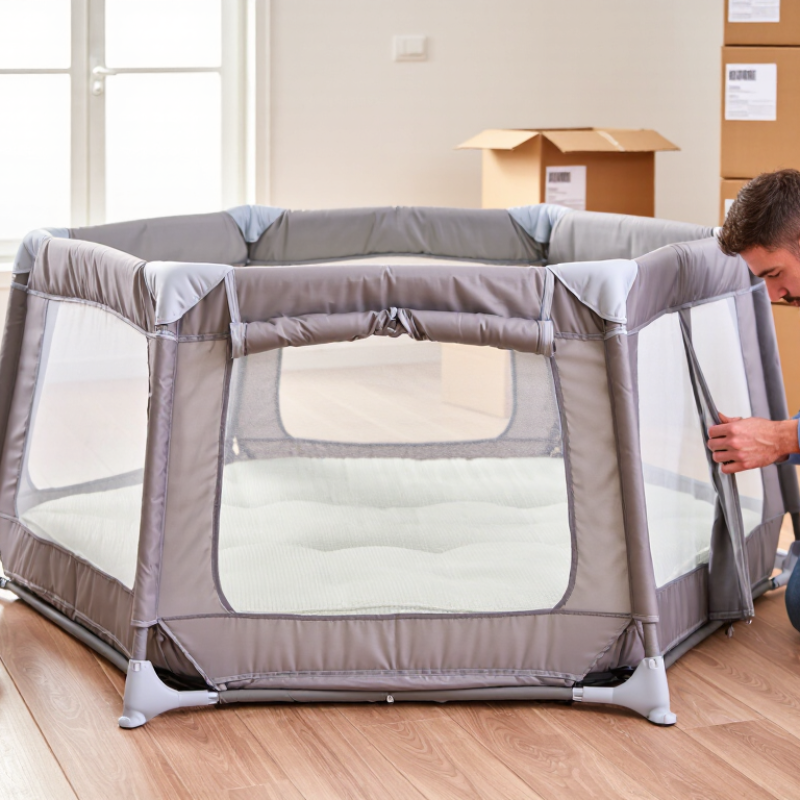
Evaluate safety design, mesh ventilation, frame strength, and locking points. Check every hinge and corner by hand. There should be no sharp edges, loose threads, or finger-trapping gaps. Materials matter too: choose stable, low-odor fabrics and corrosion-resistant frame components. Ask for material specifications, not vague claims. A clear age and weight limit is essential, even when it seems obvious.

Measure the assembled size, folded size, and usable floor area. A large playpen may not fit a small apartment or hotel room. Consider stability on wood, tile, and carpet. Review portability, cleaning access, and replacement-part availability. Inspect stitching around stress points, especially near handles and entry panels. Small details matter. Product photos can hide weak seams.

For global purchasing, request independent test reports, batch records, warning labels, and traceable instructions. Confirm that documents match the exact model and destination market. Compliance requirements differ across countries, so one certificate may not cover every sale. Check packaging language, electrical exclusions, chemical limits, and import documentation where applicable. In practice, paperwork is sometimes incomplete. That should trigger a pause, not a discount. A sample inspection before bulk ordering can expose problems that factory images miss.

Verify 3 Core Standards: ASTM F406, 16 CFR 1221, and EN 12227

10 Mesh Playpen Buying Tips for Global Buyers

Verify 3 Core Standards: ASTM F406, 16 CFR 1221, and EN 12227

When sourcing a mesh playpen, confirm which safety standard applies to your destination market. ASTM F406 covers non-full-size cribs and play yards in the United States. 16 CFR 1221 establishes mandatory U.S. requirements for play yards. EN 12227 addresses playpens intended for domestic use in European markets. These standards are not interchangeable. Ask for the exact test report, edition, laboratory name, and tested model number.

Check whether the report matches your purchase order. The fabric, frame, mattress pad, hinges, wheels, and locking parts should share the same product identity. A supplier’s PDF is only a starting point. Request photos of the compliance label and packaging. Confirm the report includes structural strength, entrapment risks, folding mechanisms, and mesh performance where applicable. Small differences matter, such as a revised corner joint or a thicker mattress.

Inspect a sample before placing a large order. Press the rails, open and fold the frame, and watch for partial locks. Run your fingers along seams and exposed edges. The mesh should remain securely attached without loose loops. I would not treat a clean-looking surface as proof of safety; appearance can mislead. One practical weakness is relying on an old certificate. Standards and product designs change. Keep written records of revisions, test dates, materials, and corrective actions.

Evaluate Mesh Strength, Ventilation, and 4 Key Entrapment Hazards

When buying a mesh playpen internationally, inspect the fabric before admiring its colors or accessories. Press the mesh with two fingers and check whether it stretches excessively. Strong mesh should resist pulling, tearing, and repeated rubbing against the frame. Look for tight stitching, reinforced corners, and seams without loose threads. Do not guess. A thick-looking panel may still have weak joins.

Ventilation matters, especially in warm rooms or humid climates. Choose mesh with evenly spaced openings that allow steady airflow without creating large gaps. Avoid designs that block most panels with padding, pockets, or fabric covers. The playpen should remain visible from several angles. Check the base, too. A poorly ventilated floor can trap heat and moisture.

Four entrapment hazards deserve careful attention: head or neck openings, finger and limb gaps, loose straps, and collapsing sections. Test every opening with a firm hand, but do not stretch it aggressively. Cords, carrying handles, and toy attachments should not hang inside the play area. Examine hinges and folding joints for sudden movement. A small gap may become dangerous when a child leans, twists, or climbs. I once underestimated how quickly a loose strap could shift during ordinary use. That mistake is worth remembering. Ask suppliers for material specifications, seam testing, folded dimensions, and inspection records. Compare those details with the product you receive, because factory samples and delivered units are not always identical.

Compare 5 Product-Cost Factors: MOQ, Freight, Duties, Testing, and Warranty

10 Mesh Playpen Buying Tips for Global Buyers

A low factory price can hide serious landed-cost risks. Compare MOQ, freight, duties, testing, and warranty before approving a mesh playpen order. MOQ affects cash flow, storage, and product variety. A 1,000-unit minimum may look efficient, but slow sales can freeze capital for months. Request carton dimensions and gross weight, not only unit prices. The World Bank’s Logistics Performance Index 2023 shows major differences in customs, infrastructure, and shipment timeliness across markets. Delivery assumptions need evidence.

Freight deserves close inspection. UNCTAD’s Review of Maritime Transport 2023 reports that maritime shipping carries over 80% of global merchandise trade by volume. However, port congestion, fuel adjustments, and seasonal surcharges can change quotations quickly. Ask for sea, rail, and air comparisons. Duties depend on the correct HS classification, origin, and destination rules. WTO World Tariff Profiles 2023 confirms that applied tariffs vary widely between economies and product categories. A broker’s written classification is safer than a guess.

Testing is not a decorative expense. Verify mesh strength, frame stability, pinch points, flammability requirements, and chemical limits for the target market. Keep laboratory reports linked to the exact model and materials. Warranty terms should define defects, evidence, replacement timing, and freight responsibility. A small reserve for claims may protect cash flow, but the right percentage is never universal. That is the uncomfortable part. Product returns, misuse, and weak packaging can distort every forecast. Recheck the assumptions after the first shipment.

10 Mesh Playpen Buying Tips for Global Buyers - Compare 5 Product-Cost Factors: MOQ, Freight, Duties, Testing, and Warranty

Practical comparison table for international sourcing and landed-cost planning

No. Buying Tip MOQ Freight Duties Testing Warranty Estimated Cost Sensitivity
1 Confirm the finished size and folded size before requesting quotations. Common planning MOQ: 100–500 units for standard models; lower quantities may require a higher unit price. A typical packed unit may weigh about 1.2–3.0 kg. Folded dimensions strongly affect air and courier charges. Import duty is based on the destination country, tariff classification, customs value, and origin; request a destination-specific estimate. Size changes can require updated product drawings and renewed safety or chemical-risk reviews. A clear warranty should cover frame failure, stitching defects, and mesh separation for at least 6–12 months. Medium
2 Compare EXW, FOB, and delivered quotations using the same product specification. MOQ is often lower for stock or standard items and higher for customized packaging or colors. FOB excludes main international freight; delivered pricing may include freight, customs handling, and local delivery. Confirm whether VAT, GST, brokerage, port fees, and other destination charges are included. Ask whether inspection and laboratory charges are included or billed separately. Check whether return freight and replacement shipping are included in the warranty terms. High
3 Calculate landed cost per sellable unit rather than comparing factory price alone. Divide one-time setup, artwork, and inspection charges across the actual order quantity. For small shipments, fixed documentation and handling charges can make freight per unit disproportionately high. Use the customs value required by the importing country; do not assume duty equals a universal percentage. Include sample testing, pre-shipment inspection, and any retesting caused by nonconformity. Add an expected replacement reserve when warranty failure rates are not supported by historical data. High
4 Request a sample that matches the mass-production materials and construction. One to three samples are normally sufficient for initial evaluation, but sample fees may be higher than production pricing. Courier sample shipments commonly cost more per kilogram than consolidated ocean freight. Samples can still attract import taxes or brokerage charges depending on destination rules and declared value. Test the exact production-representative sample for mesh strength, seams, openings, and stability. A sample approval should be linked to written production specifications and the agreed defect-remedy process. Medium
5 Check mesh openings, seam strength, and entrapment risks for the intended age group. Safety modifications may affect the minimum run because new cutting patterns, tooling, or packaging may be required. Reinforced seams or additional panels can increase packed weight and carton volume. The applicable product category and child-safety requirements vary by destination market. Typical evaluations may include mechanical and physical hazards, sharp points, accessible edges, and material safety. Warranty claims should distinguish normal wear from failures caused by unsafe construction or manufacturing defects. High
6 Specify material composition and request evidence for restricted-substance compliance. Custom fabric blends, coatings, colors, or printed panels may require a larger MOQ than standard materials. Heavier fabric and reinforced plastic or metal parts can raise both weight-based and volume-based freight. Some customs systems apply different treatment based on material composition and product use. Depending on the market, screening may cover substances such as lead, cadmium, phthalates, formaldehyde, or colorants. Warranty language should cover premature coating failure, fabric tearing, corrosion, and color-transfer defects where relevant. High
7 Optimize carton design without reducing product protection. Retail cartons, barcode labels, inserts, and export cartons may have separate minimum quantities. Reducing carton volume can lower dimensional-weight charges, especially for air and courier shipments. Packaging materials may need separate declarations or recycling marks in some markets. Drop, compression, and packaging integrity checks help reduce damage-related claims during transport. Confirm whether transport damage is covered by warranty, cargo insurance, or the carrier claim process. Medium
8 Select the transport mode according to order size, urgency, and replenishment frequency. Small trial orders may be practical by courier or air; larger repeat orders are usually more suitable for consolidation or ocean freight. Ocean freight generally has a lower cost per unit for larger shipments but involves longer transit and port-related charges. Duty is normally unaffected by transport mode, while customs brokerage and terminal charges can vary. Testing documents should be completed before dispatch to avoid storage and inspection delays at destination. Longer transit increases the value of robust packaging and clearly defined damage-reporting deadlines. High
9 Use a written pre-shipment inspection plan with measurable acceptance criteria. Inspection cost is often easier to justify on medium or large orders; for small orders, it can materially increase unit cost. Inspection does not normally change freight, but failed inspections can create rework, storage, and delayed-shipment costs. Delays may increase customs storage or demurrage exposure if goods are already at the port. Define sample size, critical defects, major defects, minor defects, dimensions, color tolerance, and function checks. Require a corrective-action process and replacement or credit terms for confirmed production defects. Medium
10 Negotiate warranty, spare parts, and after-sales support before placing the purchase order. Replacement mesh panels, connectors, or carrying bags may have separate minimum quantities or setup charges. Small replacement shipments can have a high freight cost per unit; consolidate spare parts with regular orders when possible. Replacement goods may still require customs declarations, taxes, or brokerage depending on local rules. Keep test reports, batch records, and complaint samples to support root-cause analysis. Specify coverage period, exclusions, claim evidence, response time, remedy, and responsibility for return freight. Medium
Cost-planning note: MOQ, freight, duties, testing, and warranty costs vary by destination, order volume, product specification, season, transport mode, and applicable regulations. Use these ranges as sourcing benchmarks only and obtain a written quotation, tariff classification review, freight offer, and compliance assessment for the target market before ordering.

Audit Supplier Data: Test Reports, Traceability, Certifications, and After-Sales Support

When buying a mesh playpen internationally, audit the supplier’s data before comparing prices. Request recent test reports for mesh strength, seam durability, frame stability, and material safety. Check the laboratory name, report number, test date, and exact product model. A generic certificate may not cover the playpen you will receive.

Traceability should reach the production floor. Ask for batch codes, fabric specifications, inspection records, and photographs of packed goods. Match the batch code on the carton with the inspection document. Keep samples from the approved shipment. They can reveal changes in mesh tension, stitching, or frame finish later. Small details matter.

Certifications require careful reading. Confirm their scope, validity, issuing body, and market relevance. Do not treat a logo image as proof. Ask who controls corrective actions when a sample fails. After-sales support also needs evidence. Request response times, spare-part procedures, replacement terms, and multilingual instructions. Test the contact channel before placing an order. A fast reply is useful, but not enough. Ask a practical question about a broken hinge or missing connector.

In my experience, suppliers often provide clear paperwork but vague production records. That is a warning, not an automatic rejection. I would document every promise in the purchase agreement and inspect randomly before shipment. My process is not perfect; factory conditions can change after approval. Regular rechecks remain necessary.

10 Mesh Playpen Buying Tips for Global Buyers

Audit Supplier Data: Test Reports, Traceability, Certifications, and After-Sales Support

This checklist counts the key evidence items buyers should verify during a supplier audit. Safety documentation may include mechanical and physical testing, flammability, chemical migration, labeling, batch traceability, quality controls, inspection records, complaint handling, and corrective-action records. Exact requirements depend on the destination market and product configuration.