Skip to content

What Is a Lithium Battery Pack and How Does It Work?

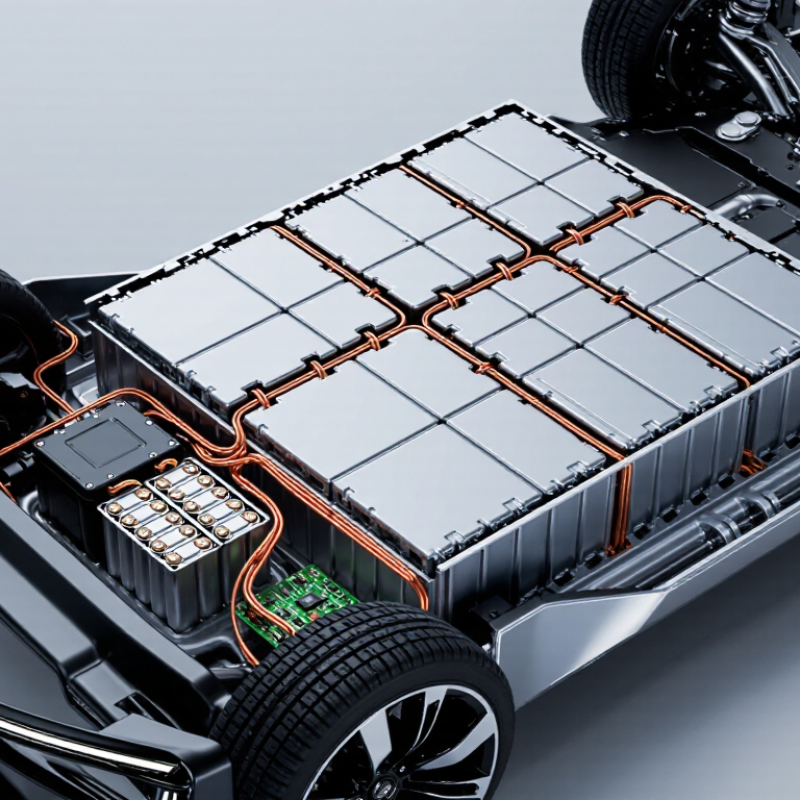
A Lithium Battery Pack is more than a group of cells inside a metal case. It is an engineered energy system that stores electricity chemically and releases it through controlled electrochemical reactions. Cells provide voltage and capacity, while modules, busbars, sensors, cooling paths, and a battery management system create a usable pack. In an electric vehicle, the pack may sit beneath the cabin floor, where hundreds of kilograms of cells deliver steady power to the motor.

Industry data shows why this technology matters. The International Energy Agency’s Global EV Outlook 2024 reported that global electric vehicle battery demand exceeded 750 GWh in 2023, rising by about 40% from the previous year. BloombergNEF’s 2024 Battery Price Survey recorded an average lithium-ion pack price of approximately $115 per kWh, a 20% annual decrease. These figures suggest improving scale and affordability, but they do not tell the whole story. Chemistry, temperature, charging habits, manufacturing quality, and pack design strongly affect real-world performance.

The basic process is straightforward. During charging, lithium ions move through the electrolyte toward the negative electrode. During discharge, they travel back while electrons move through the external circuit. That movement powers a vehicle, tool, or storage inverter. The BMS monitors voltage, temperature, current, and cell balance continuously. Small sensors matter.

Still, lithium battery packs are not automatically safe, durable, or efficient. Poor thermal control can accelerate degradation, while extreme cold can reduce available power. A reliable explanation must connect laboratory ratings with daily experience, including slower charging, reduced range, and capacity loss over time. This article examines how each component works and why careful engineering determines the pack’s practical value.
What Is a Lithium Battery Pack and How Does It Work?

What Is a Lithium Battery Pack?

A lithium battery pack is an engineered energy system, not a single battery. It combines cells, electrical connections, sensors, protective housing, and a battery management system (BMS). Most packs use lithium-ion cells, where lithium ions move between electrodes during charging and discharging. The cells may look like small metal cylinders, flat pouches, or rigid prismatic blocks.

A pack connects cells in series and parallel. Series connections raise voltage, while parallel connections increase capacity and current delivery. The BMS monitors voltage, temperature, and current in real time. It can disconnect the pack when conditions become unsafe.

Thermal materials and cooling channels help control heat, especially during fast charging. In practical testing, a pack may deliver less energy than its label suggests. Cold weather, aging, and high loads all reduce usable capacity.

The International Energy Agency reported that global electric vehicle battery demand exceeded 750 GWh in 2023, rising by about 40% from 2022. This growth reflects larger packs and wider vehicle adoption, not a simple improvement in cell chemistry. BloombergNEF’s 2023 Battery Price Survey placed the average lithium-ion pack price at 139 dollars per kWh. Prices matter, but safety design matters more. A cheaper pack can become a poor investment if its sensors, insulation, or thermal controls are weak. Industry reports offer averages; real performance still depends on design, manufacturing quality, and operating conditions.

What Components Make Up a Lithium Battery Pack?

A lithium battery pack is built from several coordinated parts, not just a group of cells. The cells store energy through controlled chemical reactions. They may be arranged in series to raise voltage or in parallel to increase capacity. A pack can contain dozens of cells. Their spacing matters.

The battery management system, or BMS, monitors voltage, current, and temperature. It helps prevent overcharging, deep discharge, and unsafe operating conditions. Small sensors usually sit near the cells. The BMS may also balance cell voltages, because cells rarely age at exactly the same speed. This detail is easy to overlook. A pack can appear healthy while one weak cell limits its performance.

Current travels through busbars, cables, terminals, and connectors. These parts need suitable insulation and low electrical resistance. A fuse or protective device can interrupt excessive current. The enclosure protects the internal assembly from impact, dust, and moisture. Some packs include cooling plates, thermal pads, vents, or heaters for difficult environments. Mechanical supports reduce vibration and pressure on the cells. During inspection, technicians should check loose connections, swelling, damaged insulation, and unusual heat. A clean exterior proves little. Design choices also vary with voltage, capacity, load, and installation space, so a neat diagram cannot replace measured testing and careful service records.

How Does a Lithium Battery Pack Store and Deliver Energy?

A lithium battery pack stores energy through reversible chemical reactions inside multiple cells. Each cell contains a graphite anode, a metal-oxide cathode, and an electrolyte that carries lithium ions. During charging, an external power source pushes lithium ions toward the anode. Electrons travel through the charging circuit instead. This separation creates stored chemical potential, much like winding a spring, but at an electrochemical level. The ions do not simply “hold electricity.” That common shortcut can confuse beginners.

When a device needs power, the reaction reverses. Lithium ions move through the electrolyte toward the cathode. Electrons leave the anode and travel through the external circuit, producing useful current. A pack connects cells in series for higher voltage and in parallel for greater capacity. A battery management system measures cell voltage, temperature, and current. It can balance cells and disconnect the pack during unsafe conditions. Small losses matter.

In practice, delivery depends on load, temperature, age, and resistance. A power tool may draw strong current for seconds, while a sensor may use energy for months. Cold conditions slow ion movement and reduce available capacity. Heat can also accelerate wear, so controlled charging is important. The process is not perfectly efficient; some energy becomes heat. Engineers still refine cell chemistry, cooling, and control software because real battery behavior is less tidy than textbook diagrams. That gap deserves attention.

What Safety Systems Control Lithium Battery Pack Operation?

What Is a Lithium Battery Pack and How Does It Work?

What Safety Systems Control Lithium Battery Pack Operation?

A lithium battery pack combines multiple cells, wiring, sensors, and a control unit. Its main safety system is the battery management system, or BMS. The BMS measures each cell’s voltage, pack current, and internal temperature. It can stop charging when a cell reaches its upper voltage limit. It can also disconnect the load when voltage drops too far. Small sensors matter. A loose sensor may create a dangerous blind spot.

Current protection works through fuses, contactors, and electronic switches. A fuse can break the circuit during a severe short circuit. Contactors separate the battery from equipment when the BMS detects a serious fault. Many packs also balance cell voltages during charging. Without balancing, one weak cell may reach its limit before the others. Charging then needs to stop early.

Heat remains a difficult risk. Thermal sensors monitor hot areas near cells, busbars, and charging circuits. Some designs add cooling plates, vents, or flame-resistant barriers. A temperature rise can trigger reduced power or complete shutdown. This is not foolproof. A damaged cell may behave differently from test data. Moisture, vibration, and aging can also weaken connections over time. Regular inspection should check swelling, unusual odors, cracked insulation, and overheated terminals. A safety system works best when sensors, hardware, software, and careful maintenance support one another.

What Is a Lithium Battery Pack and How Does It Work?

Safety Systems That Control Lithium Battery Pack Operation

A lithium battery pack combines multiple electrochemical cells with a battery management system (BMS), temperature sensors, current sensors, switching devices, and protective fuses. The BMS continuously monitors cell voltage, pack current, temperature, and state of charge. It can stop charging or discharging when operating limits are exceeded, while cell balancing helps keep the series-connected cells at similar voltage levels.

Chart explanation: The values represent common lithium-ion cell operating checkpoints. A typical BMS limits charging near 4.20 V per cell, disconnects the load when cell voltage approaches the lower discharge limit, and uses temperature measurements to reduce or stop operation. Exact thresholds vary by cell chemistry and pack design.

How Are Lithium Battery Packs Charged, Used, and Maintained?

A lithium battery pack stores energy in several connected lithium-ion cells. A battery management system monitors voltage, temperature, and current during operation. In practical use, this control system helps prevent overcharging, deep discharge, and excessive heat. It is useful protection, not a guarantee against every failure.

Charging requires a compatible charger with the correct voltage and current rating. Most packs charge in two stages: constant current, then constant voltage. Place the pack on a hard, dry surface while charging. Keep it away from direct sunlight, heaters, and flammable materials. Do not charge a swollen, cracked, wet, or unusually hot pack. Stop immediately if it smells strange. A small oversight matters.

During use, follow the pack’s rated load and avoid blocking ventilation openings. Heavy loads can create heat, especially in cold or poorly maintained equipment. Allow the pack to cool before charging again. I used to think a full charge was always best, but long storage at full capacity can increase chemical stress. For storage, a moderate charge level in a cool, dry place is generally better. Check the pack occasionally for swelling, damaged cables, corrosion, or reduced runtime. Do not open the casing or replace individual cells without proper training and equipment. Battery maintenance is not perfect science; real temperature, age, and usage patterns can change performance. Damaged packs should be handled through approved battery recycling services.

What Is a Lithium Battery Pack and How Does It Work? - How Are Lithium Battery Packs Charged, Used, and Maintained?

Data Dimension Typical Information How It Affects Use and Maintenance
Basic Definition A lithium battery pack is an assembly of one or more rechargeable lithium-ion cells, connected with electrical conductors and usually controlled by a battery management system. The pack provides higher voltage, capacity, or power than a single cell and must be operated within specified electrical and thermal limits.
How Energy Is Stored During charging, lithium ions move from the positive electrode to the negative electrode. During discharge, they move back while electrons flow through the external circuit. The ion movement supplies electrical energy to devices such as tools, medical equipment, vehicles, and backup systems.
Common Cell Chemistry Lithium iron phosphate (LiFePO₄) cells commonly have a nominal voltage of about 3.2 V per cell. Other lithium-ion chemistries commonly have a nominal voltage of about 3.6–3.7 V per cell. Chemistry influences energy density, operating voltage, cycle life, thermal behavior, cost, and the required charging limits.
Series and Parallel Connections Cells connected in series increase voltage. Cells connected in parallel increase ampere-hour capacity and current capability. A balanced design is necessary so that cells share current evenly and reach similar voltage levels.
Capacity Capacity is commonly stated in ampere-hours (Ah) or watt-hours (Wh). Approximate energy is calculated as: Wh = nominal voltage × Ah. Actual usable energy is lower than the nominal rating because of conversion losses, temperature, aging, and protection limits.
Battery Management System A BMS can monitor cell voltage, pack current, temperature, state of charge, and charging or discharging conditions. It may provide overcharge, over-discharge, overcurrent, short-circuit, and over-temperature protection, as well as cell balancing.
Charging Method Most lithium-ion packs use a constant-current/constant-voltage (CC/CV) charging profile. The charger must match the pack chemistry, voltage, current, and connector requirements. Using an unsuitable charger can cause overheating, reduced service life, protection shutdown, or a serious safety hazard.
Charging Stages The charger first supplies controlled current. When the target voltage is reached, it holds the voltage while the current gradually decreases. Charging ends when the current reaches the charger’s termination threshold. A complete charge is not determined by time alone; the charger and BMS should control the process.
Charging Temperature Many lithium-ion packs are designed to charge approximately between 0°C and 45°C, but the exact range depends on the cell and pack design. Charging below freezing can cause lithium plating in some chemistries. Always follow the pack’s specified temperature limits.
Discharge Temperature Many packs can discharge over a wider range, often approximately from -20°C to 60°C, depending on the design and chemistry. Low temperatures reduce available power, while high temperatures accelerate aging and may trigger protective shutdown.
Depth of Discharge Depth of discharge (DoD) is the percentage of available capacity used during a cycle. For example, using 60% of the capacity represents approximately 60% DoD. Shallower cycles generally place less stress on lithium-ion cells and can help extend service life.
Cycle Life Cycle life is the number of equivalent full charge-discharge cycles a pack can complete before its capacity falls to a specified level, often around 80% of its initial capacity. Temperature, charging voltage, discharge rate, storage level, and depth of discharge all influence aging.
Power and Current The pack’s maximum continuous and peak current ratings depend on the cells, conductors, connectors, thermal design, and BMS settings. Loads that exceed the rated current can create excessive heat, voltage drop, accelerated aging, or a protective shutdown.
Storage Recommendation For extended storage, a moderate state of charge, commonly around 30–60%, is generally preferable to storing the pack completely full or empty. Store the pack in a cool, dry, well-ventilated location away from direct sunlight, moisture, heat sources, and flammable materials.
Routine Maintenance Inspect the housing, terminals, wiring, connectors, and charging equipment. Keep contacts clean and check for swelling, cracks, unusual odor, leakage, or excessive heat. Do not use a pack that is damaged, swollen, wet, or abnormally hot. Inspection should be performed by qualified personnel when internal repair is required.
Safety Practices Prevent short circuits, impacts, punctures, water exposure, unauthorized disassembly, and contact with incompatible chargers or equipment. If a pack smokes, vents, swells rapidly, or becomes extremely hot, move away from it if safe to do so and contact local emergency or hazardous-material authorities.
End-of-Life Handling Lithium battery packs should not be placed in ordinary household waste or mixed recycling bins. Use an approved battery collection or recycling program, and protect exposed terminals from short circuits during transport.

Note: Exact voltage, current, temperature, charging, storage, and maintenance limits vary by cell chemistry and pack design. Always follow the technical specifications supplied for the specific battery pack.