Skip to content

What Is a Gramophone Record Player and How Does It Work?

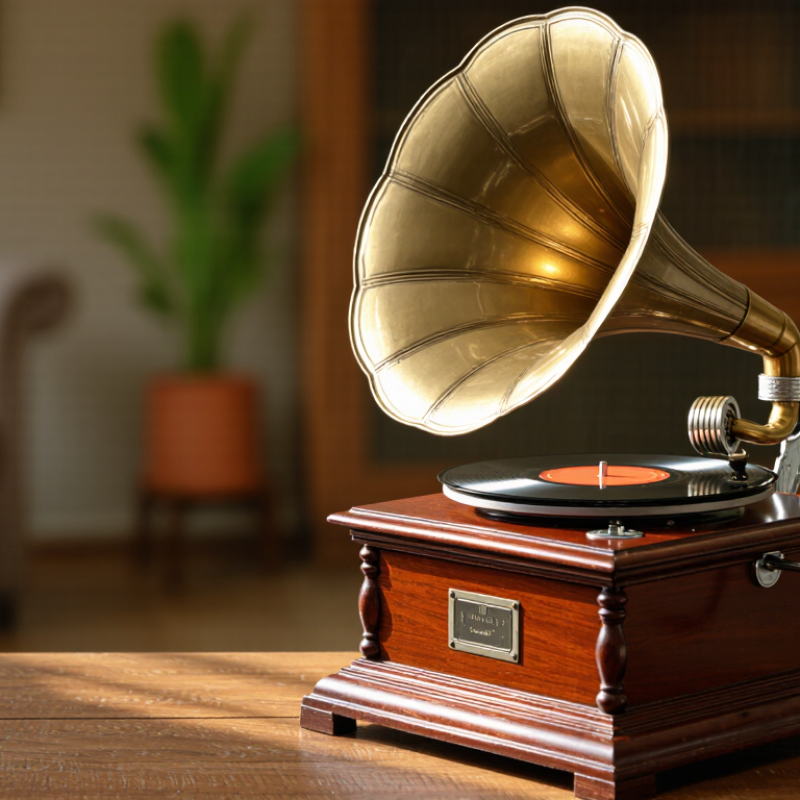
A Gramophone Record Player turns tiny grooves into sound you can hear. Its stylus follows the record’s spiral groove, tracing microscopic changes as the disc spins. Those vibrations travel through a cartridge and amplification system to the speakers. In older gramophones, a horn projected the sound mechanically. The principle is simple, but each part affects the result.

The format has a measurable place in today’s music market. The Recording Industry Association of America reported that U.S. vinyl record revenue reached $1.4 billion in 2023, rising 10% from the previous year. Its 2023 Year-End Music Industry Revenue Report also noted vinyl’s continued growth. That matters. Yet sales figures do not explain why a record player sounds as it does, or how to choose one. This guide examines the machine’s main components, from platter and tonearm to stylus and speakers. It also explains how groove movement becomes an electrical signal, then audible sound. A record can reveal surface noise, dust, or a worn stylus quite clearly. Small details matter. Still, descriptions of “warm” sound are partly subjective, and equipment alone cannot guarantee a better listening experience. Understanding the mechanics helps set realistic expectations—and makes the ritual of lowering the stylus less mysterious.
What Is a Gramophone Record Player and How Does It Work?

What a Gramophone Record Player Is

A gramophone record player is a device that reads sound stored as tiny, continuous grooves on a rotating disc. A stylus rests in the groove and follows its changing shape. Those movements become vibrations, which a cartridge converts into an electrical signal in many modern players. Older acoustic gramophones used a diaphragm and horn to make the vibrations audible. The term can be imprecise: people sometimes use “gramophone” for different kinds of record players.

The turntable, stylus, and playback system work together. A steady rotation helps the stylus trace the groove; dust or a worn stylus can interfere with playback. Some players need an external amplifier and speakers, while others include built-in speakers. Vinyl remains an established format: the Recording Industry Association of America’s 2023 Year-End Music Industry Revenue Report recorded 43 million vinyl album units sold in the United States and $1.4 billion in vinyl revenue. These figures describe the market, not the performance of any individual player.

Tips: Place the player on a firm, level surface. Keep records clean, and lower the stylus gently. If playback sounds distorted, check the stylus and record before adjusting other settings. A small setup error can matter.

The Main Components of a Gramophone Record Player

A gramophone record player converts the grooves of a disc into sound through a chain of mechanical and electrical parts. The platter supports the record, while a motor turns it at a selected speed. A spindle keeps it centered. Small parts, but each matters. If the platter wobbles or the speed drifts, pitch and timing can suffer.

The tonearm carries the cartridge across the disc. At its tip, a stylus follows the groove’s tiny movements. The cartridge turns those movements into an electrical signal; a phono preamplifier then raises and equalizes that signal for playback equipment. In an acoustic gramophone, a horn amplifies sound mechanically instead. Not every record player has one. Alignment can be fiddly, and dust on the stylus can interfere with tracking. A neat diagram rarely shows that part.

Vinyl remains a substantial part of recorded music: the Recording Industry Association of America’s 2023 Year-End Music Industry Revenue Report recorded $1.4 billion in U.S. vinyl revenue. That figure describes the market, not sound quality or component performance. It does, however, show why understanding the playback chain still matters. When troubleshooting, check the record’s seating, platter speed, stylus condition, and preamp connection before assuming a major fault.

What Is a Gramophone Record Player and How Does It Work? — The Main Components of a Gramophone Record Player
Component What It Is How It Works Role in Playback
Record A disc with a spiral groove containing recorded sound information. As the record rotates, the groove guides the stylus along its path. The groove’s tiny variations make the stylus vibrate. Stores the sound pattern that the gramophone reproduces.
Turntable and Platter The rotating platform that supports the record. The drive mechanism turns the platter at a steady speed while the record rests on it. Moves the record beneath the stylus at a consistent rate.
Spindle The central pin that fits through the record’s center hole. It helps position the record on the platter and keeps it centered during rotation. Maintains the record’s alignment as it spins.
Drive Mechanism A spring motor in many traditional wind-up gramophones; some models use other mechanical drives. On a wind-up model, turning the crank stores energy in a spring, which then powers the rotating platter. Provides the motion needed to play the record without an electric motor.
Governor A mechanical speed-control device found in many spring-driven gramophones. Rotating weights and friction regulate the motor’s speed and help prevent the platter from spinning too quickly. Helps keep playback speed more stable.
Tonearm The arm that holds and guides the soundbox across the record. It allows the stylus to follow the spiral groove from the outer edge toward the center. Positions the soundbox and transfers groove movement to it.
Soundbox and Diaphragm A small mechanical assembly attached to the tonearm. Its diaphragm is a thin membrane that vibrates. Vibrations from the stylus are transmitted to the diaphragm, which vibrates in response. Converts the stylus’s groove-following motion into sound vibrations.
Stylus (Needle) A small, replaceable point that rests in the record groove. It follows the groove’s contours and carries their vibrations to the soundbox. Reads the physical sound information in the groove. Steel needles on many acoustic models were commonly replaced regularly.
Horn or Acoustic Sound Channel A flared horn, or an internal passage leading to one, depending on the gramophone’s design. It channels and acoustically amplifies the vibrations produced by the soundbox, without electronic amplification. Projects the sound into the surrounding space.
Brake or Stop Control A mechanical control that slows or stops the platter. When engaged, it applies friction to the rotating mechanism or platter. Stops playback and helps prevent the record from continuing to spin.

How the parts work together: The drive mechanism rotates the record; the stylus follows its groove; the tonearm carries the resulting vibrations to the soundbox; and the horn projects the sound acoustically.

How a Record Player Reads the Grooves

A record player reads sound from a tiny spiral groove pressed into a disc. The groove’s walls contain changing patterns, not visible notes or words. As the disc turns, a stylus, often called a needle, rests in the groove and follows its minute ridges and wiggles. It moves from the outer edge toward the center. The motion is delicate. Even a small speck of dust can interrupt it.

The stylus vibrates as it traces the groove. In many modern players, a cartridge turns those vibrations into a small electrical signal. That signal passes through suitable audio equipment and becomes sound from speakers. Older acoustic gramophones used a different method: a needle transferred vibrations to a diaphragm, and a horn helped project the sound. The result depends on more than the record itself. A worn stylus, uneven placement, or a dusty surface can change what you hear. I still find the process a little surprising; the groove looks almost smooth to the eye.

Tips: Keep records clean and handle them by their edges. Place the player on a steady, level surface, and use the tracking force recommended for its cartridge. Avoid pressing the stylus into the groove by hand. If playback skips or sounds unusually distorted, inspect the record and stylus gently; the cause is not always obvious.

How a Record Player Reads the Grooves

A stylus follows side-to-side groove variations, turning them into an electrical audio signal. This chart shows the ideal wavelength of a steady tone at different frequencies, calculated at the outer (146 mm) and inner (60 mm) radii of a record rotating at 33⅓ RPM. The groove moves faster at the outer radius, so the same tone has a longer wavelength there.

How Vibrations Become Audible Sound

A gramophone record turns recorded motion back into sound. A stylus rests in the record’s spiral groove, where tiny changes in the groove walls guide its movement. On many records, the stylus moves from side to side; other formats use up-and-down motion. The details depend on the recording and reproducer. The movements are minute.

The stylus passes those vibrations through a needle bar to a soundbox. Inside, a thin diaphragm responds by moving the surrounding air. A horn helps carry those pressure changes into the room, making the sound more audible. It does not create extra energy; its shape helps direct the vibrating air. Dust, a worn stylus, or a loose connection can soften details or add a rough rasp.

It is tempting to think of the horn as a speaker, but the comparison only goes so far. A gramophone’s sound depends on the groove, the diaphragm, the horn, and even the room’s hard surfaces. Listen closely. A bright, clear note may sit beside faint crackle, and not every noise has an obvious cause. That uncertainty is part of listening carefully, rather than assuming each record will sound alike.

How Gramophone Players Have Evolved

Early gramophones turned groove motion into sound without electricity. A steel needle traced a rotating disc, and a diaphragm vibrated inside the soundbox. A flared horn amplified those vibrations into the room. No amplifier was needed. The result could sound lively, but it was often loud, narrow in tone, and sensitive to scratches.

Electric motors and pickups gradually changed the design. A pickup converted groove movement into an electrical signal, allowing amplifiers and speakers to produce greater volume and detail. Later records, including long-playing vinyl discs, offered more music on each side and used finer grooves. Turntables became quieter and more controlled, though setup still mattered: an uneven surface or worn stylus could distort the sound.

Today, some players retain visible features such as a platter, tonearm, and cartridge, while connecting to modern speakers or audio systems. Others include built-in amplification. The old horn is mostly a historical form, not a necessary part of playback. That changed everything. Yet newer does not always mean more satisfying. A careful listener may prefer the soft surface noise and tactile routine of older equipment, while another values consistent speed and easier controls. The evolution is not a straight march toward perfection; each design trades simplicity, fidelity, and convenience differently.