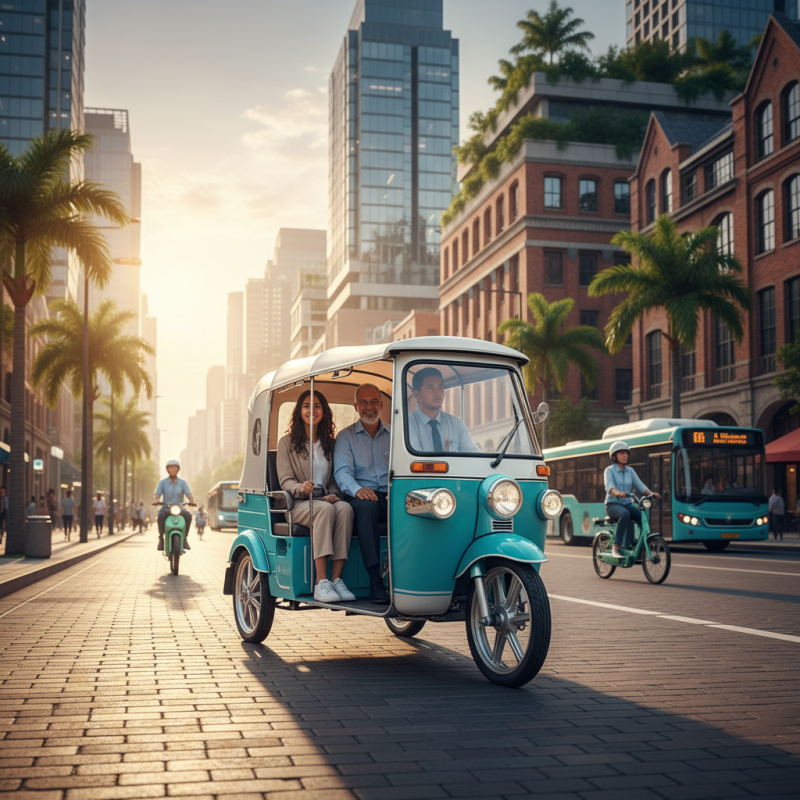
What is an Electric Passenger Tricycle and Its Benefits?
In recent years, the electric passenger tricycle has gained popularity as a sustainable transport option. This innovative vehicle combines the comfort of a passenger tricycle with the efficiency of electric power. Many cities are seeing the rise of these tricycles on their streets, reducing congestion and pollution.
The benefits of an electric passenger tricycle are compelling. They offer easy maneuverability, making them ideal for urban environments. Passengers enjoy a smooth ride, and operators can benefit from lower operating costs. However, the initial investment and range limitations are challenges that potential users should consider.
Overall, electric passenger tricycles present a promising alternative to traditional vehicles. They create opportunities for eco-friendly travel while addressing urban transportation issues. As cities evolve, embracing this technology could lead to a more sustainable future.
What is an Electric Passenger Tricycle?
Electric passenger tricycles are becoming more popular in urban areas. They offer an eco-friendly alternative for short-distance travel. These vehicles typically have three wheels and an electric motor. They can carry multiple passengers, making them ideal for ridesharing or family trips. According to a report by the International Council on Clean Transportation, electric tricycles can reduce greenhouse gas emissions significantly compared to traditional gasoline vehicles.
The use of electric passenger tricycles brings several advantages. They are energy-efficient and cost-effective. Operating costs are significantly lower than traditional vehicles. The average cost of electricity needed to power an electric tricycle is about one-fifth of that for gasoline. Additionally, these tricycles are designed to be user-friendly, even for those who are not experienced riders. However, charging infrastructure is still being developed in many regions, which can be a drawback.
Safety is another crucial aspect. While electric tricycles offer stability with three wheels, factors like road conditions and weather can affect performance. Riders must be cautious. Furthermore, the speed of these tricycles varies, which may not be suitable for all traffic situations. Some users have reported discomfort during longer rides, highlighting the need for better ergonomic designs in the future.
Key Features of Electric Passenger Tricycles
Electric passenger tricycles have gained popularity for urban commuting and short-distance travel. Their design offers stability and comfort, making them ideal for passengers of all ages. These tricycles often feature three wheels, an electric motor, and a spacious seating arrangement. According to industry reports, the demand for electric tricycles is projected to grow by 20% annually over the next five years.
Key features of electric passenger tricycles include energy efficiency, reduced carbon emissions, and easy maneuverability. Many models possess a battery range of 30 to 50 miles on a single charge. This makes them attractive for daily use. Research indicates that using electric tricycles can decrease traffic congestion significantly. Some users still express concerns over battery life and charging infrastructure.
Safety is another essential aspect. Electric tricycles often come equipped with built-in lights, reflective materials, and sturdy braking systems. However, not all models meet high safety standards. Reports suggest that accidents still occur due to inadequate rider training or maintenance. The balance between technology and user education cannot be overlooked. As this market evolves, continuous improvements and awareness will be crucial for maximizing these vehicles' benefits.
Advantages of Using Electric Passenger Tricycles
Electric passenger tricycles are becoming popular for urban transport. They provide a unique combination of comfort and convenience. These tricycles are designed to accommodate passengers while allowing a driver to navigate through city streets. With three wheels, they offer stability and safety.
One significant advantage is their eco-friendliness. They produce zero emissions and reduce the carbon footprint. This aspect is crucial in today's world where climate change is a concern. Furthermore, electric tricycles are quiet, making them ideal for busy city environments. They can easily maneuver through traffic, reducing commute times.
However, challenges remain. Battery life can limit distances traveled. If the battery dies, riders may feel stranded. Safety features vary, which can be a concern for passengers. So, while electric passenger tricycles offer many benefits, potential users should consider these factors before choosing this mode of transportation.
Environmental Impact of Electric Passenger Tricycles
Electric passenger tricycles are gaining popularity due to their potential to reduce environmental impact. Traditional vehicles emit significant greenhouse gases, contributing to climate change. In contrast, electric tricycles offer a cleaner alternative. Studies show that electric vehicles can reduce emissions by up to 70% compared to gasoline-powered options. This shift is vital for urban areas facing air quality challenges.
Moreover, the production of electric tricycles requires less energy compared to cars. A report from the International Energy Agency highlights that electric two-wheelers, including tricycles, are more energy-efficient. They typically consume less electricity per kilometer traveled. However, the environmental benefits depend on how the electricity is generated. In regions relying on fossil fuels, the advantages may diminish.
Despite their benefits, electric passenger tricycles also have drawbacks. Battery production has significant environmental costs and can lead to resource depletion. Additionally, the charging infrastructure is still developing in many areas. This uneven availability can discourage potential users. Addressing these challenges is crucial for maximizing the positive impact of electric passenger tricycles on the environment.
Comparison with Traditional Passenger Vehicles
Electric passenger tricycles are gaining traction in urban transport. They offer several benefits over traditional passenger vehicles. For instance, a recent market report stated that electric tricycles can reduce travel emissions by up to 40%. This is significant when compared to conventional vehicles, which heavily rely on fossil fuels.
The design of electric tricycles allows for a smaller footprint on the road. This makes navigation easier in congested areas. A study shows that electric tricycles can alleviate traffic congestion by 30% in urban settings. Their lower operating costs, around 70% cheaper than fuel-based vehicles, appeal to both riders and operators. However, the initial purchase price can still be a barrier for some users.
**Tip:** When considering the switch to an electric passenger tricycle, evaluate your local charging infrastructure. Availability of charging stations can influence your daily use. The technology is rapidly improving, yet adoption varies by region. The need for more charging options remains a concern. While the benefits are clear, it’s crucial to reflect on these practicalities.