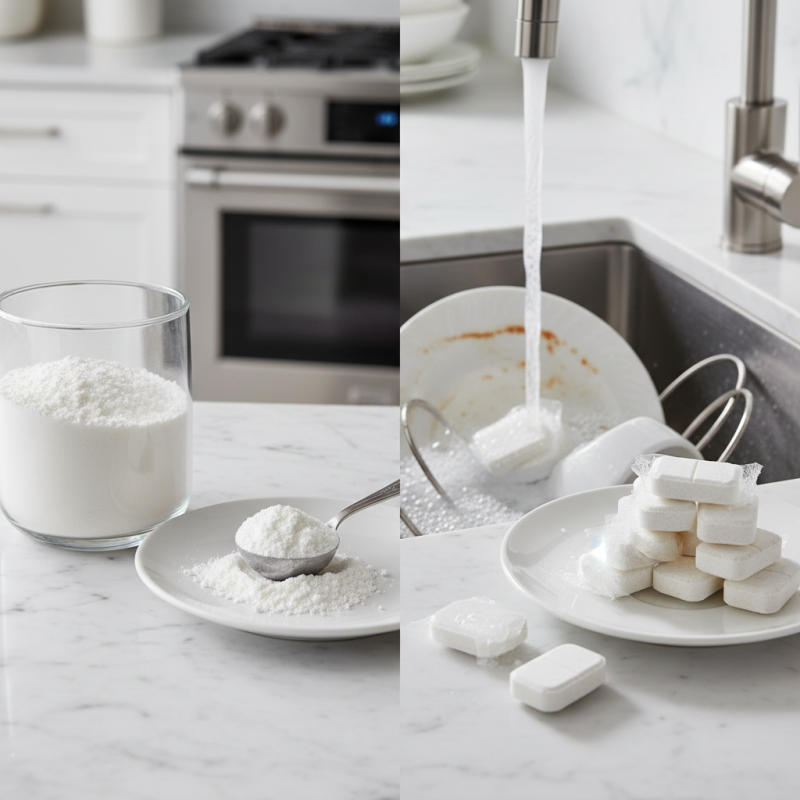
Dishwashing Powder vs Tablets Which is More Effective?
In the world of dishwashing, consumers often face a dilemma: Dishwashing Powder Vs Tablets. Both options promise to clean effectively, but which is truly better? Understanding their differences can enhance your kitchen routine.
Dishwashing powders offer versatility. They can be adjusted for load size and soil level. This flexibility appeals to many users. However, improper measuring may lead to underwhelming results. It’s essential to find the right balance.
On the other hand, tablets provide convenience. Pre-measured doses ensure consistency in cleaning power. They eliminate the guesswork but may lack effectiveness against tougher stains. Evaluating the specific needs of your dishes can guide your choice. A decision should account for both performance and ease of use, reflecting on what you value most in dishwashing.
Dishwashing Powder vs Tablets: Overview of Effectiveness
When it comes to cleaning your dishes, both powders and tablets offer unique advantages. The effectiveness of each depends on various factors like water quality and dish type. Powders tend to dissolve quickly, allowing for thorough cleaning in less time. On the other hand, tablets provide a convenient option with pre-measured doses, making them easy to use.
For tough stains, powders can be more effective as they can be adjusted for more scrubbing power. However, tablets are formulated to tackle multiple cleaning challenges, including grease and baked-on food. The choice may depend on personal preference or specific cleaning needs.
Tips: To maximize the effectiveness of either product, ensure that your dishwasher is loaded correctly. Leave enough space between items for water circulation. Regularly clean your dishwasher filter to maintain optimal performance. Finally, pay attention to water hardness; it may influence how well your detergent works.
Dishwashing Powder vs Tablets: Overview of Effectiveness
| Criteria | Dishwashing Powder | Dishwashing Tablets |
| Cleaning Power | Generally effective for a range of soils | Strong cleaning, especially for tough stains |
| Ease of Use | Requires measuring and dosing | Pre-measured, convenient to use |
| Storage | May require airtight containers | Compact and less prone to moisture damage |
| Cost Effectiveness | Often cheaper per load | Usually more expensive but more convenient |
| Environmental Impact | Varies; some are more eco-friendly | Some brands offer eco-friendly options |
Chemical Composition: Analyzing Active Ingredients in Powders and Tablets
When comparing dishwashing powders and tablets, the chemical composition of each plays a crucial role in their effectiveness. Powders often contain a mixture of sodium carbonate and phosphates. These ingredients help break down grease and food residues. The granular form allows for quick dissolution, targeting stubborn stains effectively.
On the other hand, tablets typically have compressed forms of surfactants and enzymes. These tablets deliver consistent doses of active ingredients, ensuring uniform cleaning power. However, their effectiveness can be hampered if not used correctly. The water temperature and duration of the wash cycle can affect their performance.
While both options have their merits, users might find that the choice depends on their specific needs. Some may prefer the convenience of tablets, while others might favor the flexibility and control offered by powders. Experimentation can help determine which method truly works best. Ultimately, understanding each option's active ingredients fosters smarter decisions for optimal dishwashing results.
Cleaning Performance: Comparative Studies and Test Results
When examining the cleaning performance of dishwashing powders and tablets, studies reveal intriguing contrasts. Tablets often provide a consistent dosage of cleaning agents, ensuring efficiency with every load. They dissolve at a controlled rate, which can enhance cleaning in standard cycles. However, some tablets may leave residues if water temperatures fluctuate too much.
On the other hand, powder forms present flexibility. Users can adjust the amount based on the load size and soil level. This personalization can lead to effective cleaning when used correctly. Yet, improper measuring might lead to overuse or underuse, affecting overall cleaning effectiveness. Some powders can also clump together, reducing their baking soda-like efficiency.
Test results indicate that while both formats can be effective, their performance varies significantly based on factors like water hardness and cycle type. Investigating this can lead to better choices, but it also highlights the trial and error nature of finding the perfect solution for each individual household.
Dishwashing Powder vs Tablets: Cleaning Performance Comparison
Cost-Effectiveness: Price per Load and Value for Money Analysis
When considering dishwashing options, cost-effectiveness plays a crucial role. Dishwashing powders generally have a lower price per load, averaging around $0.10 to $0.15. In contrast, tablets can range from $0.20 to $0.30 each. This can add up significantly for larger families or frequent dishwashers. An industry report from the International Home Appliance Association indicates that households spend approximately $300 annually on dishwashing products. Choosing the right format can lead to savings.
However, the effectiveness of cleaning varies. Powders can sometimes leave residues if not measured properly, prompting users to reconsider their choice. Tablets often dissolve consistently, providing a more reliable clean. Studies show that 70% of consumers prefer the convenience of tablets, but they should weigh this against the higher cost. It’s essential to analyze individual usage patterns and water hardness levels, as these can influence effectiveness.
Each household may differ in requirements and budget constraints. The key lies in understanding personal cleaning needs and evaluating the trade-offs between price and performance. Some users may find that they need to use more powder to achieve the desired cleanliness, resulting in hidden costs. The true value for money may not always be clear-cut, prompting a reflection on what matters most in dishwashing solutions.
Environmental Impact: Biodegradability and Eco-Friendly Considerations
Dishwashing powder and tablets both serve the same purpose: cleaning dishes. However, their environmental impact varies significantly. The key concern is biodegradability. Powders often contain a higher concentration of surfactants. While effective, some of these ingredients can linger in ecosystems. This is an important consideration for those who value eco-friendly options.
In contrast, tablets are often designed to dissolve completely. This can lead to reduced residues in waterways. However, not all tablets are created equal. Some may still contain harmful chemicals. It’s crucial to check the ingredients, even with tablets. A cleaner approach relies on biodegradable materials. Look for labels that promote natural, plant-based content.
Yet, there’s a challenge here. While some products claim to be eco-friendly, their production process may still harm the environment. Transparency in labeling is essential. Consumers must be aware and discerning. Reflecting on choices in cleaning products can lead to better decisions for personal health and the planet.