What is the Difference Between CNC and Laser Cutter?
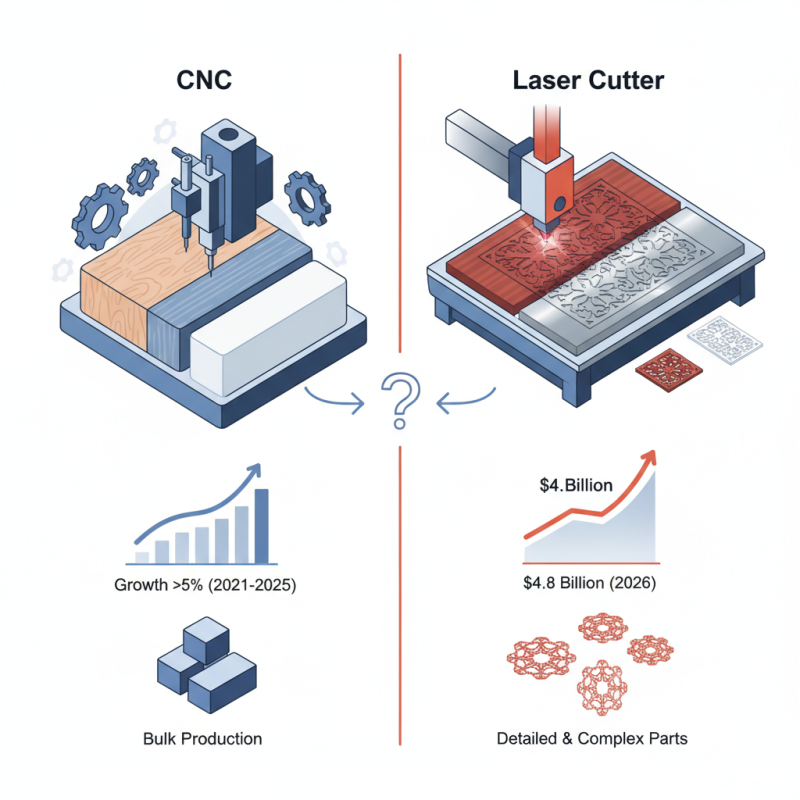
The manufacturing industry constantly seeks efficiency and precision. Within this realm, CNC And Laser Cutters have emerged as vital technologies. A report from TechNavio indicates that the CNC machine market is expected to grow by over 5% from 2021 to 2025. Meanwhile, the laser cutting market is projected to expand even faster, showcasing its rising importance.
CNC machines excel in versatility. They can handle various materials such as wood, metal, and plastic. Laser cutters, however, provide unparalleled precision, especially for intricate designs. According to a study from MarketsandMarkets, the global laser cutting market is set to reach $4.8 billion by 2026. This highlights the increasing reliance on laser technology in manufacturing.
It is essential to reflect on the ideal applications for each method. While CNC offers robust solutions for bulk production, laser cutters shine in creating detailed and complex parts. Understanding these differences helps businesses align with their production goals better. Properly leveraging CNC and laser cutter technologies can elevate operational efficiency and product quality in today's competitive market.
CNC Cutting: An Overview of Technology and Applications
CNC cutting technology utilizes computer-controlled machines to precisely cut materials. This process is highly versatile and can handle various materials, from metals to plastics. CNC systems often use rotary tools or plasma cutters to shape materials into complex designs. The accuracy and repeatability of CNC machines make them ideal for industrial applications.
In practical uses, CNC technology can be found in automotive and aerospace industries, where precision is vital. For instance, cutting intricate parts for engines requires exact measurements. However, this technology has its challenges. Setup time can be lengthy. Operators must possess knowledge to program operations correctly. Misprogramming can lead to waste.
Adaptability is one strength of CNC systems, supporting different patterns and production scales. However, learning curves exist for new users. Effective training is essential to maximize the machine’s capabilities. Many projects may not always meet expectations initially, emphasizing the need for continuous improvement and skill development in the CNC field.
Understanding Laser Cutting: Principles and Uses
Laser cutting utilizes focused beams of light to accurately sever materials. This method leverages intense heat to melt, burn, or vaporize materials, creating clean cuts with minimal kerf. It excels in precision and detail, making it ideal for intricate designs on various materials, such as metal, plastic, and wood.
Applications of laser cutting span multiple industries. In manufacturing, it shapes components for machinery. In fashion, it cuts fabric with intricate patterns. The technology is also popular in signage and décor, producing detailed designs and logos. Despite its advantages, laser cutting does have limitations. Material thickness and reflective surfaces can affect performance and outcomes. Careful setup is crucial for optimal results.
Key Differences Between CNC and Laser Cutting Processes
CNC and laser cutters are both popular tools in manufacturing. However, they operate differently. CNC machines use rotary tools to cut through materials, while laser cutters use focused light beams. This fundamental difference defines their applications and efficiency.
CNC cutting is versatile. It can work with various materials, including wood, metal, and plastics. The process involves a computer-controlled approach, which allows for precise manipulation of tools. On the other hand, laser cutting excels in creating detailed designs. The laser's precision leads to clean edges and intricate patterns. However, it may struggle with thicker materials.
One area where both methods fall short is speed on intricate cuts. CNC may take longer on detailed designs due to the mechanical movements involved. Meanwhile, laser cutters can face limitations when it comes to cutting very thick metals. Each method has strengths and weaknesses, requiring careful consideration to choose the right one for specific projects. Balancing detail with efficiency is key in these processes.
Materials Compatibility: What Each Cutting Method Can Handle
When it comes to materials compatibility, CNC and laser cutters each have distinct advantages. CNC machines excel at working with solid materials such as wood, plastics, and metals. They utilize precise tool paths to carve, mill, or engrave these materials. For example, a CNC router can create intricate designs on a wooden surface, providing a clean finish that enhances the final product. Their ability to handle thicker materials makes them ideal for heavy-duty applications.
In contrast, laser cutters shine when it comes to thin and delicate materials. They can effectively cut and engrave items like paper, acrylic, and leather. The focused beam of light allows for intricate designs on surfaces without much physical force. However, laser cutting has limitations. Some materials, like reflective metals, can pose challenges. The energy may bounce off instead of penetrating.
Both techniques have strengths and weaknesses. CNC is robust and versatile for many applications, but it might be overkill for lighter materials. Laser cutting offers precision on fine projects but may struggle with certain tougher materials. Understanding these nuances can help makers choose the right tool for their specific needs.
CNC vs. Laser Cutter: Materials Compatibility
Choosing the Right Cutter for Your Project: CNC vs. Laser
When choosing between CNC and Laser cutters, consider your project requirements. CNC routers work by carving materials away. They excel in woodworking and can create complex designs. They use a rotating tool to etch, cut, or mill. This process can take time, particularly with dense materials. Still, it's reliable for producing intricate shapes.
Laser cutters work differently. They use focused light to cut through materials. This method allows for precision and speed. Laser cutting is ideal for thin materials like acrylic or paper. The clean edges produced are often a major advantage. However, it may not handle thick materials as well.
Each cutting method has its strengths and weaknesses. CNC may require more setup time and equipment. It can also produce more waste. On the other hand, laser cutters may need extensive ventilation. Also, the initial cost can be high. Evaluating your project's specific needs is crucial in making the right choice.
What is the Difference Between CNC and Laser Cutter?
| Feature | CNC Cutter | Laser Cutter |
| Operating Principle | Uses rotating cutting tools | Uses focused laser beam |
| Material Compatibility | Metal, wood, plastic, foam, etc. | Metal, plastic, wood, fabric, etc. |
| Thickness Capability | Varies, can cut thicker materials | Typically thinner materials; precision cutting |
| Cutting Speed | Generally slower than laser cutting | Faster for thinner materials |
| Precision | High precision, limited by tool wear | Very high precision, no tool wear |
| Maintenance | Requires tool changes and upkeep | Requires lens cleaning and occasional replacement |
| Cost | Typically lower initial cost | Higher initial investment |