7 Counterbalanced Lift Buying Tips for Global Buyers
Global buyers selecting a Counterbalanced Lift must look beyond the purchase price. Real performance depends on load weights, travel distances, floor conditions, and daily duty cycles. A truck suited to a smooth warehouse may struggle on uneven yards or in tight aisles. Details matter.
This guide introduces seven practical buying tips, from confirming rated capacity and load center to comparing power options, mast height, and attachments. Ask suppliers for specifications that match your actual loads, including pallet dimensions and the heaviest items handled. Check turning radius and lift height against your site layout. A showroom demonstration is useful, but it cannot fully reproduce your workplace conditions.
Compare the total cost of ownership, not just the initial quote. Battery or fuel needs, maintenance access, spare-parts availability, operator training, and warranty terms all affect long-term value. For international purchases, confirm that the proposed configuration and documentation meet requirements in the destination market; these can vary by location. Request written answers and verify critical claims against manufacturer information. A polished brochure is not proof of suitability. Some details may only become clear after a site assessment, so allow time for questions and a second review. The right choice is not always the largest or newest truck, but the one that safely fits the work, support network, and budget.
Define the Load Capacity and Operating Requirements
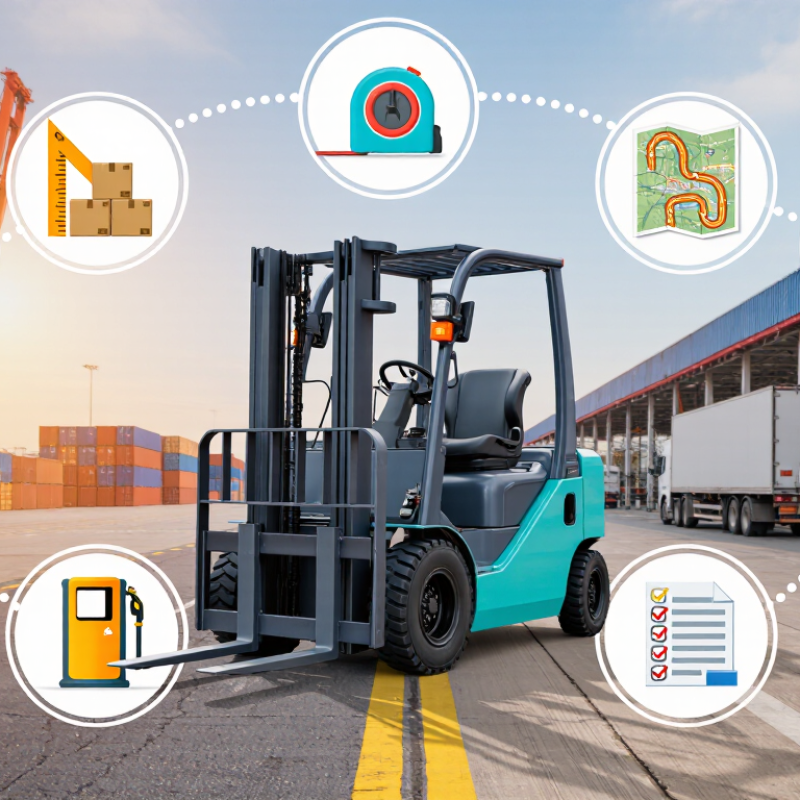
Before comparing counterbalanced lifts, define the heaviest load, its dimensions, and where its center of gravity sits. A compact steel crate can weigh less than a long timber bundle yet create more forward leverage. Record the load’s weight at its actual load center, not only its shipping weight. Then check the capacity plate for the planned mast height and any fitted attachment. OSHA’s powered industrial truck standard requires operators to stay within the truck’s rated capacity. The rating can change with load position and equipment configuration. Numbers matter.
Map the real route, too: doorway width, floor slope, turning space, and travel distance all affect a safe capacity choice. A lift rated for a level warehouse floor may not suit a ramp or rough yard. Ask suppliers to confirm capacity against a load diagram and the narrowest aisle, then test representative loads under controlled conditions. Test it loaded. OSHA guidance cites estimates of nearly 100 worker deaths and 95,000 injuries annually in forklift-related incidents.
These are broad estimates, not a prediction for one site, but they underline why operating conditions belong in the specification. That figure also deserves context: it is not a substitute for current, site-specific risk data.
Keep a written record of load weights, attachments, routes, and any capacity derating. Some details will be estimates at first. Recheck them after operations begin.
Compare Counterbalanced Lift Types and Power Sources
Counterbalanced lifts suit loads carried beyond the wheelbase, but tire and power choices change their real working limits. Three-wheel models turn tightly in narrow aisles; four-wheel models usually feel steadier on longer outdoor runs. Cushion tires work well on smooth concrete. Pneumatic tires handle rougher yards better. Check the floor. A cracked dock plate can matter more than a brochure’s capacity figure.
Electric units produce no tailpipe emissions during operation, making them useful indoors, but buyers should assess charging access, battery runtime, and cold-storage conditions. Propane and diesel models can refuel quickly and support extended shifts, though exhaust and ventilation need careful consideration. The U.S. Department of Energy’s Alternative Fuels Data Center reports that some fuel-cell forklifts can refuel in about three minutes, a useful benchmark for high-throughput sites. That matters. Yet hydrogen supply and fueling infrastructure may be limited at a buyer’s location.
Compare the lift’s rated capacity at the actual load center, not just its headline capacity. Ask suppliers for capacity charts, tire specifications, and energy-use estimates based on your shift pattern. A 1,500-kilogram load carried farther forward can reduce safe lifting capacity. Test the proposed configuration on the site’s tightest turn and roughest surface. I would still treat projected energy savings cautiously; real duty cycles rarely match tidy calculations.
7 Counterbalanced Lift Buying Tips for Global Buyers: Compare Types and Power Sources
Typical capacity ranges vary by model and market; these broad ranges are a starting point, not a specification. Match the truck to the load’s weight, dimensions, lift height, operating surface, and ventilation requirements, then confirm capacity on the specific model’s load chart.
Check Safety Features and Regulatory Compliance
When assessing a counterbalanced lift, inspect the safety details that are easy to overlook. Check the rated-capacity plate, load center, overhead guard, seat belt, brakes, tires, and steering response. Verify that warning devices work and the operator has a clear view when carrying a load. Small details matter. Ask for inspection and maintenance records, plus the operator manual in a language workers can use.
Safety risks deserve careful attention. NIOSH’s 1997 alert, Preventing Injuries and Deaths of Workers Who Operate or Work Near Forklifts, estimated about 100 U.S. forklift-related deaths and 20,000 serious injuries annually at the time. These are historical estimates, not current global rates, but they underline why safety checks should not stop at a sales brochure. Compare the truck’s design and documentation with relevant requirements, such as OSHA’s powered industrial truck rules in the United States and ISO 3691-1 for industrial truck safety. Requirements vary by destination.
Before ordering, confirm that the exact truck configuration—not just a similar model—has the required conformity documents and test records for your market. Ask how the stated capacity changes with attachments or raised loads. Request clear explanations, not just certificates. A missing document may be an administrative gap, but it still needs resolving before delivery. When answers feel vague, pause and verify them with a qualified local safety professional.
Evaluate Supplier Support, Parts, and Warranty Coverage
7 Counterbalanced Lift Buying Tips for Global Buyers
Evaluate Supplier Support, Parts, and Warranty Coverage
A counterbalanced lift is a long-term operating asset, so the purchase price tells only part of the story. Ask how quickly the supplier responds to technical questions and whether support is available across your working hours. Request the service process in writing, including remote troubleshooting, technician availability, and operator or maintenance training. A vague promise of “full support” is not a service plan.
Tips: Check parts availability for the exact lift configuration. Ask for typical lead times on filters, tires, brake components, and other wear items. Confirm whether parts can be shipped to your location and how orders are tracked. Ask what information the service team needs, such as model, serial number, or fault codes. Details matter.
Read warranty terms before comparing offers. Check the coverage period, usage limits, exclusions, and whether labor and replacement parts are both included. Clarify who handles transport or diagnosis if a fault appears. Get answers in writing. Warranty wording can look reassuring while leaving costly gaps. I would also compare the supplier’s nearest service point with your actual site, not just the country on a map. That small check is easy to skip, and distance can change how quickly a lift returns to work.
Compare Total Cost, Delivery, and Ownership Risks
A low purchase price can hide expensive ownership costs. Compare the quoted price with freight, insurance, import charges, unloading, and commissioning at your site. Ask what the quote excludes. Small fees add up. For a counterbalanced lift, also check tire type, battery or fuel system, and mast options against your actual loads and floor conditions. A cheaper configuration may cost more if it needs frequent adjustments or cannot handle your heaviest pallet safely.
Delivery is more than a promised ship date. Confirm the machine’s packed dimensions, port handling needs, and final-mile transport plan before ordering. Check that doorways, ramps, and unloading equipment can accommodate it. Get an estimated delivery window in writing, and ask how delays affect parts availability and startup support. A few days’ delay may disrupt a warehouse schedule. Even careful estimates can miss local handling costs, so leave room in the budget.
Ownership risks often appear after the warranty begins. Ask which parts are stocked near your site, how service is arranged, and what routine maintenance requires. Check warranty coverage for the duty cycle you expect, not just light use. Review battery charging needs or fuel access, operator training, and expected resale value. A brochure cannot predict every site condition; measure aisle width and floor slope yourself. That extra check can prevent a costly mismatch.