7 Tips for Choosing the Best Umbrella Folding Pram
Choosing an Umbrella Folding Pram can seem straightforward until you compare frame weight, folded size, wheel design, and everyday comfort. A compact fold may fit beside a hallway shoe rack, but it is less useful if opening it takes two hands while you hold your child. Small details matter. Check how the latch works, whether the pram stands when folded, and if its handle feels comfortable on a short walk. The canopy should offer practical coverage, while the seat, harness, brakes, and weight limit deserve careful attention. Always compare these details with the manufacturer’s instructions.
This guide shares seven practical tips for choosing a pram that suits your routine, not just its product photos. Think about the places you visit: narrow shop aisles, bus steps, uneven pavements, or a car trunk already carrying groceries. Test the fold and push, if possible, and notice whether the wheels track smoothly and the basket remains accessible. When shopping online, read the specifications and warranty details rather than relying on phrases such as “ultra-light” or “easy-fold.” No single model works for every family. That is worth remembering. A lighter frame may be easier to carry, yet offer less storage; a larger canopy may add bulk. Use the tips to weigh these trade-offs against your child’s needs and your daily habits. A little hesitation is sensible: the best choice is the one you can use safely and comfortably, day after day.
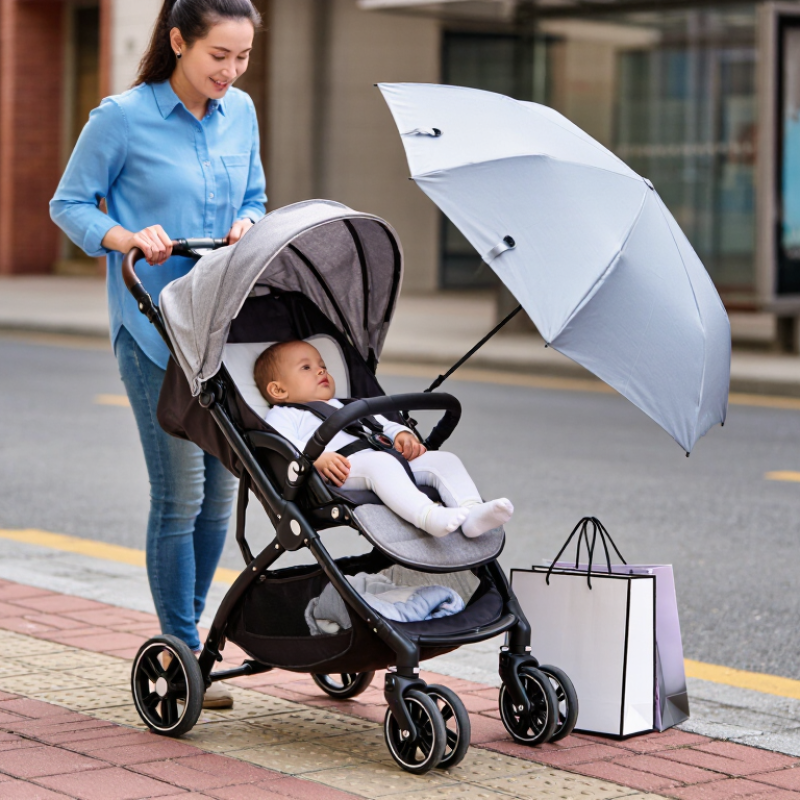
Identify Your Child’s Needs and Your Everyday Travel Habits
Before comparing folded sizes, map a normal day with your child. Does the route include stairs, crowded buses, gravel paths, or a long walk from the car? Check the pram’s stated age and weight limits, recline options, harness, and wheel suitability against your child’s needs. A tiny fold can help in a hallway, but it may mean less storage or a shorter seat. Little details matter. Carry your usual bag and try folding the pram one-handed, if that matters to your routine.
The U.S. Census Bureau’s 2023 American Community Survey reports a mean one-way commute of 26.8 minutes. That figure describes workers, not family journeys, but it is a useful reminder that daily travel can take time. Think about where your child will nap, how often you lift the pram, and whether groceries need to fit underneath. For regular transit, check folded dimensions and how easily the frame stands when folded. For uneven pavements, prioritize stable handling over the smallest possible package. A quick shop-floor test cannot reproduce a rainy school run, of course. Still, try the fold, steering, and brake before deciding; it is easy to overvalue compactness.
Check Safety Features, Stability, and Age Suitability
A secure harness is more important than a padded seat. Look for a restraint that adjusts snugly as your child grows, and check that the buckle closes firmly. Test the brakes on level ground; the pram should stay put when you press them. ASTM F833 sets performance and safety requirements for carriages and strollers, but a standard cannot replace careful checks. Small details matter.
Stability deserves a hands-on test. With the pram open and locked, press gently on the handle and watch for wobbling or folding. Avoid hanging heavy bags from the handle, which can shift the center of gravity. A peer-reviewed U.S. study using emergency-department data estimated 360,937 stroller-related injuries among children from 1990 to 2010. That figure covers many stroller types and situations, so it cannot predict the risk of one model. Still, it supports treating brakes, locks, and harnesses as practical safeguards.
Age suitability is not just a birthday number. Check the maker’s minimum age, weight limit, and guidance for children who cannot sit steadily. A lightweight umbrella pram may be convenient, yet a young infant may need more support than its seat provides. Try adjusting the recline and harness before buying. A quick store test is imperfect. Recheck fit as your child grows.
Assess Seat Comfort, Canopy Coverage, and Storage Space
A comfortable seat should support your child without leaving pressure marks after a short outing. Check the harness adjustment, padding, legroom, and recline while your child is seated. A soft cushion can look inviting, yet thick padding may trap heat or make a secure fit harder to judge. Try the pram on a bumpy pavement, too. Small jolts reveal more than a showroom floor.
Canopy coverage matters in changing weather. Extend it fully and check whether it shades your child’s face during a walk, not just while the pram faces one direction. The World Health Organization’s Global Solar UV Index guidance recommends sun protection when the index reaches 3 or higher. A canopy helps, but it cannot block every angle; breathable fabric and ventilation openings matter on warm days. No canopy replaces sensible shade breaks.
Storage space is useful only when it stays accessible. Check whether a diaper bag fits without pressing against the seat, and whether you can reach the basket with the seat reclined. A large basket may still frustrate you if its opening is narrow. Add a few everyday items before deciding: a folded blanket, water bottle, and small bag. Measure your usual load, not the optimistic version.
7 Tips for Choosing the Best Umbrella Folding Pram — Assess Seat Comfort, Canopy Coverage, and Storage Space | Tip | What to Assess | What to Check | Why It Matters |
| 1 | Check seat comfort | Look for supportive padding, a seat that suits your child’s size, and materials that feel comfortable in the climate where you live. Check the seat’s stated weight and height limits. | A well-fitting seat can make everyday outings more comfortable. Staying within the manufacturer’s limits helps ensure the pram is used as intended. |
| 2 | Assess recline and age suitability | Check the recline positions and the manufacturer’s minimum age guidance. For a newborn, use only a pram explicitly approved for newborn use and with the required recline or compatible carrycot. | Not every umbrella-folding pram is suitable for newborns. A suitable recline and age rating help support safe, appropriate use. |
| 3 | Compare canopy coverage | Open the canopy fully and check how much of the seat it shades. Look for an adjustable extension and, if UV protection is important, a clearly stated UPF rating on the fabric. | Coverage can help shield a child from sun and light weather. A UPF label provides a measurable indication of the fabric’s tested ultraviolet protection. |
| 4 | Test the fold and carrying weight | Try folding and unfolding the pram, check whether it locks when folded, and compare its listed weight with what you can comfortably lift. Review folded dimensions for your storage space or vehicle. | A compact fold is useful only if it is manageable in daily use and fits where you plan to store or transport it. |
| 5 | Measure storage space | Check the basket’s access and stated weight limit. Consider whether it can hold the items you usually carry, and avoid hanging heavy bags from the handles unless the manufacturer permits it. | Accessible storage makes errands more convenient. Overloading a basket or handle can affect stability and may exceed the pram’s limits. |
| 6 | Evaluate handling and brakes | Push the pram over surfaces you commonly use, test turning and steering, and check that the brakes engage and release as described in the instructions. | Handling can vary with wheel design and surface conditions. Reliable, easy-to-use brakes help keep the pram stationary when parked. |
| 7 | Review safety features and upkeep | Check the harness fit and adjustment, frame locking mechanism, warning labels, and applicable safety-standard information. Confirm that the fabric can be cleaned according to the care instructions. | Regular checks and correct use help keep key components working as intended. Cleaning guidance can help maintain the seat and canopy over time. |
Test Maneuverability and Review Durability and Maintenance
7 Tips for Choosing the Best Umbrella Folding Pram
Test maneuverability in places you actually visit, not only across a roomy shop floor. Push the pram through a narrow doorway, turn around a chair, and try one-handed steering. Notice whether the front wheels swivel smoothly or catch on small floor transitions. If possible, add a typical bag to the storage basket; extra weight can change how easily the pram turns. It may still feel awkward at first. That matters.
Tip: Try folding and unfolding it several times. Check whether the latch is easy to reach and the folded frame stays secure. A quick fold is useful, but not if you need two hands and a clear patch of floor every time.
For durability, inspect the frame joints, wheel attachments, stitching, and harness buckles. These spots take repeated strain. Gently press the frame and roll the wheels over a small bump, listening for rattles or scraping. Ask how the seat fabric should be cleaned, and check whether it can be removed without a struggle. A damp cloth may handle everyday marks, but food spills can be less forgiving. I would not judge durability from appearance alone; even a sturdy-looking pram needs routine checks for loose parts and worn wheels. Cleaning instructions are worth reading before purchase, not after the first muddy outing.
7 Tips for Choosing the Best Umbrella Folding Pram
Suggested evaluation weights for comparing prams. Prioritize maneuverability, durability, and ease of maintenance.
These percentages are a suggested comparison framework, not measured test results. Check each pram’s specifications and assess it in person where possible.