How to Choose the Best LED Screen for Your Business Needs?
Choosing the right LED Screen for your business is crucial. It can impact your marketing, communication, and overall brand image. With so many options available, this decision might feel overwhelming. The right LED screen can enhance visibility and attract customers. It can showcase your products and services in vibrant detail.
When considering an LED screen, think about your specific needs. Size, resolution, and brightness are essential factors. A high-quality screen can illuminate your message in any environment. However, it’s important to balance quality with budget. Investing in a top-tier LED screen may yield better results over time.
Many businesses struggle with choosing or even understanding technical specifications. Seeking expert advice can help. Prioritizing your requirements will lead to a more suitable choice. Yet, be mindful of trends that may not suit your brand. Reflect on what truly represents your business. Finding the perfect LED screen is a mix of analysis and creativity.
Understanding Different Types of LED Screens Available for Business Use
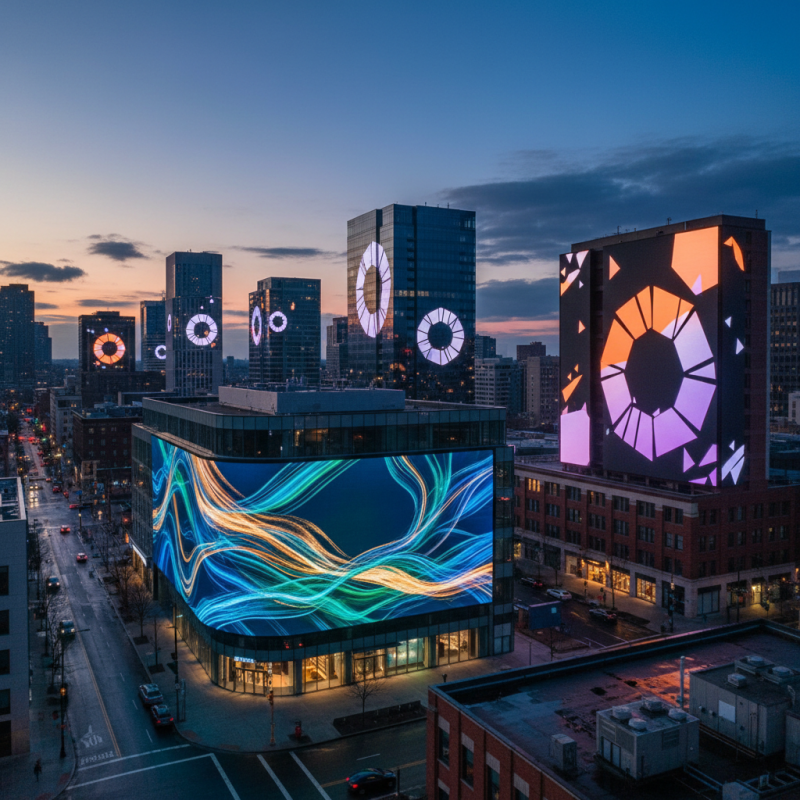
When considering LED screens for business use, understanding the types available is crucial. There are primarily three types: indoor, outdoor, and rental screens. Indoor screens offer high resolution, ideal for close viewing, while outdoor screens need to withstand weather conditions and provide visibility in bright light. Rental screens are versatile, often used at events or exhibitions, allowing businesses to adapt quickly.
Research indicates that the global LED display market is expected to grow significantly, reaching over $80 billion by 2027. This growth highlights the increasing reliance on LED technology for effective marketing and communication. Many businesses remain uncertain about their needs. Assessing your space, audience, and delivery method can drive the right choice.
Tip: When selecting an LED screen, consider resolution and brightness according to your environment. Higher pixel density is essential for indoor displays.
Additionally, size matters. A larger screen may draw more attention but can overwhelm a small space. It’s about balance. Businesses often overlook the aspect of installation and maintenance. An easy-to-maintain display can save future costs and downtime.
Tip: Think ahead about flexibility. If your needs change, can your screen adapt? Keeping options open can enhance your investment.
Key Factors to Consider When Choosing an LED Screen for Your Business
When choosing an LED screen for your business, several key factors should influence your decision. Firstly, understand the resolution you'll need. A higher resolution screen provides clearer images and text. According to industry reports, screens with at least 1080p resolution are recommended for larger displays. This ensures better visibility, especially in bright environments.
Size is another critical consideration. The screen's dimensions should match the viewing distance. For example, a screen set up for close viewing—like in retail—might require a smaller size compared to one designed for large venues. A common piece of advice is to maintain a 1:10 ratio for viewing distance to screen size. This guideline helps determine the proper dimensions.
Tips: Consider the brightness levels. Outdoor screens need at least 5,000 nits for visibility in direct sunlight, while indoor screens usually require around 1,000 nits. Remember to factor in installation and power consumption as well. These can significantly affect overall costs and efficiency. Evaluating these elements thoughtfully can prevent overspend and enhance your visual messaging strategy.
How to Choose the Best LED Screen for Your Business Needs?
| Feature | Description | Recommendation |
| Brightness | Measure of lumens per square meter; critical for outdoor visibility. | At least 5000 nits for outdoor use. |
| Resolution | The clarity of the display, typically noted in pixel pitch (mm). | Lower pixel pitch for closer viewing distances. |
| Durability | Ability to withstand environmental conditions, like rain and dust. | Look for IP65 or higher rating for outdoor screens. |
| Viewing Angle | The maximum angle at which the display can be viewed without significant degradation. | More than 140 degrees for optimal visibility. |
| Weight | Heavier screens may require additional structural support. | Consider lightweight options for easier installation. |
| Cost | Overall price, including installation and maintenance costs. | Balance budget with features and durability. |
Assessing Your Business Environment and Space for LED Screen Installation
When considering an LED screen for your business, the installation space is paramount. Assess your environment carefully. Is it a bright or dim area? High ambient light can wash out images. An outdoor installation or a bright retail space may require a higher brightness level. Determine the viewing distance too. If customers stand close, you need a higher resolution to avoid pixelation.
Next, think about wall space. How large is the area where the screen will go? A massive screen can overwhelm a small room, while a tiny screen might get lost in a spacious area. Consider the height as well. Screens placed too high may strain viewers' necks. A lower installation allows for a more engaging experience.
Take into account foot traffic. If your business gets a lot of visitors, placement should maximize visibility. Avoid corners or spots where barriers block the view. Reflect on the screen's purpose too. Is it for advertising, information, or entertainment? Each use case may dictate different size and resolution requirements. Understanding these aspects ensures your LED screen meets your business needs effectively.
Evaluating Cost versus Quality: Finding the Right LED Screen Investment
When evaluating cost versus quality for LED screens, understanding your business needs is essential. It's easy to be drawn to lower-priced options, but these can lead to hidden costs later. Cheap screens often compromise on brightness, resolution, or durability. A poor-quality display can hurt your brand image and customer engagement.
Consider the long-term benefits of investing in quality. Higher-quality LED screens offer better visibility, longer life, and lower maintenance costs. For instance, a screen with a high pixel density provides clearer images, attracting more viewers. Businesses should also factor in power consumption. An energy-efficient screen can reduce operating costs over time.
Tips: Before finalizing your purchase, test the screen in varied lighting conditions. This can reveal how well it performs in real-world settings. Comparing warranties can also provide insight into a manufacturer’s confidence in their product. Finally, ensure you read reviews from other businesses. Their experiences can guide your decision-making and prevent potential pitfalls.
Best Practices for Maintaining and Managing Your LED Screen Display
Maintaining and managing an LED screen display involves several key practices. Regular cleaning is crucial. Dust and fingerprints can obscure visibility. Use a soft, lint-free cloth to gently wipe the surface. Avoid harsh chemicals that might damage the screen. Schedule maintenance checks to identify any issues early. This proactive approach can prevent costly repairs down the line.
Temperature control is another vital aspect. LED screens perform best in moderate conditions. Excessive heat can impact functionality and lifespan. Ensure proper ventilation around the screen. Energy-efficient cooling systems can help maintain optimal temperatures. Keep an eye on humidity levels as well. Too much moisture can lead to malfunctions.
Lastly, consider the content management aspect. Regularly update your display with fresh content to keep your audience engaged. However, ensure that your content aligns with your business goals. Test the audio-visual elements for clarity. A poorly timed message can lead to confusion. Reflect on what works and what doesn’t for continuous improvement.