How to Choose the Best Hair Diffuser for Curly Hair
Choosing a diffuser can change how curly hair dries, but the right attachment depends on your curls, dryer, and routine. The best hair diffusers for curly hair help spread airflow more gently than a bare nozzle, which may reduce disruption while curls set. They do not create curl definition on their own. Technique matters, too.
Look closely at the details. A deep bowl can hold longer curls, while longer prongs may lift roots or separate dense hair. Check that the diffuser fits your dryer securely; a loose attachment can wobble or fall off. Adjustable airflow and heat settings are useful, especially if your hair takes a long time to dry. Start with low heat and gentle airflow, then adjust only if needed. Small details matter.
This guide explores diffuser shapes, dryer compatibility, materials, and features worth comparing before you buy. It also considers practical trade-offs, such as portability, cleaning, and whether a larger bowl feels awkward to handle. Product descriptions can sound impressive, yet they rarely tell you exactly how an attachment will behave with your curl pattern. Not always. Consider your own routine and, when possible, test a diffuser with damp hair before relying on it for an important day. There is no single perfect option for everyone. The aim is to find a dependable match that dries comfortably and supports the way you want your curls to look.
How a Hair Diffuser Supports Curl Formation
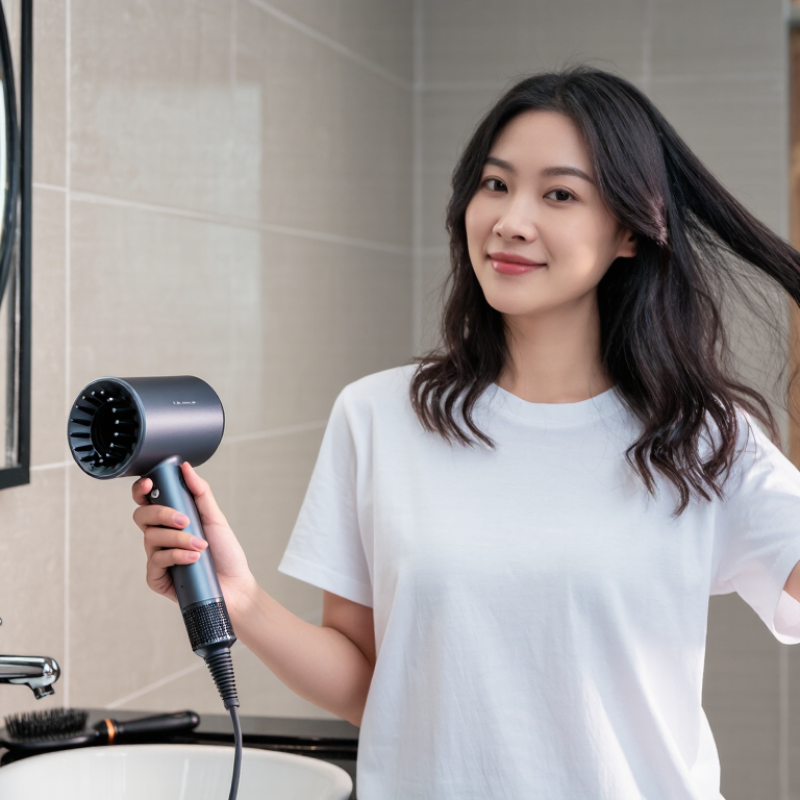
A diffuser supports curl formation by spreading airflow through its perforated bowl instead of directing one narrow stream at wet hair. That gentler airflow can help curl clumps stay together as water evaporates, rather than separating them into frizz. It does not create a curl pattern; it helps preserve the pattern already present. Small distinction, but useful.
For more even drying, place sections loosely in the bowl and bring it toward your scalp. Use low airflow, and pause between sections instead of constantly rearranging them. On a real wash day, this can feel slow. Yet rough handling while curls are wet may undo the definition you are trying to keep.
Heat still matters. A 2011 laboratory study in Annals of Dermatology compared drying at 47°C, 61°C, and 95°C. In the tested condition with a dryer 15 cm away and kept moving, researchers observed no visible surface damage at 47°C; damage increased at higher temperatures. The study did not test diffusers specifically, so it cannot prove a diffuser prevents damage. Use moderate heat, and stop when curls are dry rather than chasing perfect uniformity. Some sections may remain less defined. That is not necessarily a tool problem.
How to Choose the Best Hair Diffuser for Curly Hair - How a Hair Diffuser Supports Curl Formation
| Feature | What to Look For | How It Can Support Curl Formation | Best Suited To |
| Bowl diameter and depth | A bowl large and deep enough to hold a section of curls without compressing them. | Lets curls rest together while they dry, helping limit disruption from direct airflow. | Long, dense, or longer-than-shoulder-length hair. |
| Airflow distribution | Multiple vents or a perforated bowl that spreads air across the diffuser surface. | Disperses airflow over a wider area than a concentrated nozzle, which can reduce the force that separates curl clumps. | Most curl patterns, especially when frizz is a concern. |
| Prong length and spacing | Prongs that reach the scalp comfortably, with spacing that does not snag or pull curls. | Can lift hair near the roots while the bowl supports the lengths, adding root lift without requiring vigorous movement. | People seeking more volume at the roots; shorter prongs may suit delicate or easily tangled curls. |
| Dryer compatibility | A secure fit for the dryer’s nozzle diameter and shape; check the diffuser’s stated compatibility. | A stable connection helps keep airflow predictable and prevents the attachment from shifting during use. | Anyone choosing a universal or dryer-specific attachment. |
| Heat and speed settings | A dryer with adjustable heat and airflow, including a low or gentle setting. | Gentler airflow makes it easier to dry curls without forcefully disturbing their shape. Lower heat can help limit unnecessary heat exposure. | Fine, fragile, color-treated, or heat-sensitive hair. |
| Weight and handling | A comfortable weight and shape that are easy to hold while moving the diffuser slowly. | Comfortable handling makes it easier to use a patient hover or gentle cupping technique instead of shaking or brushing through curls. | Anyone with a long drying routine or limited hand and arm comfort. |
| Drying technique | Choose a diffuser that allows you to hover near the hair or gently cup sections without crushing them. | Drying with minimal movement helps preserve the curl clumps formed while wet. A diffuser supports the process but does not create a curl pattern on its own. | All curl types; use the method that maintains your natural pattern most comfortably. |
Selection tip: Prioritize a secure fit, gentle adjustable airflow, and a bowl that accommodates your hair length and density. Results also depend on your natural texture, styling products, and drying technique.
Assess Your Curl Pattern and Styling Needs
Start by observing your curls when they are clean, damp, and free of heavy styling products. Loose waves often need gentle airflow and a diffuser bowl that supports their shape without flattening them. Tighter curls may benefit from longer prongs that reach toward the roots, especially if your hair is dense. Curl patterns can vary across one head, so don’t choose based on a single section. Small details matter.
Consider what you want the diffuser to do. If faster drying is important, look for a broad bowl and adjustable airflow; strong air can disturb curl clumps and create frizz. For root lift, check whether the prongs can reach your scalp without pulling or tangling. Fine strands may do better with lower heat, while thick hair can take longer to dry even with a larger diffuser. Start on low airflow and warm, not hot, heat, then adjust as your hair responds. A curl chart can guide you, but it cannot account for your haircut, humidity, or styling routine. I sometimes find that the same setting behaves differently on wash days, which is a useful reminder to judge results over several tries.
Compare Diffuser Shapes, Prong Designs, and Airflow
How to Choose the Best Hair Diffuser for Curly Hair
Compare the bowl, prongs, and airflow—not just the attachment’s size. A wide, shallow bowl can cradle loose curls, while a deeper bowl may hold tighter coils closer to the scalp. Long prongs help lift roots, but they can snag if your hair is dense or easily tangled. Short prongs offer gentler handling, though they may not reach through thick sections. Fit matters.
Airflow should feel gentle and spread across the bowl, not blast one small patch. Strong, concentrated air can disturb curl clumps and create frizz; lower airflow often gives you better control, even if drying takes longer.
The American Academy of Dermatology advises holding a dryer at least six inches from hair and keeping it moving to limit heat damage. That guidance is useful, but it does not compare diffuser designs directly. Check whether a model’s airflow claims include clear testing details; numbers without a stated method are hard to compare.
I’ve found that a diffuser can look perfect and still feel awkward once curls are wet. Test the weight and prong spacing, and start on low heat and airflow. Drying may take patience.
Check Dryer Compatibility, Heat Settings, and Materials
Choosing a diffuser starts with dryer compatibility, not the attachment’s appearance. Check the outlet diameter, shape, and locking method against the dryer’s specifications. A loose fit can leak airflow or slip when you turn your head. Fit matters. For curls, look for low or medium heat and adjustable airflow, so you can dry roots without blasting delicate ends. There is no single ideal setting for every curl pattern; hair density and dampness change drying time.
Heat deserves a closer look. A 2011 study in Annals of Dermatology measured air temperatures of about 47°C at 15 centimetres, 61°C at 10 centimetres, and 95°C at five centimetres from a dryer. The findings show why distance and heat control matter, though they do not predict damage for every person. Choose a diffuser made from heat-resistant material, with a broad bowl and smooth, rounded prongs. Inspect its connection and surface for cracks or sharp seams. Silicone can feel flexible, while rigid plastic may hold its shape better; neither material guarantees a good fit. One detail is easy to miss: an attachment that feels sturdy when cool may soften with repeated heating. Check its care instructions, and replace it if it warps.
Select a Diffuser for Comfort, Portability, and Care
A good diffuser should feel manageable in your hand, not just look roomy in a product photo. Check its weight and balance, especially if you dry your hair with one arm raised. A deep bowl can hold curls gently, while longer prongs may help reach roots without pressing the diffuser against your scalp. Confirm that the attachment fits your dryer securely; a loose fit can make styling awkward. Small details matter.
Portability depends on more than size. A detachable or collapsible diffuser can save space in a travel bag, but it should still feel sturdy when assembled. Let the attachment cool completely before packing it. At home, remove trapped hair and lint regularly, and follow the dryer’s care instructions. For curl care, try low or medium heat and gentle airflow. If your hair feels rough or unusually dry afterward, reduce the heat or shorten the drying time. It is easy to blame the tool, though technique may be part of the problem.
Tips: Test the diffuser with your dryer before a trip. Hold it near your curls rather than pushing hair deep into the bowl. Pause between sections, and check how your scalp feels. Comfort is personal; what works for one routine may not suit another.
How to Choose the Best Hair Diffuser for Curly Hair
Compare key features for comfort, portability, and curl care.
Suggested selection priorities on a 1–5 scale, where 5 is most important. These are practical editorial scores, not survey results or laboratory measurements. Look for gentle airflow and adjustable heat to help limit unnecessary stress on curls; check that the diffuser fits your dryer securely.