Skip to content

10 Best Smart LED Lights for Global Buyers?

Choosing the right Smart LED Light is not simply a matter of selecting the brightest bulb. Global buyers must compare performance, compatibility, safety, and long-term value. A lamp that works perfectly in London may need a different voltage, plug, or wireless standard in Dubai, Toronto, or Singapore. Small details matter.

Lighting researcher Dr. Mariana Figueiro has noted, “Light is the strongest cue for our circadian rhythms.” That insight adds depth to everyday buying decisions. Warm light around 2,700K can create a calmer evening atmosphere, while cooler light may support focused daytime tasks. Color rendering also deserves attention. A high CRI rating can make vegetables, fabrics, and skin tones appear more natural. Not every product claims this honestly, however.

This guide examines ten Smart LED Light options for different homes, offices, and commercial spaces. It considers brightness, dimming quality, color accuracy, app stability, voice-assistant support, Wi-Fi or Bluetooth connectivity, and installation effort. Energy efficiency and warranty coverage also influence the real cost over time. Buyers should check regional certifications and confirm whether cloud features work in their country. Privacy policies deserve a careful look too.

Some choices will be excellent. None will suit everyone. A premium model may offer smoother scenes but unnecessary features for a small bedroom. A cheaper light may save money initially, then disappoint through weak software or limited support. These comparisons aim to be practical, transparent, and useful, while recognizing that smart lighting changes quickly. A little skepticism helps. Exact needs should lead the purchase.
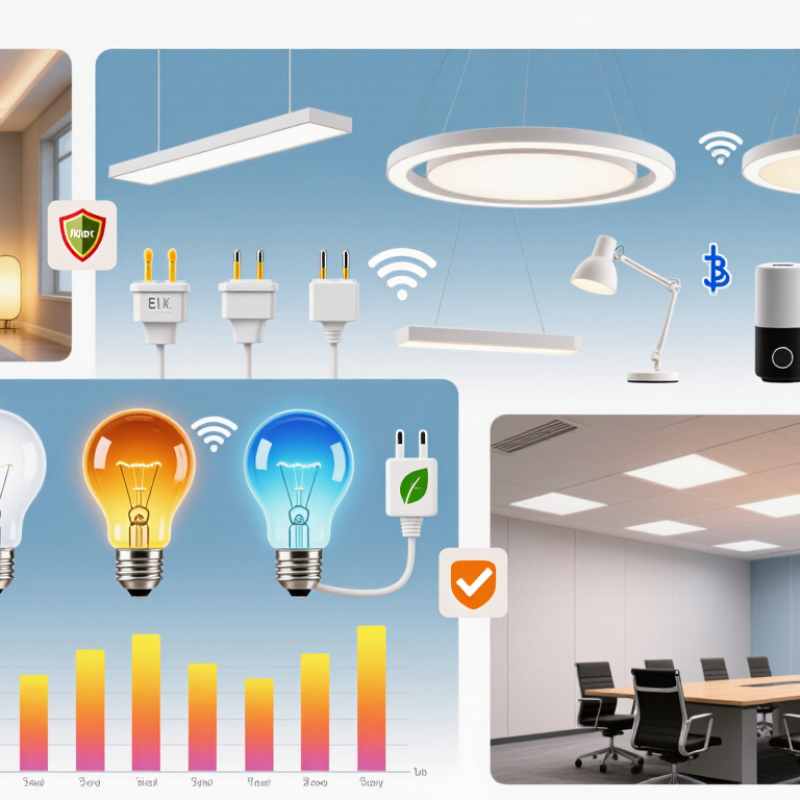
10 Best Smart LED Lights for Global Buyers?

What Are Smart LED Lights and How Do They Work?

Smart LED lights combine efficient light-emitting diodes with a small controller and wireless connection. The controller receives commands through Wi-Fi, Bluetooth, Zigbee, Thread, or a compatible hub. Users can adjust brightness, color temperature, schedules, and sometimes color. A phone app sends the command, while the bulb’s internal driver regulates electrical current safely.

The U.S. Department of Energy reports that LEDs use at least 75% less energy than incandescent bulbs and can last up to 25 times longer. The International Energy Agency estimates that lighting represents about 15% of global electricity use. These figures explain the appeal for global buyers.

However, smart features consume standby power, and cloud-based functions may stop working during internet outages. The experience is not frictionless. A technically efficient bulb can still disappoint if pairing instructions are unclear.

Tips: Check the socket type, voltage range, wireless standard, and privacy settings before purchase. Choose local control when possible. Test the bulb near your router or hub first. Color accuracy also matters; a high color-rendering index helps fabrics, food, and skin tones look more natural. Claims about “energy savings” deserve reflection, because frequent brightness changes and long operating hours can reduce the real-world benefit.

Which Features Matter Most for Global Smart Lighting Buyers?

For global smart lighting buyers, compatibility matters more than a colorful product box. Check the lamp’s voltage range before ordering. A fixture designed for one electrical system may not work safely elsewhere. The socket type also varies between countries. Small details can prevent expensive returns.

Wireless performance deserves equal attention. Many smart LED lights depend on 2.4 GHz Wi-Fi, while some support newer networks or local control standards. A stable connection matters in rooms with thick walls. App language, regional availability, and account requirements can affect daily use. Offline control is useful when the internet fails. It is not glamorous, but it is practical. Buyers should also review data permissions and update policies. A low price means little if support disappears after installation.

Lighting quality should be measured, not guessed. Look for adjustable brightness, accurate color temperature, and a high color-rendering index for kitchens, studios, and work areas. Energy efficiency helps reduce long-term costs, but advertised savings may depend on usage. Dimming performance is another overlooked point; some lamps flicker at low settings. Safety certifications recognized in the target market provide stronger evidence than vague claims. I would not treat a long feature list as proof of quality. Real value comes from reliable controls, clear instructions, replaceable parts where possible, and support that understands local electrical requirements.

How to Compare the 10 Best Smart LED Lights

How to Compare the 10 Best Smart LED Lights

Comparing smart LED lights requires more than checking brightness or color effects. Start with useful light output, measured in lumens, and energy efficiency, measured in lumens per watt. The U.S. Department of Energy reports that LED products use at least 75% less energy and last up to 25 times longer than incandescent lamps. However, real performance depends on heat management, driver quality, and daily operating hours. Check color rendering too. A CRI of 90 or higher can make food, skin tones, and printed materials look more natural. Warm white settings around 2700K suit bedrooms, while 4000K can support detailed tasks.

Global buyers should also compare voltage range, socket standards, and regional certifications. A light designed for 220–240V may not suit every market. Confirm whether it supports Wi-Fi, Bluetooth, or a low-power mesh protocol, then check local network compatibility. The Connectivity Standards Alliance reports that Matter is designed to improve interoperability across smart-home ecosystems, but implementation still varies between devices. Read the privacy policy carefully. Cloud dependence can affect control during outages or service changes.

My practical test includes ten minutes of pairing, repeated dimming, and overnight standby measurement. Some lights connect quickly but respond slowly later. That matters. Review warranty length, software-update support, and replacement availability. I once ranked a bright model too highly because I ignored flicker at low brightness. A phone camera revealed it. Independent testing remains valuable, but every test has limits. Check the method, not just the score.

10 Best Smart LED Lights for Global Buyers? - How to Compare the 10 Best Smart LED Lights

Rank Light Type Best For Brightness Color Options Color Temperature CRI Wireless Standard Voice & Smart-Home Support Typical Power Rated Life Dimming Ingress Protection Typical Use
1 A19/E27 Color Smart Bulb General home lighting 800–1,100 lm Tunable white + RGB 2,200–6,500 K ≥80 Wi-Fi or Matter over Wi-Fi Major voice assistants; app control 8–10 W 15,000–25,000 h App, schedules, scenes IP20 Bedrooms, living rooms, offices
2 A19/E27 Tunable-White Bulb Energy-efficient daily lighting 800–1,050 lm Warm-to-cool white 2,700–6,500 K ≥80 Wi-Fi, Bluetooth, or Matter Voice assistants; remote access varies 7–9 W 15,000–25,000 h App and automation control IP20 Kitchens, hallways, work areas
3 GU10 Smart Spotlight Accent and track lighting 350–500 lm White or RGB + white 2,200–6,500 K ≥80 Wi-Fi, Bluetooth Mesh, or Zigbee Voice assistants; hub may be required 4–6 W 15,000–25,000 h App-based; physical dimmers vary IP20 Display cabinets, galleries, kitchens
4 BR30 Smart Floodlight Wide-area room illumination 650–1,100 lm Tunable white or RGB 2,200–6,500 K ≥80 Wi-Fi or Matter over Wi-Fi Voice assistants; app automation 9–12 W 15,000–25,000 h App and scene control IP20 Recessed fixtures, lounges, studios
5 E27 Smart Filament Bulb Decorative fixtures 350–800 lm Warm white; some RGB versions 1,800–4,000 K ≥80 Wi-Fi, Bluetooth, or Matter Voice assistants; app control 4–8 W 15,000–20,000 h App-based IP20 Pendant lamps, restaurants, bedrooms
6 Smart Candle or C35 Bulb Small decorative lamps 250–470 lm Warm white or RGB 2,200–6,500 K ≥80 Wi-Fi, Bluetooth, or Zigbee Voice assistants; hub may be required 3–5 W 15,000–25,000 h App and schedules IP20 Bedside lamps, chandeliers, sconces
7 Smart LED Strip, 2–5 m Indirect and ambient lighting 300–1,500 lm total RGB, RGBW, or tunable white 2,700–6,500 K when white channel is included ≥80 for white-channel models Wi-Fi, Bluetooth Mesh, or Matter Voice assistants; app scenes 10–60 W per 5 m 20,000–30,000 h App, music effects, schedules IP20; outdoor versions up to IP65 TV backlighting, shelves, ceilings
8 Smart Flat Ceiling Panel Even overhead lighting 1,500–3,000 lm Tunable white; selected models add RGB 2,700–6,500 K ≥80 Wi-Fi or Matter over Wi-Fi Voice assistants; app automation 18–35 W 25,000–50,000 h App control; wall switch compatibility varies IP20 Kitchens, offices, utility rooms
9 PAR38 Smart Outdoor Floodlight Patios and exterior security lighting 1,200–1,800 lm White or RGB + white 2,700–6,500 K ≥80 Wi-Fi or Matter over Wi-Fi Voice assistants; remote access 13–18 W 15,000–25,000 h App schedules and motion routines IP65 or higher Gardens, entrances, balconies
10 Smart Portable LED Lamp Portable and rechargeable lighting 100–500 lm Tunable white + RGB 2,200–6,500 K ≥80 Bluetooth, Wi-Fi, or Matter App control; voice support varies 3–12 W 15,000–25,000 h App, scenes, and touch controls IP20–IP54, depending on model Bedrooms, dining areas, travel, camping

Note: Specifications are representative ranges for widely available smart LED light categories. Actual performance, socket compatibility, voltage, wireless requirements, and regional certifications should be confirmed before purchase.

What Connectivity, Compatibility, and Safety Standards Should You Check?

Choosing among the 10 best smart LED lights for global buyers starts with connectivity, not brightness. Check whether the light supports Wi-Fi, Bluetooth, Thread, or Zigbee. A dual-band router may still exclude 2.4 GHz devices. Matter support can improve cross-platform compatibility, but implementation quality varies. Test the pairing process before installing lights across several rooms.

Voltage deserves equal attention. Confirm 100–240V input and 50/60Hz operation for international use. Match the socket, such as E26, E27, GU10, or B22. The International Energy Agency reports that efficient LED lighting can use at least 75% less electricity than incandescent lighting. However, poor heat management can shorten LED life. Look for clear lumen ratings, thermal protection, and published testing.

Safety and privacy checks should be practical. IEC 60598-1 covers general luminaire safety, while IEC 62471 addresses photobiological risks. Market-specific marks may include CE, UKCA, FCC, RCM, or KC requirements. ETSI EN 303 645 recommends basic IoT protections, including unique passwords, secure updates, and vulnerability handling. Check the data policy too. Does the device require constant cloud access? Can you delete account data? I have found that specifications often look complete, yet omit firmware-support periods. That omission matters. A cheaper light is not truly economical if updates stop early or replacement requires rewiring.

10 Best Smart LED Lights for Global Buyers

What connectivity, compatibility, and safety standards should you check?

How to read the chart: Most smart lighting products use the 2.4 GHz band because it offers broad device compatibility and better indoor coverage than higher-frequency bands. Wi-Fi devices may also use 5 GHz, while Zigbee and Thread commonly operate at 2.4 GHz.

  • Connectivity: Check whether the light supports Wi-Fi, Bluetooth Low Energy, Zigbee, Thread, or Matter over a compatible transport such as Wi-Fi or Thread.
  • Compatibility: Confirm the required mobile platform, smart-home ecosystem, hub or border router, local-control support, and regional voltage range.
  • Safety: Look for applicable standards such as IEC 60598-1 for luminaires, IEC 61347-1 for lamp-control gear, IEC 62471 for photobiological safety, and relevant regional EMC and electrical-safety requirements.

Note: Matter is an application-layer smart-home standard rather than a radio band. Actual range and performance depend on building materials, antenna design, interference, network configuration, and regulatory limits.

Which Smart LED Light Best Fits Each User and Home?

Choosing among the 10 best smart LED lights depends less on extra effects and more on the home they serve. For renters, a screw-in bulb with Wi-Fi control is practical because it needs no hub. Larger homes often benefit from Thread or Zigbee devices, which can reduce network congestion. Check the socket type and voltage carefully. Global electrical standards are not interchangeable.

Energy use matters too. The International Energy Agency reports that lighting represents about 15% of global electricity consumption. The U.S. Department of Energy says LED products use at least 75% less energy than incandescent lighting and can last up to 25 times longer. A warm-white bulb near a bedside feels comfortable, while adjustable white light suits a home office. Families may prefer schedules, low-brightness night lighting, and local control when the internet fails. Older users need clear apps and reliable voice commands. Small details matter.

My first shortlist focused too heavily on color scenes. That was a mistake. A bright bulb can still create glare on a kitchen counter. Buyers in humid areas should check the fixture’s protection rating, especially outdoors. Privacy also deserves attention; not every connected device needs constant cloud access. I would test setup speed, physical controls, and recovery after a router restart. No system is perfect. The best fit is the light that matches the user’s routine, wiring, climate, and patience.