A Conductivity Meter turns an invisible property of water into a reading you can use. That number can help monitor hydroponic nutrient solutions, aquarium water, pools, and laboratory samples. Yet a meter is only as useful as its range, probe, and care routine. A quick dip is not the whole story.
This guide to the 10 best conductivity meters to buy in 2026 compares practical features that affect everyday measurements. Look for a suitable conductivity range, clear display, replaceable or durable probe, and automatic temperature compensation when your work needs it. Calibration matters, too. A standard solution, rinsed probe, and steady sample temperature can make readings more consistent. Small details count.
No meter is perfect. A low-cost model may suit occasional checks, while frequent testing may justify a sturdier instrument with clearer calibration guidance. Even then, specifications do not guarantee a good fit for every sample. Water residue on a probe, bubbles around its sensor, or a rushed reading can change results. That is easy to overlook.
The selections are intended to help you compare use cases, not promise identical performance across brands. Check current manufacturer specifications, supported ranges, calibration instructions, and replacement-part availability before buying. If readings seem unusual, test a fresh sample and verify the meter with a suitable standard. A shortlist helps, but your sampling routine still matters.
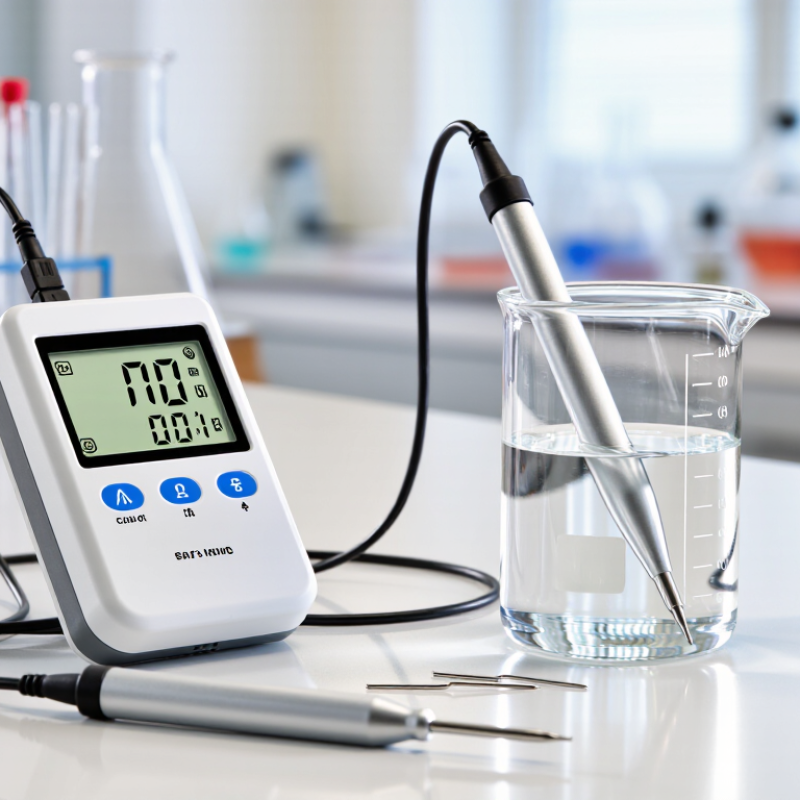
A conductivity meter estimates how easily electrical current moves through a liquid. Dissolved ions, such as sodium or chloride, carry that current. More mobile ions usually mean higher conductivity, but the reading does not identify which substances are present. That distinction matters. A meter cannot confirm that water is safe or reveal every contaminant.
Most meters pass a small alternating current between electrodes in a probe and measure the response. Alternating current helps limit electrode polarization. The meter then applies a cell constant to convert the measurement into conductivity, often shown in microsiemens or millisiemens per centimeter. Temperature changes conductivity, so many instruments display the sample temperature and compensate toward a reference value, commonly 25°C. That adjustment helps comparisons, but it does not make every sample behave identically.
A practical check begins with a suitable calibration standard. Rinse the probe, shake off excess droplets, and immerse it without trapping bubbles around the sensor. Wait for the display to settle. Small details matter. A clean-looking sample can still give an unexpected result, which is a useful reminder to check calibration, temperature, and probe condition before drawing conclusions. I would not treat a single reading as a complete water analysis.
Conductivity meters come in several forms, each suited to a different testing routine. Pocket meters are compact and useful for quick checks in aquariums, hydroponic reservoirs, or field samples. Their small size is handy, though tiny displays can be hard to read in bright sunlight. Benchtop meters offer larger screens and more control over calibration, making them practical for laboratories and repeated measurements. Inline meters stay installed in pipes or tanks, helping operators track changing water conditions without collecting samples each time.
Some meters display conductivity directly, while others also estimate total dissolved solids or salinity. These values are related, but they are not interchangeable; the conversion depends on the sample. Temperature matters, too. Automatic temperature compensation can improve consistency, but it cannot correct a dirty probe or poor calibration. A reading that looks precise may still be misleading.
Tips: Rinse the probe with distilled water between samples, then gently blot it dry. Calibrate with a suitable standard near your expected measurement range. Avoid touching the sensing surface, and allow the reading to stabilize. If results seem inconsistent, check the probe and temperature settings before assuming the water has changed.
Choosing a conductivity meter starts with the water or solution you plan to test. A freshwater aquarium, boiler sample, and concentrated process liquid can require very different measurement ranges. Check the expected minimum and maximum conductivity before comparing instruments. A meter that only reads a narrow range may be precise but unsuitable for your samples.
Look closely at accuracy, resolution, and temperature compensation. Accuracy describes how close a reading may be to the true value; resolution is the smallest change displayed. Automatic temperature compensation helps compare readings at different temperatures, but it does not make every sample behave identically. For dependable results, calibrate with a suitable conductivity standard and follow the meter’s instructions. Keep the probe clean. Residue can distort readings.
Probe design matters, too. Cell constant, cable length, and sensor materials should suit your samples and workspace. For field use, a rugged housing, clear display, and replaceable batteries may be more useful than extra lab features. For routine bench testing, data logging can save time and reduce transcription errors. It is tempting to buy the widest range available, but that can mean paying for capacity you never use. Decide where the meter will be used, how often it needs calibration, and whether replacement probes are easy to obtain. Small details count. A comfortable probe grip can make repeated testing less awkward, though it will not fix poor calibration habits.
Compare meter styles by application, measurement range, and practical features. The categories below are brand-neutral buying guides, not specifications for individual products.
| No. | Meter type | Best suited for | Typical measurement range | Useful features to look for | Key selection tip |
|---|---|---|---|---|---|
| 1 | Basic conductivity pen | Quick checks of drinking water, hydroponic nutrient solution, and other low-to-moderate conductivity samples. | Commonly about 0–2,000 or 0–10,000 µS/cm, depending on the model. | Automatic temperature compensation (ATC), replaceable batteries, and a clear display. | Check that its range covers your samples; a compact pen may not suit highly conductive solutions. |
| 2 | Pocket EC meter | Routine checks in hydroponics, aquariums, and general water testing. | Often spans several µS/cm to around 20 mS/cm. | One- or two-point calibration, temperature display, and a replaceable or cleanable probe. | Choose a model with calibration standards that bracket the values you measure most often. |
| 3 | High-range pocket meter | Concentrated nutrient solutions, brackish water, and other samples above the range of basic pens. | Some models measure to about 100 mS/cm; the upper limit varies. | Automatic range selection, a stated upper limit, and a probe suitable for concentrated samples. | Confirm the meter can measure the expected maximum without displaying an over-range error. |
| 4 | Water-resistant handheld meter | Field work, outdoor sampling, and regular testing around wet work areas. | Commonly covers low conductivity through tens or hundreds of mS/cm, depending on probe and model. | Documented ingress-protection rating, backlit display, and a rugged, replaceable probe. | Look for a published protection rating; “water-resistant” alone does not specify immersion limits. |
| 5 | Laboratory benchtop meter | Repeatable measurements in research, education, and quality-control laboratories. | Ranges vary widely; some instruments cover from low µS/cm values to 2,000 mS/cm with suitable probes. | Multi-point calibration, data storage or export, temperature probe input, and replaceable electrodes. | Match the cell constant and probe to the sample range; one probe may not perform well across every range. |
| 6 | Low-conductivity water meter | Deionized, distilled, or purified water, where readings are especially sensitive to contamination. | Designed for very low values, often in the sub-µS/cm to hundreds-of-µS/cm region. | Low-range resolution, a suitable low-conductivity cell, and a temperature sensor. | Use clean containers and the recommended measurement procedure; exposure to air and residues can change readings. |
| 7 | EC/TDS combination meter | Users who want conductivity readings and an estimated total dissolved solids (TDS) display. | EC ranges commonly extend from low µS/cm to several thousand µS/cm or more. | Selectable TDS conversion factor, ATC, and clear indication of whether the display is showing EC or TDS. | TDS is generally calculated from conductivity using a conversion factor; it is not a direct measurement of all dissolved substances. |
| 8 | Conductivity-based salinity meter | Salinity checks in aquaculture, marine studies, and brackish-water monitoring. | Range depends on the instrument and scale; many are designed for freshwater through seawater conditions. | Salinity mode, temperature compensation, and a probe rated for the intended sample conditions. | Check which salinity scale or calculation the meter uses; different methods and sample conditions can yield different results. |
| 9 | Inline process conductivity system | Continuous monitoring in water treatment, manufacturing, and process lines. | Selected to match the process; available systems cover low conductivity through highly conductive liquids. | Compatible sensor and transmitter, suitable process connections, and output options such as 4–20 mA where needed. | Check chemical compatibility, operating temperature and pressure, installation requirements, and calibration procedure. |
| 10 | Soil or substrate EC meter | Comparing salinity or nutrient-related conductivity in soil and growing media. | Often displayed in mS/cm or dS/m; range and method depend on the probe and measurement approach. | Purpose-designed probe, selectable soil or solution mode, and clear instructions for sampling. | Readings depend on moisture, temperature, and the measurement method; compare samples using the same procedure. |
Buying note: Ranges and features are representative of common meter categories, not guaranteed specifications. Before purchasing, verify the exact instrument’s accuracy, resolution, calibration requirements, probe compatibility, temperature-compensation method, and operating limits.
Choosing among the 10 best conductivity meters to buy in 2026 starts with the water you need to test. Aquarium owners may value a compact probe and quick readings; laboratory users often need tighter accuracy, documented calibration, and temperature compensation. For fieldwork, a sealed housing and replaceable probe can matter more than a large display. Check the stated range, accuracy, calibration points, and whether the meter reports conductivity or estimated total dissolved solids. ASTM D1125 outlines recognized methods for measuring water conductivity, a useful reference when comparing specifications. Small details matter. A low-cost meter can suit routine checks, but a drifting probe can quietly mislead.
Tips: Rinse the probe with clean water between samples, then let it drain without wiping the sensor. Calibrate with a standard solution near your expected range. Record the water temperature and repeat readings when results look unusual.
Keep interpretation modest. The World Health Organization’s Guidelines for Drinking-water Quality (2022) says water with total dissolved solids below 600 mg/L is generally palatable. That figure is not a conductivity limit or a safety verdict. Conductivity-to-TDS conversions vary, so avoid treating one display value as proof of water quality. A weak point in many buying guides is ranking meters without explaining their intended use; the right choice depends on sample type, testing frequency, and how much measurement uncertainty you can accept.
Representative conductivity benchmarks for common water samples. Compare these values with a meter’s measurement range when choosing a model.
Values are approximate benchmarks in µS/cm; actual readings vary with temperature, water composition, and measurement conditions. The logarithmic scale makes both very low and high values visible.
A conductivity meter is only as dependable as its calibration and probe condition. Calibrate before important measurements, after long storage, or when readings drift. Choose fresh conductivity standards that bracket the range you expect in your sample. A low-range water check needs a different standard from a concentrated solution. Let standards and samples reach similar temperatures, unless your procedure specifies otherwise. Rinse the probe with clean water between solutions, then gently blot it with lint-free tissue. Avoid rubbing the sensing surfaces. Small details matter.
Follow the meter’s calibration prompts and wait for each reading to stabilize. Pour standards into clean cups; never return used liquid to its bottle. After testing, rinse the probe and store it as directed in the meter’s instructions. Some probes require a storage solution, so do not assume that plain water is suitable. Inspect the cable, connector, and probe for residue or damage. Record calibration date, standards, and results.
It is tempting to trust a steady number, but a stable reading can still be wrong. Do not rush. Recalibrate if a check standard falls outside your accepted tolerance.