Skip to content

Top Canvas Awnings for Global Buyers?

Choosing the top Canvas Awnings for global buyers requires more than comparing photographs and headline prices. A showroom sample may look impressive, yet fail under strong sun, coastal salt, or repeated rain. Buyers need evidence about fabric density, acrylic treatment, stitching quality, frame strength, and installation support.

Industry consultant Martin Hale says, “A reliable awning begins with honest material information, not attractive promises.” That principle matters when suppliers operate across different climates and standards. A canopy suited to a dry Mediterranean terrace may perform differently in humid Southeast Asia. Wind exposure, drainage, UV intensity, and seasonal maintenance all deserve attention.

Look closely at the details. Is the fabric solution-dyed, or merely surface-coated? Are seams reinforced at the corners? Does the frame resist corrosion near the sea? Can replacement covers be ordered five years later? These questions reveal practical experience.

Price alone misleads.

A lower quotation may exclude freight, mounting hardware, duties, or professional installation. A higher quotation may reflect stronger fabric, better warranties, and tested components. Still, expensive does not always mean superior. That assumption needs questioning.

This guide compares leading Canvas Awnings through performance, durability, design flexibility, supplier reliability, and ownership value. It considers residential patios, hospitality terraces, retail storefronts, and commercial outdoor areas. The goal is not to declare one universal winner. No single awning fits every market.

Instead, global buyers can identify the most suitable option for their weather, building structure, budget, and maintenance capacity. Evidence matters. So does local judgment.
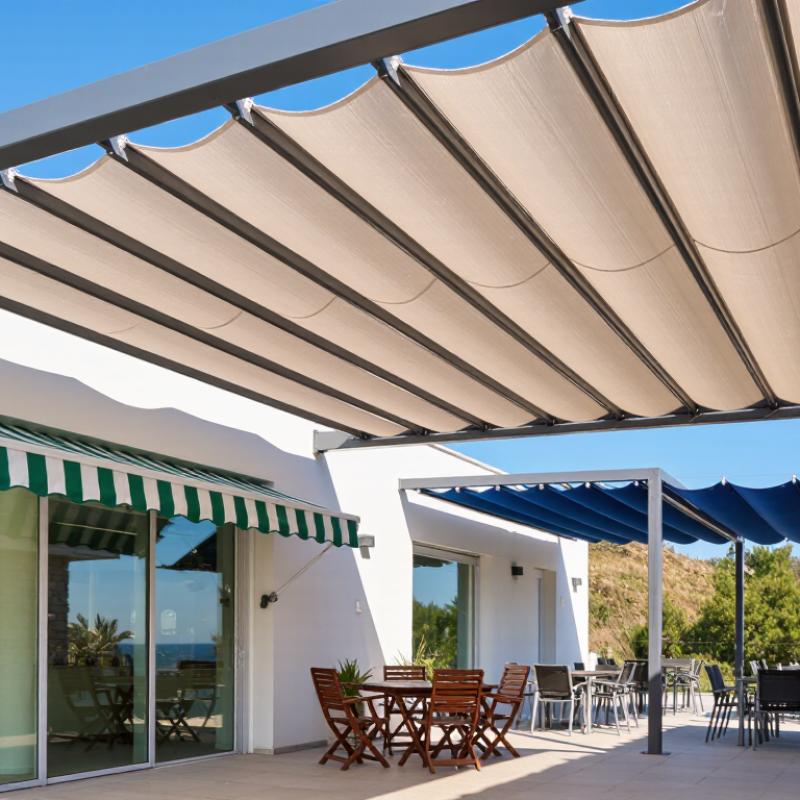
Top Canvas Awnings for Global Buyers?

What Are Canvas Awnings and How Do They Work?

A canvas awning is a fabric-covered structure fixed above a window, door, patio, or shopfront. “Canvas” may mean woven acrylic, polyester, or coated fabric, not only traditional cotton. The fabric stretches across arms and a front bar, creating shade before sunlight reaches the glass. Retractable models use hinged joints or rolling tubes, while fixed models rely on a permanent metal frame. The angle matters. A steeper projection blocks more low winter sun but may collect rain and wind.

The U.S. Department of Energy’s Energy Saver guidance reports that awnings can reduce solar heat gain by up to 65% on south-facing windows and 77% on west-facing windows. That performance depends on fabric openness, color, projection, window orientation, and local weather. Darker fabrics may absorb more heat, although reflective coatings can change the result. Fabric alone does not guarantee comfort.

It is a practical system.

For global buyers, measured projection and wind exposure deserve careful attention. A coastal balcony, for example, needs corrosion-resistant hardware and frequent fabric inspection. Moisture trapped after rain can encourage mildew, especially when ventilation is poor. The Professional Awning Manufacturers Association and ASTM testing practices also distinguish fabric strength, water resistance, and colorfastness; these properties should not be treated as identical. I would ask for test methods, warranty conditions, and maintenance instructions, not just a fabric weight. Even published energy savings remain estimates, because nearby buildings, glass type, and user habits can alter real performance.

Which Canvas Awning Types Suit Different Outdoor Spaces?

Top Canvas Awnings for Global Buyers?

Which Canvas Awning Types Suit Different Outdoor Spaces?

A canvas awning should match the space, not merely its color. For small windows, a drop-arm awning offers shade while preserving outside views. It suits bedrooms, cafés, and narrow balconies. A retractable awning works better over patios or decks. You can extend it during bright afternoons and store it before strong winds arrive. Measure twice. Wall strength matters as much as fabric size.

Fixed canvas awnings provide dependable cover above entrances, shopfronts, and outdoor seating areas. Their permanent frames handle regular use, but they need correct drainage and a suitable slope. Water-resistant canvas is not always waterproof. Check the fabric’s UV rating, stitching, frame coating, and cleaning instructions before buying. In humid regions, breathable material can reduce trapped moisture, although it may need more frequent maintenance.

Freestanding awnings help when walls cannot support brackets. They suit gardens, poolside areas, temporary dining spaces, and rented properties. Choose weighted bases and inspect the frame after storms. I once underestimated afternoon wind on a sheltered terrace; the shade looked stable until the weather changed. That mistake taught me to check local wind conditions, anchoring options, and installation guidance. A qualified installer can also confirm whether the wall, posts, and mounting hardware are appropriate for the location.

What Materials and Features Define a High-Quality Canvas Awning?

A quality canvas awning begins with fabric selected for its climate, not appearance alone. Solution-dyed acrylic usually offers strong UV resistance, stable color, and useful water repellency. Polyester canvas can be lighter and more economical, but its coating may wear faster. Cotton feels natural and breathes well. It needs more care.

Good fabric still needs a reliable structure. An aluminum frame resists corrosion in humid coastal regions, while stainless steel bolts handle repeated movement. Look for tightly woven panels, reinforced corners, and double-stitched hems. These details reduce tearing when wind lifts the canopy. A practical inspection should also check the fabric weight and stitching consistency.

Water resistance should not mean a sealed, plastic-like surface. A breathable weave allows trapped moisture to escape, reducing mildew risk. However, no canvas stays waterproof forever. Seams often leak before the fabric does. The awning should shed rain without forming heavy pockets. A moderate slope helps.

For buyers across regions, replaceable covers and accessible spare parts add real value. Clear installation instructions matter when local installers have different tools or methods. I would question vague claims such as “all-weather protection.” A heavy fabric can perform poorly if its frame flexes or its drainage is weak. Small design choices matter. Ask for verified UV, water, and wind-performance data, while accepting that every material involves a compromise.

How Should Global Buyers Compare Suppliers, Costs, and Certifications?

Global buyers should compare canvas awning suppliers through evidence, not attractive catalog images.
Grand View Research values the global awnings market at roughly US$10 billion in 2023, with steady growth expected through 2030. This growth attracts capable factories and inexperienced traders. Request fabric weight, coating type, UV-performance results, water-pressure data, and wind-load ratings. A sample should be inspected outdoors. Check stitching, eyelets, seams, and frame joints after several days of sunlight and rain. Small defects often become expensive claims.

Cost comparison must include the landed price.
Add tooling, packaging, freight, insurance, customs duties, installation, and replacement parts. Ask suppliers to separate each item clearly. A cheaper quotation may use lighter fabric or weaker hardware. It may also exclude testing fees. I would compare at least three written offers using identical specifications. That method is slower, but more reliable. The International Trade Centre notes that trade costs remain strongly affected by logistics and border procedures, not only factory prices.

Tips: Verify certificates with the issuing body. ISO 9001 shows quality-management control, not awning safety. Ask for recent, product-specific laboratory reports. Confirm whether testing covers the exact fabric color, coating, and frame material. For international sales, check applicable regional requirements, including chemical restrictions and fire-performance rules. Certificates can be genuine but irrelevant. That mistake is common. Also request production photos, batch records, and a written warranty. Leave room for uncertainty; color fading and coastal corrosion can vary by climate.

What Installation, Maintenance, and Climate Factors Should Buyers Consider?

Top Canvas Awnings for Global Buyers?

Canvas awnings should match local weather, not just appearance. In hot regions, breathable acrylic-coated canvas can reduce glare and indoor heat. The International Energy Agency reports that global space-cooling energy demand could more than triple by 2050. External shading may therefore support lower cooling loads, although results depend on window size, orientation, and ventilation. I have seen poorly angled awnings trap rainwater and stretch within one season. A 10–15-degree slope usually improves drainage, but installers must follow the fabric manufacturer’s tested limits. Coastal buyers should specify corrosion-resistant fasteners and inspect joints after storms. Snow regions need retractable systems or seasonal removal. Heavy snow can deform frames quickly.

Tips: Check wind ratings, UV resistance, fabric weight, and cleaning instructions before purchase. Leave airflow behind the fabric. This reduces mildew risk. Use stainless or suitably coated hardware near saltwater. The World Meteorological Organization’s climate reports show rising temperature extremes in many regions, so heat and UV exposure deserve equal attention. Awnings facing west often receive harsh afternoon sunlight. Reinforced seams and secure wall anchors matter there. Maintenance should include gentle brushing, fresh-water rinsing, and prompt treatment of small tears. Avoid aggressive detergents. They can damage water-repellent finishes. One overlooked issue is installation height: low awnings may block views, while high ones provide weaker shade. Buyers should request local engineering advice, because wall materials and wind conditions vary widely. A beautiful canvas is still a poor choice if the fixing points are wrong.

Top Canvas Awnings for Global Buyers? - What Installation, Maintenance, and Climate Factors Should Buyers Consider?

Buyer Factor Recommended Canvas or Awning Consideration Why It Matters Practical Check Before Purchase
Fabric Construction For year-round outdoor use, consider solution-dyed acrylic or another outdoor-grade synthetic canvas. Traditional cotton canvas is breathable but requires more protection from prolonged moisture. The fiber type affects color retention, water behavior, drying time, mildew risk, and service life. Request the fiber composition, fabric weight, UV-treatment details, water-repellency specification, and care instructions.
Sun and UV Exposure Choose a UV-resistant, solution-dyed fabric for locations with intense sunlight or high annual solar exposure. UV radiation can fade surface color and gradually weaken untreated fibers and coatings. Check whether the color is solution-dyed, review any documented lightfastness testing, and confirm that seams and thread are also outdoor-rated.
Rain and Drainage Select a fabric marketed as water-repellent or water-resistant, and install the awning with a continuous downward slope for positive drainage. Many retractable systems use approximately a 10–15° slope, but the manufacturer’s instructions take priority. Water-resistant canvas can shed normal rain but is not necessarily waterproof. Poor slope can cause ponding, stretching, leakage, and frame damage. Confirm the required pitch, drainage direction, valance position, and whether the awning is intended for light rain only or continuous wet weather.
Wind Exposure Use a retractable design that can be closed quickly in changing weather. Retract fabric awnings during strong or gusty winds unless the complete system has a documented rating for the conditions. Wind loads can stress brackets, arms, stitching, fabric, and the supporting wall. Wind performance varies significantly by projection, width, mounting surface, and frame design. Ask for the tested wind class or maximum operating condition, installation limitations, and whether an automatic wind sensor is available.
Snow and Freezing Conditions Retract or remove non-engineered canvas awnings before snowfall. Do not allow wet fabric to freeze while folded or rolled. Snow accumulation creates substantial static load, while trapped ice can stiffen fabric, damage coatings, and interfere with moving components. Verify the snow-load policy, winter storage procedure, and whether the structure is designed for seasonal or permanent installation.
Humidity and Mildew In tropical or humid climates, prioritize breathable outdoor fabric, good air circulation, and a design that can dry fully after rain. Mildew typically develops when dirt and moisture remain trapped on or inside damp fabric; folding wet canvas increases the risk. Confirm mildew-cleaning instructions, avoid permanently enclosing damp fabric, and provide ventilation around the roller tube or storage area.
Coastal and Salt-Air Locations Specify corrosion-resistant aluminum components and suitable stainless-steel fasteners. Plan more frequent rinsing with fresh water. Salt deposits accelerate corrosion on brackets, screws, springs, motors, and other exposed metal parts. Check the metal grades, protective finishes, drainage details, and recommended cleaning frequency for marine environments.
Installation Surface Fasten brackets to structural masonry, reinforced concrete, timber framing, or appropriately engineered steel—not only to cladding, render, insulation, or thin siding. An awning transfers significant pull-out and bending forces to the building, especially during wind. Identify the wall construction, locate structural members, confirm anchor compatibility, and use a qualified installer where required by local rules.
Cleaning Routine Remove loose debris with a soft brush, wash with clean water and a mild soap solution, rinse thoroughly, and allow the fabric to dry completely before retracting. Regular cleaning prevents dirt from becoming embedded and reduces conditions that support mildew and staining. Avoid abrasive brushes, harsh solvents, unapproved bleach, and high-pressure washing, which may damage fibers, coatings, stitching, or color.
Hardware and Moving Parts Choose corrosion-protected frames with replaceable arms, hinges, end caps, and motor or crank components where possible. Mechanical wear and corrosion can cause uneven rolling, fabric rubbing, noise, or failure even when the canvas remains in good condition. Ask about spare-part availability, lubrication requirements, manual override options, and service support in the destination country.
Local Codes and Safety Check local requirements for building permits, projection over public areas, electrical work, wind resistance, fire performance, and egress clearance. Regulations differ by country, municipality, building type, and exposure zone; compliance cannot be assumed from the product’s country of origin. Obtain written installation dimensions, electrical ratings, safety instructions, and documentation accepted by the local authority or inspector.
Lifecycle and Replacement Favor designs with replaceable fabric covers and accessible hardware rather than replacing the entire awning when the canvas wears out. Fabric, frame, and motor components age at different rates. Replaceable parts can reduce waste, downtime, and long-term ownership cost. Confirm replacement-fabric dimensions, lead times, compatible parts, warranty terms, and whether technical documents are available in the buyer’s market.

Note: Performance depends on the complete awning system, installation quality, exposure, and local weather conditions. Always follow the specific manufacturer’s installation and operating instructions and applicable local building codes.