Skip to content

7 Best Vibratory Dryers for Global Buyers in 2026

Choosing the right Vibratory Dryer can shape product quality, energy use, and daily production stability. For global buyers in 2026, the decision involves more than comparing advertised capacity. Moisture targets, material sensitivity, labor skills, local power standards, and after-sales support all matter.

This guide introduces seven strong vibratory dryer options for different industrial needs. Each model is considered through practical criteria, including drying uniformity, residence-time control, vibration performance, cleanability, construction quality, and maintenance access. A machine may look efficient on paper, yet perform poorly when feed moisture changes. That detail deserves attention.

Small samples can reveal a lot.

The review also considers safety features, documentation, spare-parts availability, and supplier responsiveness across international markets. Buyers should check whether contact surfaces match their material, especially when processing food, chemicals, minerals, or heat-sensitive products. Stainless steel finishes, insulated housings, adjustable airflow, and reliable temperature sensors can improve long-term operation.

No single dryer suits every factory. That is the honest part. A compact unit may reduce installation costs but limit future expansion. A larger system may provide flexibility but increase energy demand and cleaning time. Performance claims should be confirmed through material trials, reference checks, and clearly defined acceptance tests.

The following selection is designed to support careful comparison, not replace engineering judgment. Buyers should verify regional certification requirements, voltage compatibility, warranty terms, and commissioning support before placing an order. With those checks in place, these seven Vibratory Dryer choices can provide a practical starting point for confident global sourcing in 2026.
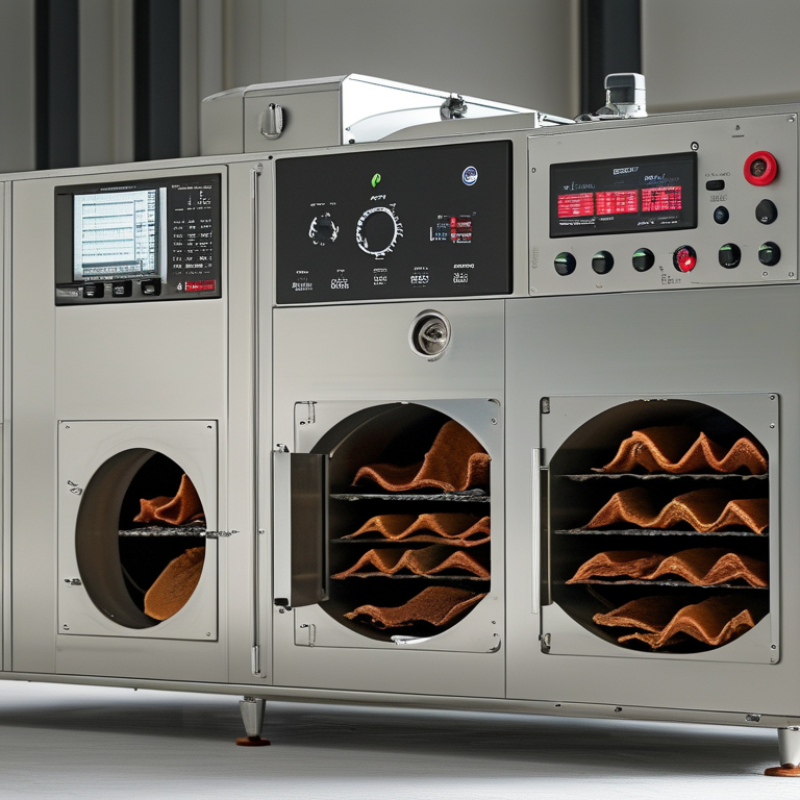
7 Best Vibratory Dryers for Global Buyers in 2026

What Is a Vibratory Dryer and How Does It Work?

A vibratory dryer removes moisture while vibration carries a product through a controlled drying zone. In many designs, an eccentric motor moves a perforated tray in short, rapid strokes. Warm air passes through the product bed or across its surface. This motion spreads particles, breaks soft agglomerates, and exposes more wet surface to airflow. The result is more even drying with less manual handling. Not magic. The exact mechanism depends on the dryer design and material behavior.

Feed enters at a measured rate. Vibration controls transport speed, while air temperature, airflow, and bed depth control evaporation. As material advances, free surface moisture leaves first; bound moisture takes longer and may need gentler conditions. Operators monitor inlet and outlet temperatures, exhaust humidity, product moisture, and residence time. These measurements help prevent overdrying, scorching, dust formation, or uneven final moisture. A compact, well-adjusted unit can deliver stable output, but poor tuning causes channeling or backflow.

For global buyers, the important question is not simply capacity. Ask whether the machine handles your particle size, feed variation, heat sensitivity, and cleaning requirements. Request test data using your actual material, not a convenient substitute. Check electrical standards, insulation, noise levels, access doors, and spare-part availability before purchase. The first setup is rarely perfect. Laboratory moisture results may differ from production samples, so that gap deserves investigation. A small change in vibration amplitude can alter residence time and product quality.

Key Factors for Comparing Vibratory Dryers in 2026

Comparing vibratory dryers in 2026 requires more than advertised capacity. The IEA’s Energy Efficiency 2024 report places industry at roughly 37% of global final energy demand. That figure makes thermal efficiency a purchasing issue, not a laboratory detail. Check evaporation energy per kilogram of removed water, inlet and outlet temperatures, airflow, and heat recovery. Ask for test data using your actual powder, not a convenient substitute. Moisture targets matter. A dryer reaching 0.2% residual moisture may waste energy if the process needs 0.5%. Compare usable throughput at that target, residence-time stability, and product temperature.

Vibration settings deserve equal scrutiny. Amplitude, frequency, deck angle, and feed depth control movement, segregation, and contact time. Request noise, dust, and maintenance measurements during continuous operation. The U.S. Department of Energy’s Industrial Decarbonization Roadmap identifies process heating as about 51% of manufacturing energy use. Insulation, fan efficiency, controls, and heat recovery can therefore change operating costs substantially. Do not judge payback from a brochure. Use measured electricity, fuel, labor, cleaning, and filter-replacement costs over a full production year. Hygienic design, screen access, corrosion resistance, and spare-part availability also affect reliability. I would leave room for doubt: laboratory results often look cleaner than factory reality. A pilot run with wet feed, seasonal humidity, and a deliberately stressed batch reveals more than polished promises. Maybe that costs more upfront. It can prevent an expensive mismatch.

7 Best Vibratory Dryers for Global Buyers in 2026

Key factors for comparing vibratory dryers include nominal throughput, drying-temperature flexibility, typical residence time, and energy demand. The figures below represent practical engineering ranges for common vibratory dryer configurations and should be validated against the material being processed.

Higher throughput is useful for bulk processing, while lower residence time and energy demand can improve product quality and operating efficiency. Actual performance depends on feed moisture, particle size, bulk density, airflow, and heat-source configuration.

Seven Leading Vibratory Dryers for Global Buyers

Seven Leading Vibratory Dryers for Global Buyers

The seven leading vibratory dryers serve different production needs. Fluid-bed vibratory dryers provide strong airflow and even moisture removal for granules and powders. Indirect-heated units protect sensitive materials from direct hot air. Vacuum vibratory dryers reduce drying temperatures and support heat-sensitive products. Continuous dryers suit steady, high-volume operations. Batch dryers offer better control for changing recipes and smaller production runs. Sanitary dryers use smooth surfaces and accessible chambers for easier cleaning. Compact pilot dryers help buyers test moisture targets before purchasing full-scale equipment.

Performance depends on more than rated capacity. Check residence time, vibration range, heat-transfer area, dust control, and final moisture consistency. A reliable supplier should provide material-contact details, temperature records, and test data using your actual product. Ask about local service, spare parts, electrical compatibility, and operator training. Small details matter. A dryer can meet its brochure capacity but perform poorly with sticky material.

Tips: Request a controlled trial with representative feedstock. Measure inlet and outlet moisture, energy use, discharge temperature, and cleaning time. Confirm whether the stated capacity uses wet or dry weight. Also review noise levels and foundation requirements before installation. In my experience, buyers sometimes focus too heavily on throughput. That choice can create uneven drying later. No machine is perfect. Allow room for testing, seasonal feed changes, and a little operational learning.

Drying Performance, Energy Use, and Maintenance Compared

7 Best Vibratory Dryers for Global Buyers in 2026

Drying performance should be judged beyond advertised capacity. In a vibratory dryer, residence time, bed depth, airflow, and feed moisture control the final result. Uneven particles may leave with damp centers while surfaces look dry. That failure is costly. Pilot testing should measure moisture variation, throughput, and product temperature at several discharge points.

Energy use deserves equal attention. The International Energy Agency’s Energy Efficiency 2023 report states that industry consumed about 37% of global final energy in 2022. The U.S. Department of Energy also identifies process heating as roughly 51% of manufacturing energy use. Drying air, exhaust losses, and poor insulation can raise operating costs quickly. Buyers should request specific energy consumption in kWh per tonne, not only installed heater power. A lower temperature is not always better.

Maintenance often decides the real ranking. Inspectable screens, accessible bearings, sealed motors, and simple airflow paths reduce downtime. Check how often springs, seals, and filters require replacement. Ask for service records from similar materials. Reported figures can be optimistic. I would treat any energy claim without feed conditions as incomplete. A practical comparison should use identical moisture loads, ambient conditions, and production targets across all seven dryers. Five minutes of inspection can reveal more than a polished brochure.

7 Best Vibratory Dryers for Global Buyers in 2026 - Drying Performance, Energy Use, and Maintenance Compared

Rank Vibratory Dryer Configuration Best For Typical Wet Feed Capacity Typical Final Moisture Typical Product Temperature Indicative Thermal Energy Use Vibration / Residence Control Maintenance Profile Key Advantages Important Limitations
1 Multi-Zone Vibratory Fluid-Bed Dryer Continuous food, chemical, mineral, and pharmaceutical production 300–2,000 kg/h 0.2–3.0% after drying 40–120°C, adjustable by zone 2.5–5.5 MJ/kg of water removed Variable vibration amplitude with independently controlled drying zones; residence time commonly 5–30 minutes Moderate; inspect springs, bearings, screens, seals, and air filters on a scheduled basis Strong process flexibility, uniform drying, high throughput, and good heat-recovery potential Higher purchase cost and control-system complexity; requires careful airflow balancing
2 Sanitary Vibratory Fluid-Bed Dryer Hygienic food ingredients, nutraceuticals, and pharmaceutical intermediates 100–1,000 kg/h 0.1–2.0% after drying 35–100°C 3.0–6.0 MJ/kg of water removed Low-amplitude conveying with adjustable air velocity; residence time commonly 3–20 minutes Moderate to high; requires frequent cleaning, gasket inspection, screen checks, and hygienic validation Cleanable construction, low contamination risk, and accurate control of heat-sensitive products Sanitary finishes and cleaning systems increase capital and operating costs
3 Heat-Recovery Vibratory Dryer Energy-conscious plants operating continuously in regions with high fuel costs 250–1,500 kg/h 0.5–4.0% after drying 45–130°C 2.0–4.5 MJ/kg of water removed Variable vibration and airflow; residence time commonly 5–25 minutes Moderate; heat exchangers, condensate drains, filters, fans, and insulation need routine attention Lower fuel demand and reduced exhaust heat losses when operated near design capacity Heat exchangers can foul, and energy savings depend strongly on feed moisture and operating load
4 Low-Temperature Vibratory Dryer with Dehumidified Air Heat-sensitive powders, plant extracts, seeds, polymers, and specialty ingredients 50–600 kg/h 0.5–5.0% after drying 25–70°C 3.5–8.0 MJ/kg of water removed Gentle vibration with controlled humidity and airflow; residence time commonly 10–45 minutes Moderate; desiccant or refrigeration circuits, filters, seals, and product-contact surfaces require inspection Protects color, aroma, potency, and other heat-sensitive product characteristics Lower throughput and higher electrical demand than conventional hot-air systems
5 High-Temperature Vibratory Dryer Inorganic minerals, salts, sand, ceramics, and robust industrial solids 500–3,000 kg/h 0.1–2.0% after drying 100–250°C 2.5–5.0 MJ/kg of water removed Higher-amplitude vibration with strong airflow; residence time commonly 2–15 minutes Moderate; high-temperature bearings, expansion joints, insulation, screens, and ducting need regular checks Fast moisture removal, high capacity, and compatibility with rugged feed materials Unsuitable for heat-sensitive products; thermal expansion and dust control require engineering attention
6 Compact Batch Vibratory Dryer Pilot plants, laboratories, seasonal production, and multiple small product batches 10–150 kg per batch 0.2–5.0% after drying 35–120°C 4.0–9.0 MJ/kg of water removed Batch vibration with manually or automatically controlled temperature and airflow Low to moderate; simple access to screens, seals, fans, and product-contact areas Low installation cost, flexible batch changeover, and straightforward operation Higher labor cost per tonne and lower energy efficiency at small batch sizes
7 Heavy-Duty Vibratory Conveyor Dryer Abrasion-resistant bulk solids and plants requiring conveying and drying in one machine 400–2,500 kg/h 0.5–4.0% after drying 50–180°C 3.0–6.5 MJ/kg of water removed Robust vibration for controlled conveying; residence time commonly 3–20 minutes Moderate; inspect drive components, springs, liners, screens, bearings, and dust-collection connections Combines conveying and drying, tolerates abrasive feed, and can integrate with existing material-handling lines May produce more noise and dust; product segregation can occur with mixed particle sizes
Data shown are representative engineering ranges for commercially available vibratory drying systems, not guarantees for a specific machine. Actual performance depends on feed moisture, particle size, bulk density, air humidity, target moisture, heat source, airflow, insulation, and residence time. Thermal energy use is expressed per kilogram of water removed and excludes site-specific upstream utilities. Final equipment selection should be confirmed through pilot testing and a supplier performance guarantee.

How to Choose the Right Vibratory Dryer for Your Market

Choosing a vibratory dryer for a global market starts with the material, not the catalog. Test its particle size, moisture range, heat sensitivity, and flow behavior. A machine handling mineral granules may damage fragile food pieces. During practical trials, monitor discharge temperature, residence time, dust release, and screen blinding. Small changes matter.

Market conditions then shape the specification. A humid coastal site may need corrosion-resistant contact parts and sealed electrical enclosures. A high-energy-cost region may favor insulated chambers, heat recovery, or lower airflow. Check local voltage, noise limits, food-contact rules, emissions requirements, and available maintenance skills. Do not assume one configuration suits every country. That assumption fails often.

Compare useful capacity, not only the advertised throughput. Ask for test data at your actual feed rate and target moisture. Review cleaning access, spare-part lead times, controls, and operator training before purchase. A dryer that performs well in a laboratory can struggle with sticky feedstock at full scale. Leave operating headroom, although this can raise the initial cost. The difficult question is whether that extra capacity will earn its place. It may not.