2026 Top Rolling Tool Carts for Global Buyers
Choosing the right Rolling Tool Carts in 2026 requires more than comparing drawer counts or glossy finishes. Global buyers need dependable storage, stable movement, and clear product information. A cart may look impressive online yet feel unbalanced when fully loaded. That difference matters in a busy workshop, warehouse, garage, or service area.
This guide examines leading rolling tool carts through practical buying criteria. These include steel thickness, drawer load ratings, caster quality, locking systems, corrosion resistance, assembly requirements, and after-sales support. It also considers shipping conditions, regional voltage-related accessories, packaging strength, and documentation for international purchases. Measurements are checked carefully because a cart that fits a product page may block a narrow workshop aisle.
Real use reveals important details. Smooth casters should roll across concrete without sudden steering. Drawers should open evenly, even when holding sockets, wrenches, and power-tool accessories. Handles need firm attachment. Locks should resist casual access, but buyers should not confuse basic security with high-security protection.
Some rankings remain subjective.
Price alone cannot define value. A lower-cost cart may serve light maintenance well, while a heavier model may justify its expense in professional environments. However, advertised capacity does not always reflect everyday performance. Buyers should verify testing methods, warranty terms, spare-part availability, and local service options before ordering. This overview aims to provide a balanced starting point, not a universal verdict. Product quality can vary between batches, markets, and suppliers, so careful verification still matters in 2026.
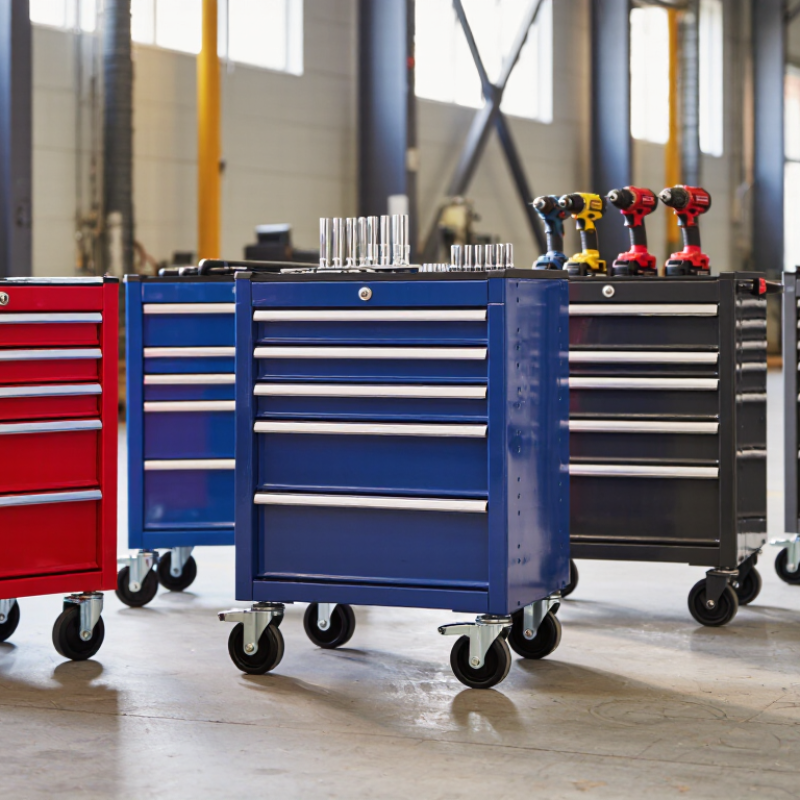
What Defines a Rolling Tool Cart in 2026
In 2026, a rolling tool cart is more than a cabinet on wheels. It is a mobile work platform for changing workshops, service teams, and global buyers. Field experience shows that stability matters before appearance. A wide base, locking casters, and a reliable anti-tip system reduce movement during repairs. Four-inch casters often handle uneven floors better than small plastic wheels. That detail is easy to overlook.
A practical cart should combine strength with controlled access. Full-extension drawers help workers see small parts without excessive bending. Ball-bearing slides should move smoothly under repeated loads. A powder-coated steel body can resist scratches, but coating quality still varies between suppliers. Buyers should request load data, material details, and test documentation. Do not trust attractive photographs alone. Ask about replacement wheels, drawer hardware, and packaging protection for long-distance shipping. These parts often decide the cart’s real service life.
Digital features are entering the category, including drawer sensors, inventory labels, and battery charging spaces. Useful, but not always necessary. A connected cart may create maintenance concerns in regions with limited technical support. I also question whether every workshop needs electronic tracking. A simple layout can remain faster and more reliable. The best 2026 definition is practical: a secure, movable, repair-friendly storage system that fits local work habits, safety expectations, and floor conditions. Performance should be checked in use, not only on paper.
Key Features Global Buyers Should Compare
2026 Top Rolling Tool Carts for Global Buyers
Key Features Global Buyers Should Compare
A rolling tool cart should fit the worksite, not just look impressive online. Compare its total load rating with the weight of your tools, drawers, and future additions. A useful cart should remain stable when several drawers are open. Measure twice. Small details matter.
Check drawer slides, locking systems, and caster quality carefully. Full-extension slides improve access to tools at the back. Lockable drawers help protect equipment during transport and storage. Swivel casters should roll smoothly across concrete, tile, or uneven workshop floors. Larger wheels usually handle thresholds better, but they may increase the cart’s overall height. That trade-off is easy to miss.
Material and finish also deserve close attention. Powder-coated steel can resist daily scratches, while reinforced corners may reduce damage during delivery. Global buyers should compare dimensions, packed weight, spare-part availability, and assembly instructions. Regional safety requirements can differ, so request test reports or compliance documents before purchase. Do not rely only on product photos.
I once underestimated handle height and found long pushing sessions uncomfortable. That mistake changed how I judge ergonomics. Check the handle position, working height, and drawer clearance with real users in mind. Warranty terms, replacement casters, and responsive technical support can matter more than a small price difference. A perfect cart does not exist. Evaluate the compromises openly.
Top Rolling Tool Cart Types and Their Best Uses
2026 Top Rolling Tool Carts for Global Buyers
Top Rolling Tool Cart Types and Their Best Uses
Rolling tool carts are no longer limited to repair garages. Grand View Research’s 2024 hand tools market analysis reports steady global growth through 2030, reflecting broader demand for organized maintenance equipment. Buyers should match cart design with workflow, not appearance.
Drawer carts suit workshops with many small parts, sockets, and measuring tools. Full-extension drawers reduce bending and make inventory checks faster. Open service carts work better for electricians, installers, and facility teams moving frequently between work areas. Their shelves provide quick access, but loose tools can shift during transport. Industrial carts with reinforced frames support heavier equipment and uneven floors. They are practical in production zones and maintenance departments.
Mobile workstations combine drawers, a solid top, and sometimes a vise. They fit assembly tasks where tools and materials must stay together. Modular carts allow buyers to add shelves, bins, or side panels later. That flexibility matters for global operations with changing equipment standards. However, extra modules increase weight and can reduce maneuverability. I have found that oversized wheels help across thresholds, yet they may make the cart harder to steer in narrow aisles.
The U.S. Occupational Safety and Health Administration highlights secure material storage under 29 CFR 1910.176. Locking drawers, stable casters, and balanced loading therefore deserve close inspection. Capacity figures can also mislead. A cart may hold the stated load, but not roll safely when weight is placed high. Test the real layout before purchasing large quantities.
Materials, Storage Design, Mobility, and Safety Standards
2026 Top Rolling Tool Carts for Global Buyers
Materials determine durability, hygiene, and total ownership cost. Powder-coated steel suits workshops with frequent impacts. Stainless steel performs better in humid or washdown environments. Aluminum reduces weight, but may resist fewer heavy impacts. Buyers should request material thickness, coating tests, and maximum drawer loads. Marketing descriptions alone are not enough.
Storage design should match real workflows. Full-extension drawers keep sockets visible and reduce repeated bending. Dividers prevent small parts from sliding during movement. A 125-millimeter swivel caster can cross uneven floors more smoothly than a smaller wheel. Two locking casters improve control near benches. High loads still require careful pushing. According to the U.S. Bureau of Labor Statistics’ 2023 workplace injury report, private industry recorded about 2.6 million nonfatal injuries and illnesses. Poor cart handling can add unnecessary exposure.
Safety details deserve direct verification. Look for drawer retention, anti-tip mechanisms, rounded corners, clear load labels, and brakes tested under working weight. ISO 11228-1 provides ergonomic guidance for lifting and carrying, but it does not set one universal cart capacity. Electrical repair areas may also need designs aligned with IEC 61340-5-1 for electrostatic control. A perfect cart does not exist. I would still question any specification without test conditions, wheel material, and floor assumptions. Global buyers should compare those details before comparing prices.
How to Select Suppliers, Evaluate Costs, and Plan Imports
For global buyers, selecting a rolling tool cart supplier requires more than comparing catalog prices. Ask for factory audit records, material certificates, load testing, and recent export references. ISO 9001 certification helps, but it does not replace production verification. Inspect welds, drawer alignment, caster brakes, coating thickness, and packaging strength. A sample should survive repeated rolling across uneven workshop floors.
Cost evaluation must include the landed price. Add product cost, tooling, inspection, inland transport, ocean freight, insurance, duties, and destination handling. UNCTAD’s Review of Maritime Transport reports that more than 80% of global merchandise trade moves by sea. Freight disruption can therefore change margins quickly. The World Bank’s Logistics Performance Index 2023 also shows major differences in customs efficiency and shipment reliability between markets. Use those differences when comparing suppliers.
Plan imports around realistic lead times. Request carton dimensions and gross weights before booking freight. Confirm pallet patterns, container utilization, labeling, and spare caster availability. A 40-foot container may look economical, yet poor loading can leave expensive unused space. My own costing sheets have underestimated port charges before. A spreadsheet can still lie. Build a 10–15% contingency for freight and handling changes, then review it before issuing the purchase order. Grand View Research identifies growing demand for organized storage within the global hand tools market, but demand forecasts cannot guarantee your sales velocity. Begin with a controlled trial shipment, measure damage rates, and revise specifications before scaling.
2026 Top Rolling Tool Carts for Global Buyers
Supplier-region benchmark for landed-cost planning, lead-time control, and product-capacity evaluation. Values are indicative procurement benchmarks for standard steel carts with 5–7 drawers and 100–150 kg total load capacity.
For global buyers, the lowest unit price should be evaluated together with freight, tooling or customization requirements, minimum order quantity, and production lead time. A practical sourcing shortlist should balance landed cost with stable capacity, documented quality control, and predictable delivery performance.